The Sofia to Istanbul Train – The Complete Guide
This post may contain affiliate links. If you make a purchase using one of these links, I may receive a small reward at no extra cost to you. See my Disclosure Policy for more information.
Who doesn’t like international sleeper trains?
You go to sleep in one country and wake up in another. Meanwhile, trains are just cool (ask Sheldon Cooper), and some claim to sleep better with the pleasant vibrations of a moving railway than in their own bed at home!
I’ve taken several throughout the world, including one route close to my heart – the international sleeper train that connects Bulgaria with Türkiye. Officially called the “Istanbul-Sofia Express“, it runs once daily in each direction.
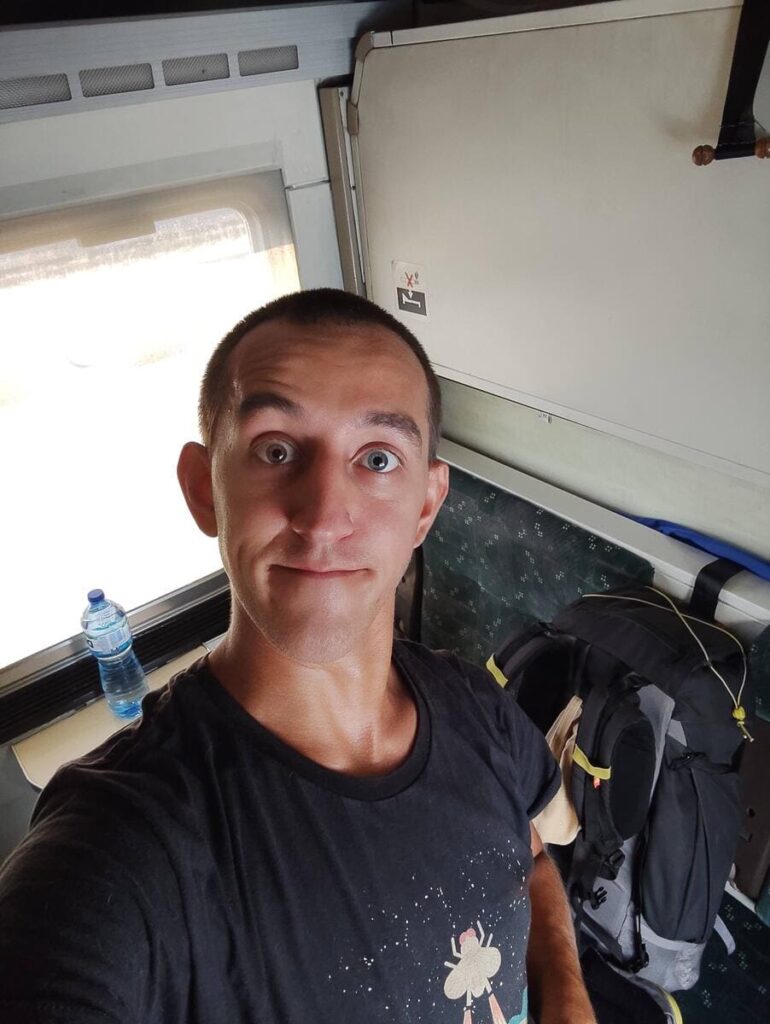
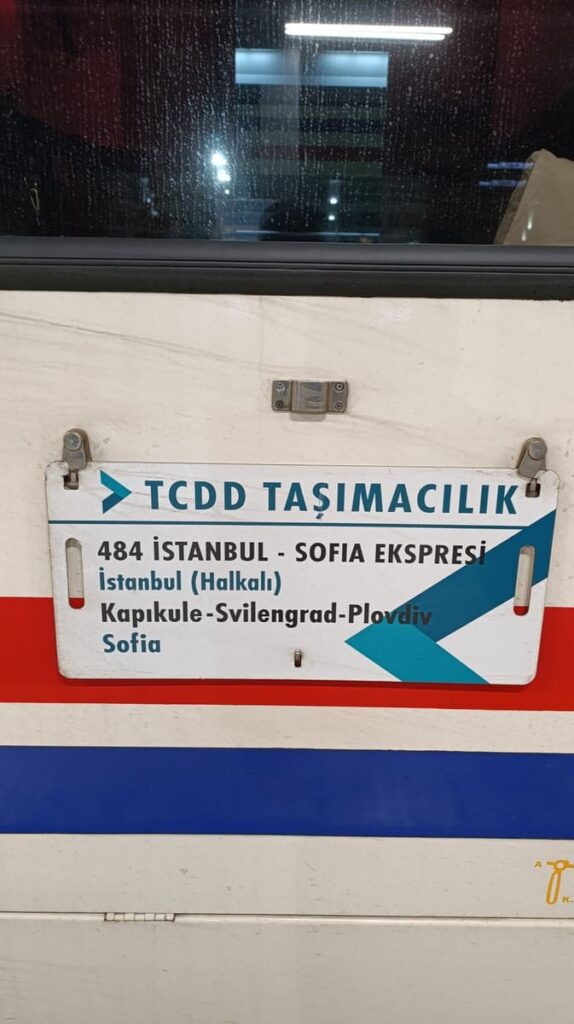
If you want to learn the practical details about it, you’re at the right place. As a Bulgarian, and having taken the train twice, I present to you the ultimate guide to the international overnight train from Sofia to Istanbul!
Quick facts
- Duration: ~14 hours, including the border crossing formalities.
- Schedule: Daily departures from Halkalı at 20:00 (arrival in Sofia at 9:45 AM) and from Sofia at 17:50 in summer/18:50 in winter (arrival in Istanbul at 9:56 AM). These may change, so check the up-to-date schedule!
- Carriages: Couchette and sleeping cars only, no seating.
- Price:
- Couchette (4 beds per car): 36.40 EUR per person.
- Coupé (2 beds per car): 41.40 EUR per person.
- Single (alone in a coupé): 74.60 EUR.
- Reservation mandatory: Up to 2 months in advance.
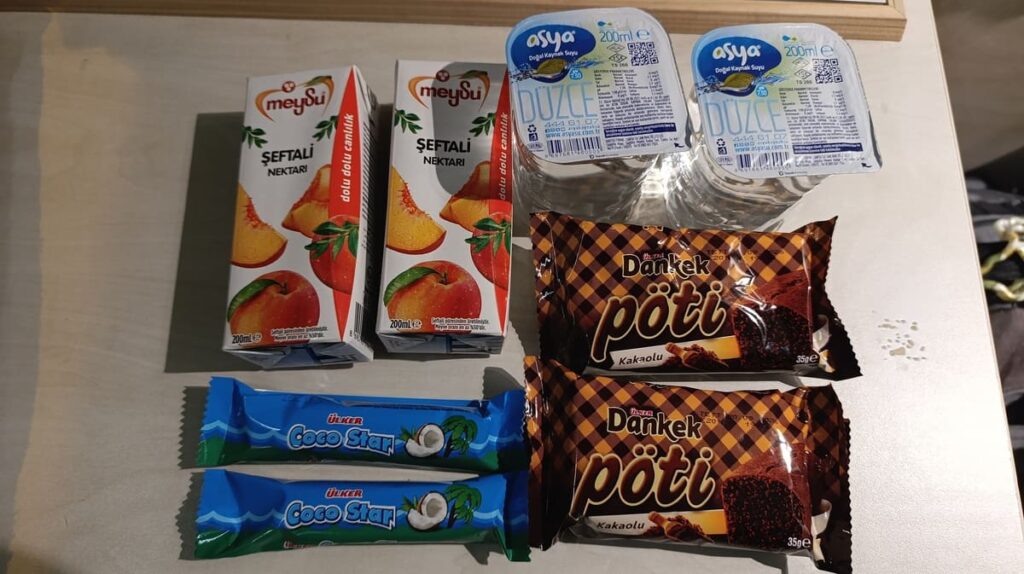
- Comforts: AC is automatic (warm in winter, cool in summer). Two toilets per carriage. A sink in each sleeping car. Clean linen is provided for every passenger. No restaurant, only a small snack and water given by the staff.
Route overview
The Istanbul-Sofia Express departs from Halkalı Station (~20 km north of central Istanbul) and ends at Sofia Central Railway Station.
It makes stops at Çerkezköy, then Edirne, and Svilengrad (for passport control), Kapıkule for a quick inspection, Dimitrovgrad (trains to Bucharest separate here), Plovdiv, and several smaller stations before Sofia.
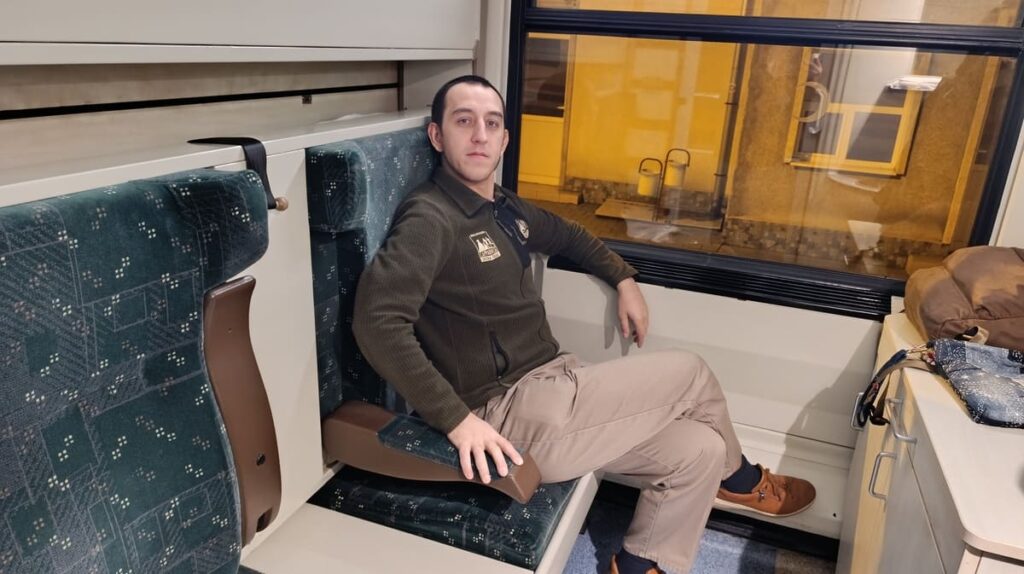
It is possible to buy a ticket only for a portion of the journey, say from/to Plovdiv or Dimitrovgrad. The price will be slightly lower, proportional to the distance traveled. As a matter of fact, the second time I took the train, I boarded at Dimitrovgrad, not Sofia.
Train 492/81032 leaves Halkalı at 20:00 and arrives in Sofia at 9:45 AM the following day. In the opposite direction, Train 493/81031 leaves Sofia at 17:50 (18:50 from October to March) and arrives in Halkalı at 9:56 AM the following day. This means around 14 hours for the ~570 km journey.
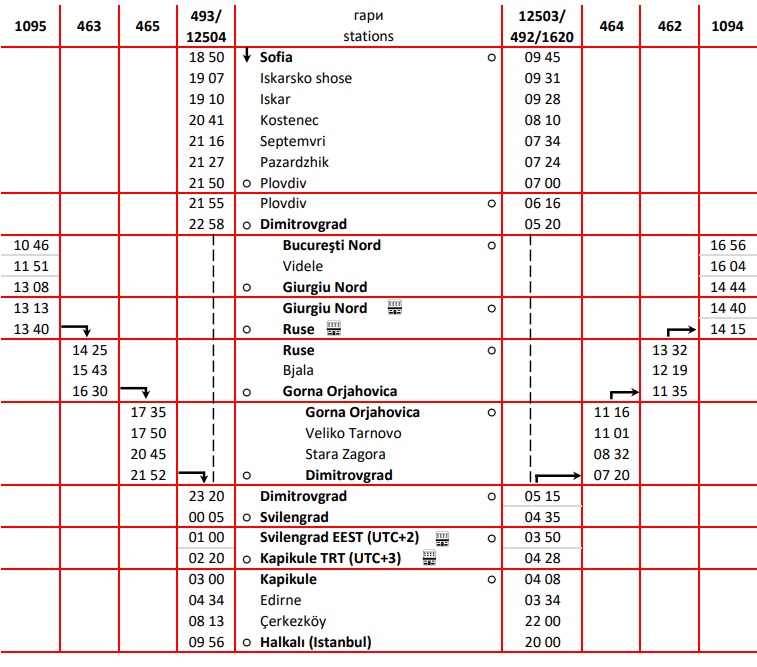
Note that Bulgaria observes daylight saving time from October to March, whereas Türkiye does not, so there is 1 hour difference between the two countries during the winter, hence the different departure times in Sofia but the same arrival time in Istanbul.
How to Buy Tickets
It’s possible to buy tickets both in person and online.
This train is not too popular and is rarely full. It is quite likely that you will be able to buy a ticket at the station on the day of travel, too.
In person
To buy a ticket in person in Bulgaria or in Türkiye, you must visit an international ticket office.
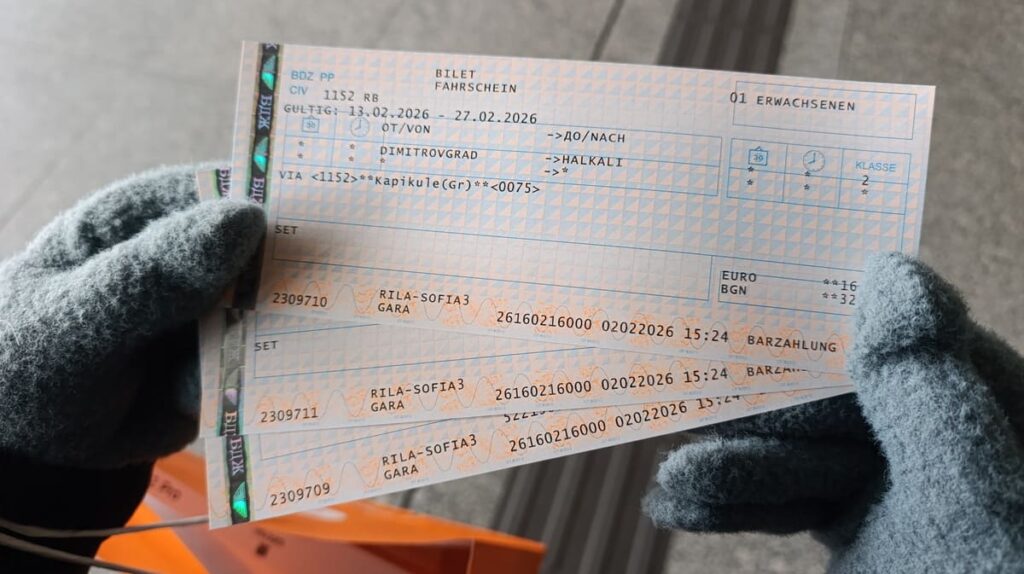
In Bulgaria, the office that sells tickets for the Sofia to Istanbul train is inside the Central Railway Station. It’s Desk #22 on the main floor of the station. You will need to give your name and ID number, even if they are not listed anywhere on the tickets. Payment is in cash (EUR) or by card.
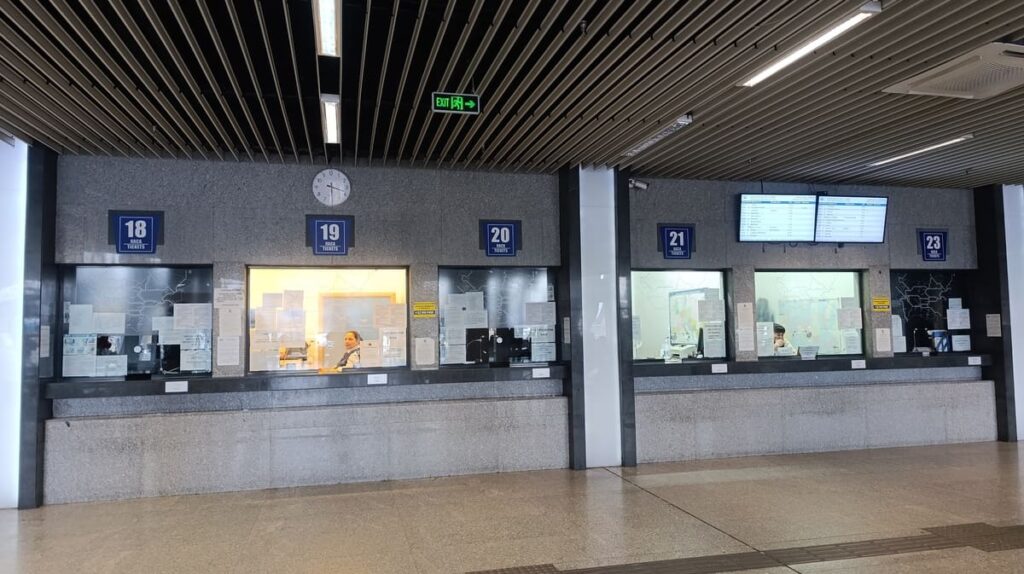
In Türkiye, you can buy a ticket at Sirkeci Station in the heart of the city. I am not familiar with the precise location, so look for the international ticket desk. You can pay by card or in cash (TRY).
Note that trains to Sofia do NOT leave from Sirkeci, but from Halkalı. The two are connected by the Marmaray train, which runs frequently and makes the 20-km journey in about 35 minutes.
Online
The Istanbul-Sofia Express is operated by TCDD Taşımacılık – the Turkish Railways.
Thus, you can buy a ticket online at the official EYBIS reservation platform.
The prices are in Turkish Lira, which has been suffering from inflation for quite a while, but adjusted regularly to maintain the same value as the EUR prices listed above.
You must print out the ticket on A4 paper, with the QR code clear!
Couchette vs Coupé
There are only 2 types of carriages on the Sofia to Istanbul train: couchette and coupé. There is no seating carriage.
Couchette is a compartment for up to 4 people. It has 4 seats, which can easily transform into 4 bunks. Unless you buy all 4 seats, you will share the cabin with others (though why would you, since you can book a private coupé instead).
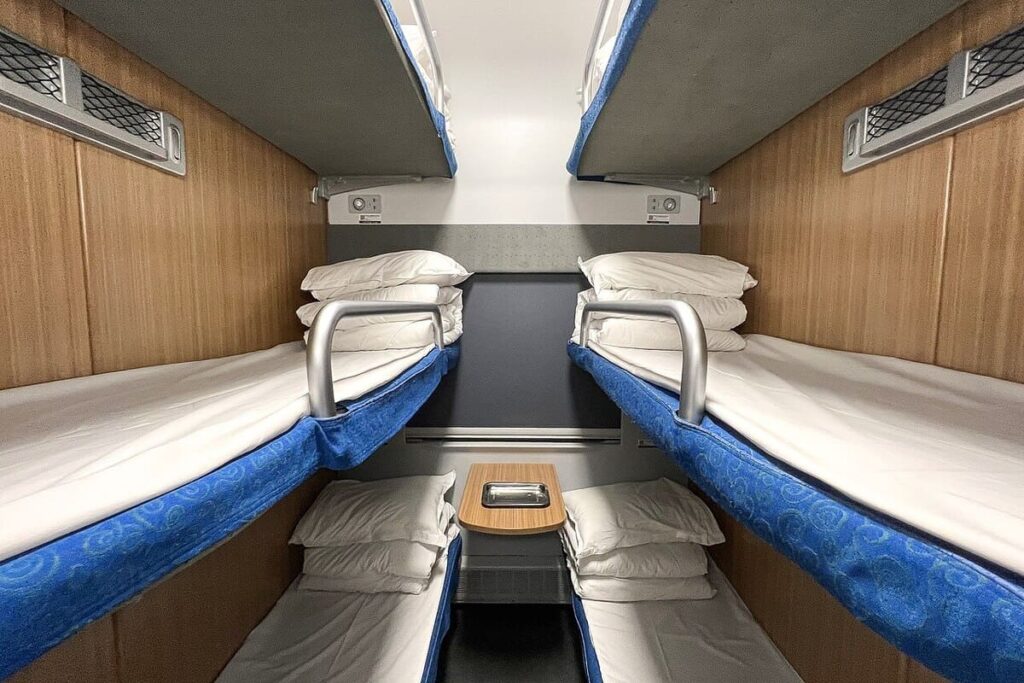
Couchette carriages have no sink inside and no table. The bunk beds are slightly smaller than in the coupé.
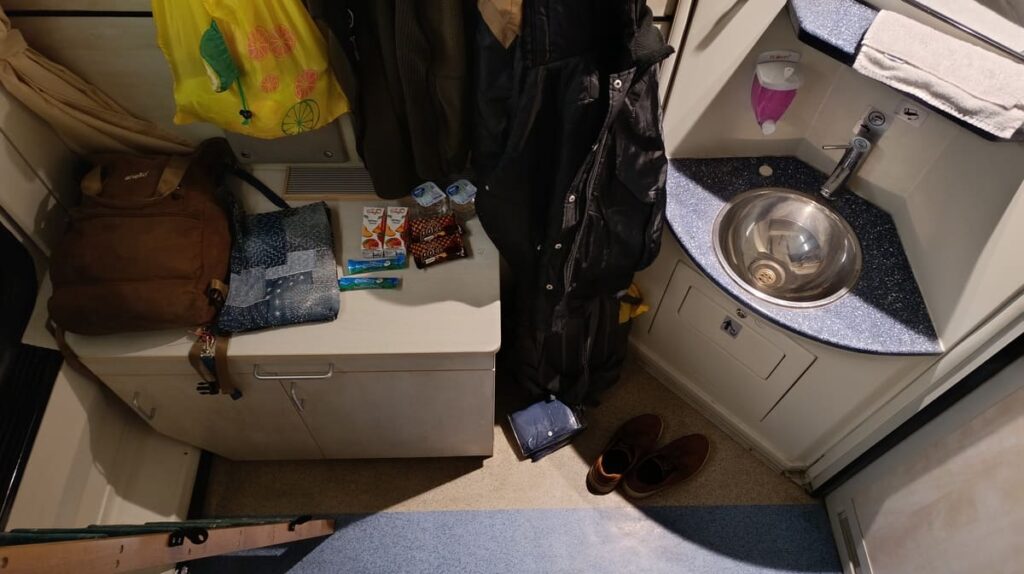
Coupé is a compartment for up to 2 people. It has 2 seats convertible to 2 bunk beds, a table, a cupboard, a fridge, and a sink. It’s perfect for couples who want the extra privacy.
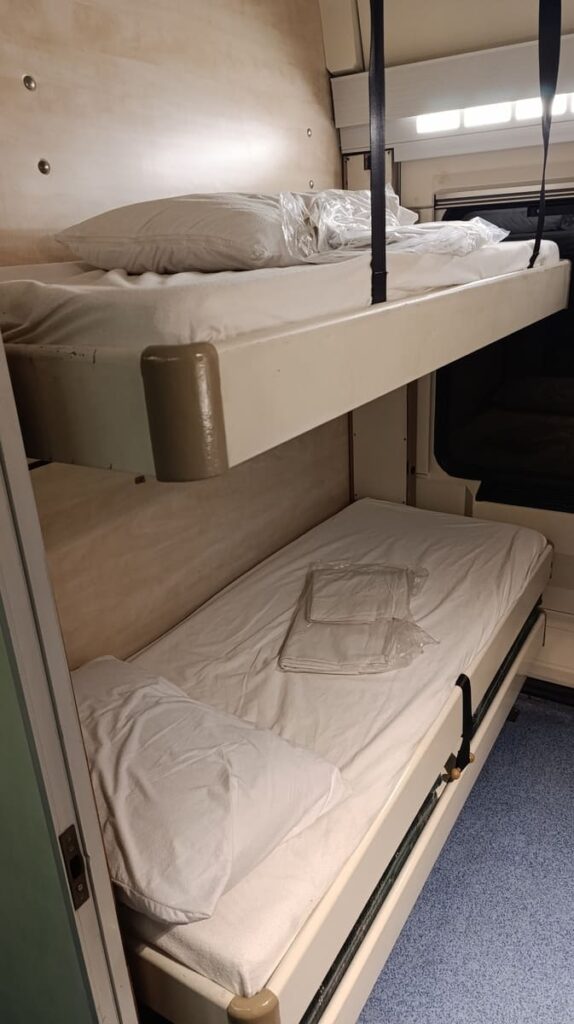
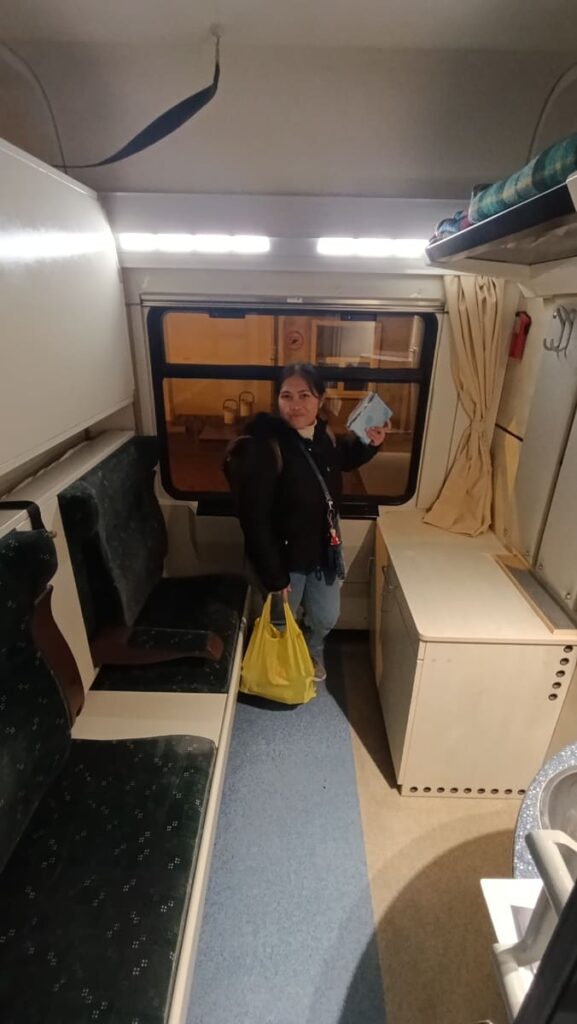
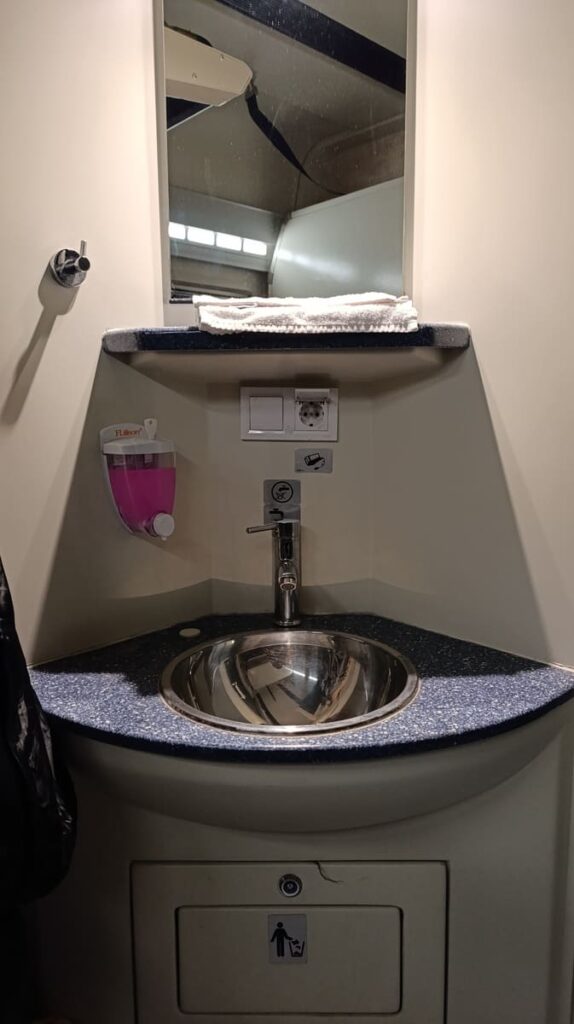
If you want to book a coupé as a solo traveler, you can, and you will pay a little less than the combined price for 2 people (82.80 EUR vs 74.60 EUR). You cannot book 1 bed in a coupé and have someone else randomly put inside it with you.
There are 2 toilets (Turkish-style squat) per carriage, shared by all passengers.
The journey on the Sofia to Istanbul night train
In general, the night train is very comfortable, and I recommend it for traveling between Istanbul and Sofia.
Boarding and setting camp
The trains always depart sometime in the late afternoon, no matter the direction. This gives you some time to enjoy the scenery or socialize with others in the couchette before the border.
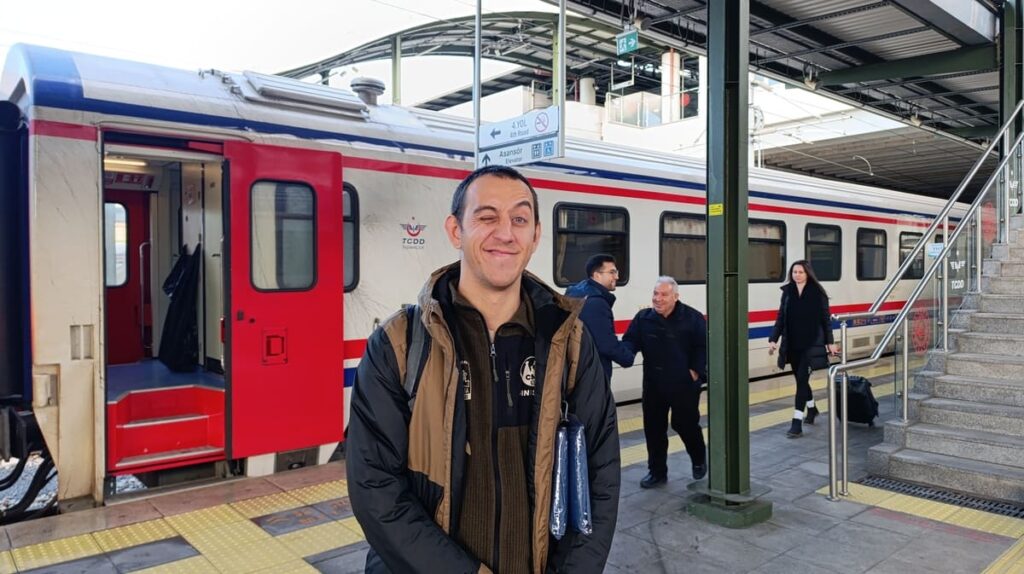
You can also take a nap or a snack, but note that there is no restaurant carriage on this train. Yes, I know, it’s the heart of a long-distance train, and it’s a pity there isn’t one here, but I suspect the low passenger numbers make it uneconomical.
Soon after you enter your cabin, the train attendant will bring you clean, plastic-wrapped linen. You will have to make your bunk, which is a hassle on the second level, but manageable.
Immigration and customs
The worst part of the journey is that you have to get out of the train for both the Bulgarian and Turkish Immigration and Customs.
In Bulgaria, the train stops in Svilengrad for the border formalities. It used to be the case that officers came on board the train, collected passports, stamped them outside, and brought them back in without you needing to leave the train.
However, nowadays (perhaps after Bulgaria entered the Schengen area) all passengers have to disembark on a small platform, have their passports checked and stamped, and go back on the train afterwards. Depending on the number of people and the mood of the immigration officers, this can take between 10 and 45 minutes.
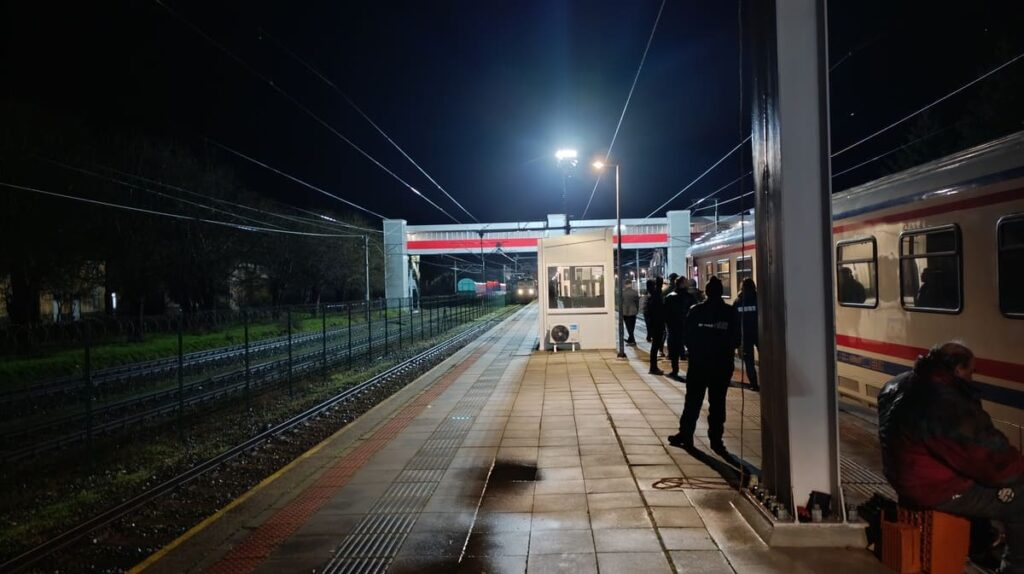
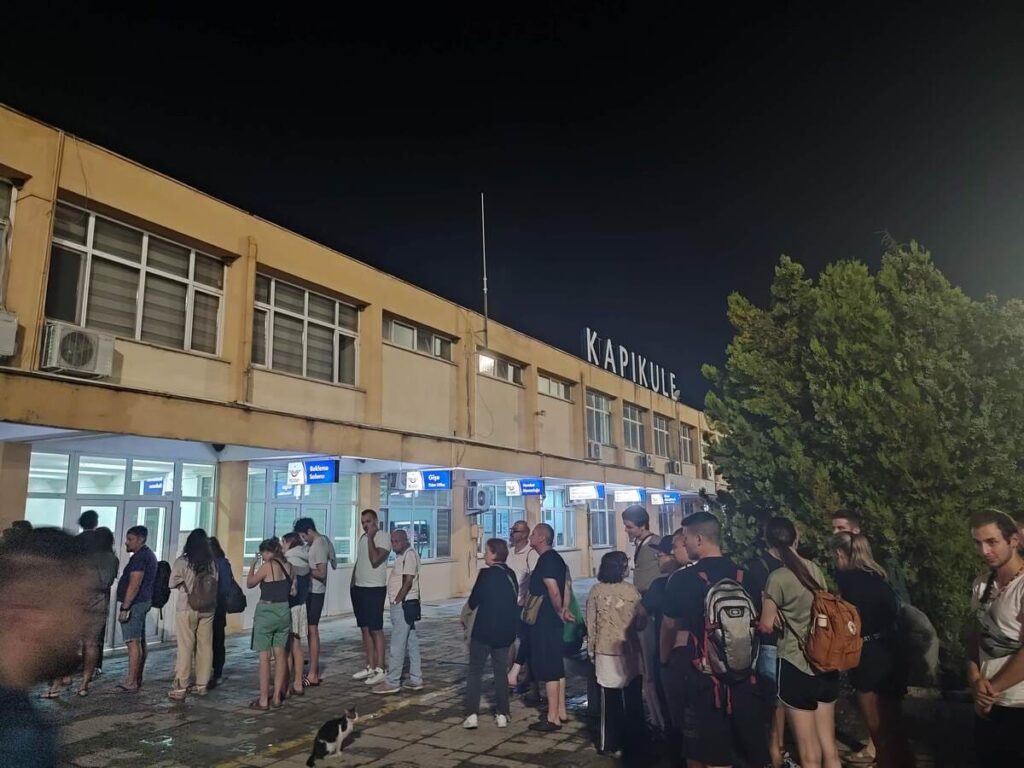
The train stops in Kapıkule (right on the border) for around 30-40 minutes for a maintenance check.
In Türkiye, the Immigration check happens in Edirne (about 20 minutes from Kapıkule) because of ongoing works on the tracks/station in Kapıkule. The platform here is a little better than the makeshift one in Bulgaria and even has a duty-free shop!
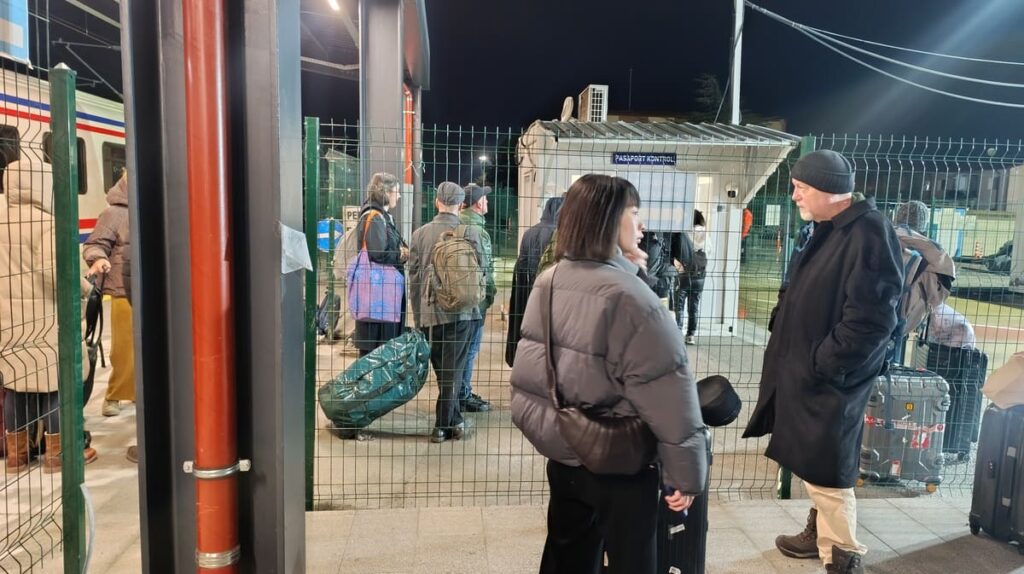
The country you enter will also have customs checks and apply allowance limits on alcohol and tobacco. Checks are haphazard and quite random.
Expect greater scrutiny when entering Bulgaria, as it’s now part of the Schengen area. Immigration, possibly with dogs, will enter the train and thoroughly check for people hiding or trying to smuggle goods.
On the tracks again and arrival
Depending on the direction of travel, the season, and random factors, the train will have successfully crossed the border around 2-4 AM.
This is when you can finally fall into deep, uninterrupted sleep until you reach the final destination – Sofia or Istanbul.
Nothing much happens on the train during that time, so lock the cabin on the inside and enjoy some uninterrupted shuteye.
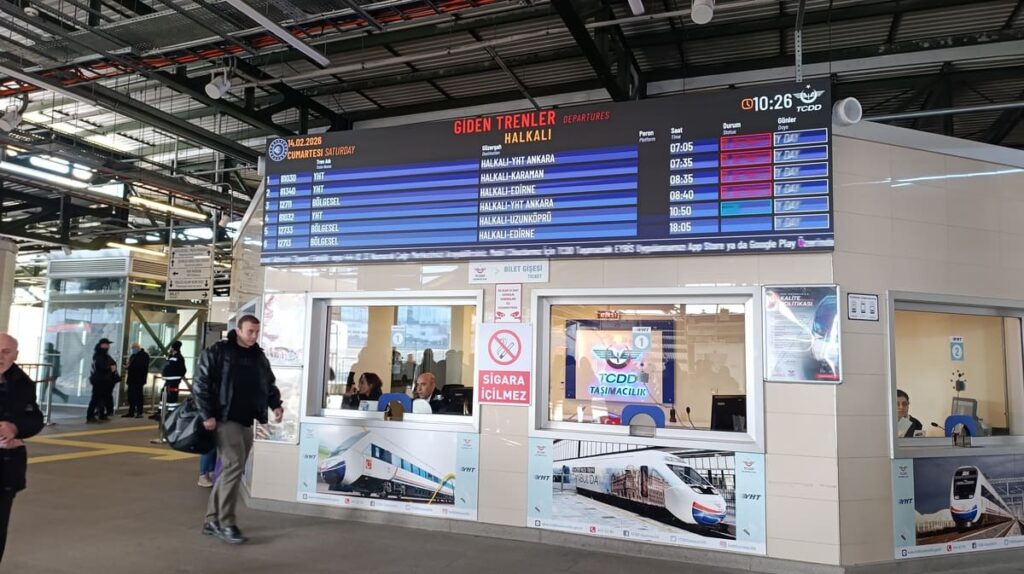
Arrival and onward transport
In both directions, you will arrive just before 10 AM, assuming no delays (which are nearly guaranteed).
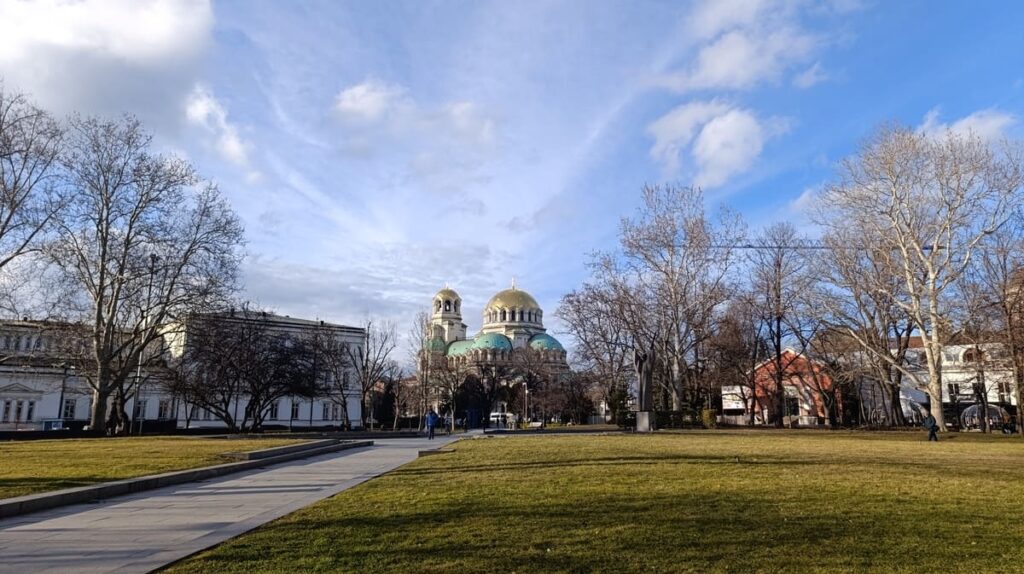
In Sofia, the train’s terminus is Sofia Central Railway Station, which is connected to the city’s subway network. You can reach the city center in less than 10 minutes (get off at Serdika Station) with single tickets costing just 0.8 EUR.
You can pay using your contactless card or buy a ticket at the station. Walking is an option too – just 25 minutes.
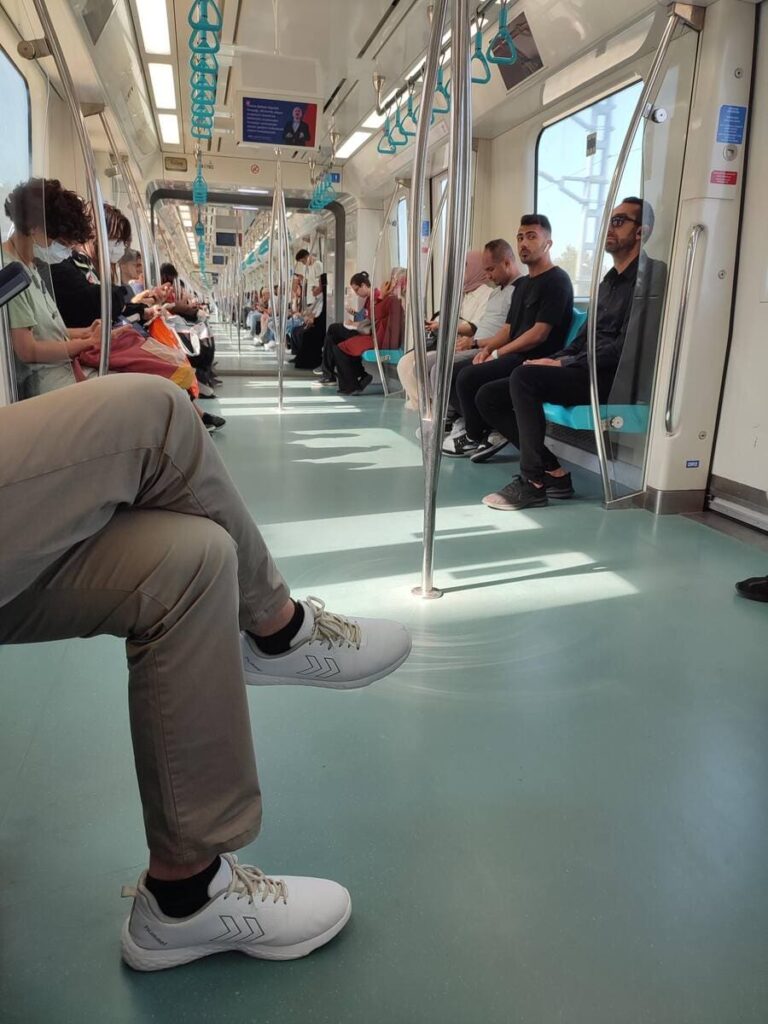
In Istanbul, the train’s terminus is Halkalı Station, which is connected to Istanbul via the Marmaray suburban train. The trains leave every 15 minutes and take 35 minutes to reach the city center (European Side).
You can buy an Istanbulkart, top it up (using a card is possible, so don’t worry if you don’t have Turkish Lira yet), and use it to pay for public transport in Istanbul, or pay directly using your contactless card, but it will be a little more expensive.
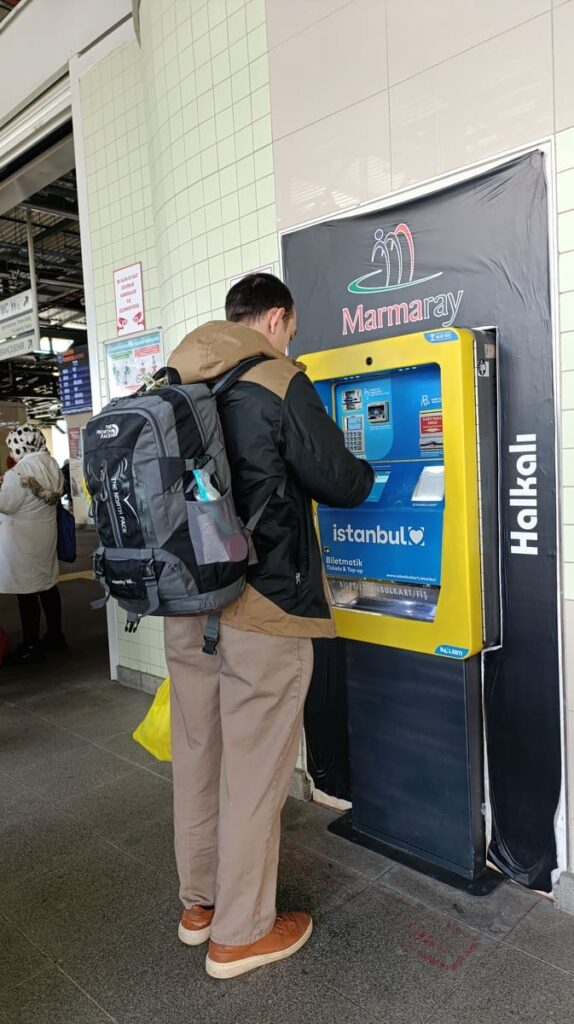
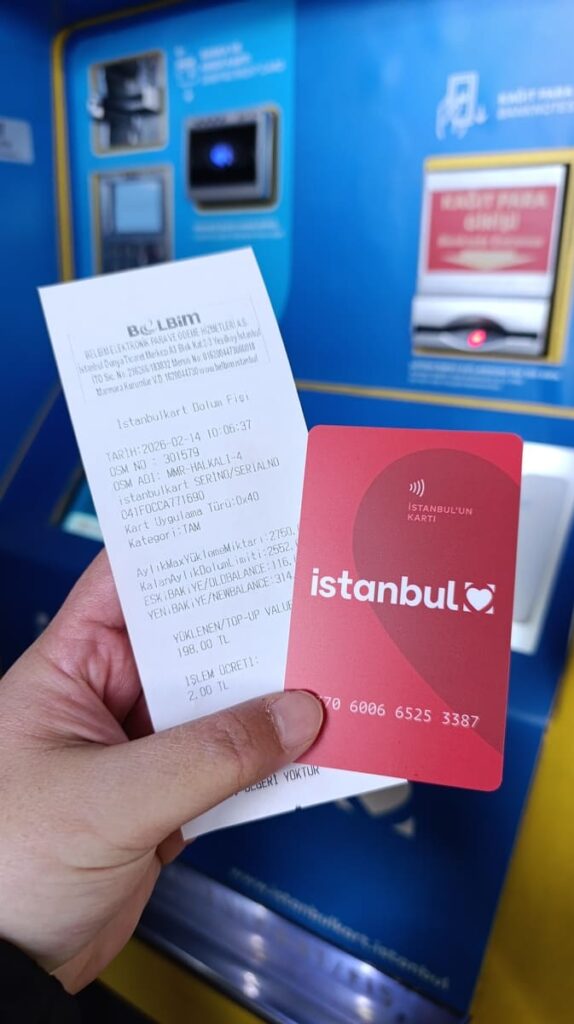
Using Istanbulkart (which costs 165 TRY itself), the fare on the Marmaray is around 60 TRY (~1.15 EUR). Get off at Sirkeci Station in the Eminönü Quarter for the heritage part of the old city.
Alternatives (bus, plane), and how they compare
If 14 hours on a train doesn’t sound appealing to you (Try first, eh? Maybe you’ll like it!), flying is a good alternative.
Flights
- Turkish Airlines has 3 daily departures to/from Istanbul Grand Airport (IST), but it’s pricey – around 130-150 EUR per seat.
- The low-cost carrier Pegasus flies to/from Istanbul Sabiha Gökçen (SAW) once per day for as little as 45 EUR.
Flight time is around 1:15 h, but when you add airport formalities, it’s more like 4 hours of total travel time.
Both airports have convenient links to central Istanbul, whereas Sofia has just 1 airport (Sofia International SOF), connected to the metro network.
Buses
Several companies, both Turkish and Bulgarian, offer daily bus services between Istanbul and Sofia. The ones below are perhaps the best from each country.
- Kamil Koç offers the route twice daily at a price of around 35 EUR and an expected travel time of 8:30 h.
- Arda Tur offers the route 2-3 times per day at a price of around 31 EUR and an expected travel time of 9-10 hours.
Nearly all companies use Esenler Bus Station in Istanbul and Sofia Central Bus Station.
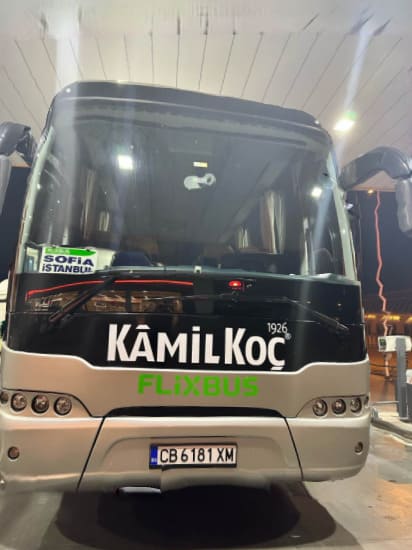
Here are my 2 cents – despite the slightly lower price and ostensibly shorter journey (the BG-TR border always has lines), the buses are not exactly comfortable. You will be stuck in a seat for 9 hours straight and feel like a boiled vegetable on arrival. For me, it’s not worth it, and I’d always pick the train over the bus.
Frequently asked questions
Can I book the Sofia to Istanbul train online?
Yes, you can buy your ticket online via the official EYBIS reservation platform of Turkish Railways.
How long is the Sofia to Istanbul train?
Around 14 hours, including the border formalities.
Is the sleeper train safe?
Yes, quite safe.
All cabins can be locked from the inside, and the train attendants are on call throughout the entire journey.
Does the train run every day?
Yes, the train runs once per day in each direction.
Where does the train arrive in Istanbul?
The train arrives at Halkalı Station, about 20 km from downtown Istanbul. Use the Marmaray suburban train to travel to the city center.
Do I need a visa at the border?
Maybe; this depends on your nationality.
Most nationalities are visa-exempt to enter Türkiye. On the other hand, Bulgaria is part of the Schengen area, so unless you are a resident of an EU country or come from one of the visa-exempt countries, you will need a Schengen visa to enter.
Is there food on board?
The train does not have a restaurant carriage. All passengers receive a bottle of water, a carton of juice, and 2 small sweet snacks, but that’s it. Bring yours!