
Money in Morocco: A Tourist Guide to ATMs, Cards and Exchange
This post may contain affiliate links. If you make a purchase using one of these links, I may receive a small reward at no extra cost to you. See my Disclosure Policy for more information.
With so many markets and souks throughout, being prepared for the money situation in Morocco is paramount to a good stay.
This money guide will help you wrap your head around using your card in Morocco, exchanging money, which ATMs don’t charge access fees, and how much cash you will realistically need during your travels in the Land of the Setting Sun.
| Best foreign currency to bring | EUR, GBP, USD |
| Where to exchange? | Banks, Exchange bureaus |
| ATMs without a fee | None after Jan 2026. |
| Can you withdraw USD directly? | No |
| Can you use Revolut and Wise? | Yes! |
| Cash or card? | Cash |
This is the full guide to money in Morocco for tourists!
Currency in Morocco
The currency in Morocco is the Moroccan Dirham with code MAD and the symbol DH.
It is a closed currency, so you are unlikely to find it in exchanges outside of Morocco. Don’t bother trying to buy MAD in your country. This also means you are not allowed to take more than 2000 dirhams out of Morocco.
On the other hand, MAD is pegged to a currency basket that consists of the Euro (60%) and the US Dollar (40%). This means its value fluctuates only as much as these two currencies, and that the rate between MAD and EUR/USD is quite stable.
Common coins are 1, 2, 5, and 10 MAD. There is also a rather rare 1/2 MAD coin and even rarer 0.1 and 0.2 (called santimat).
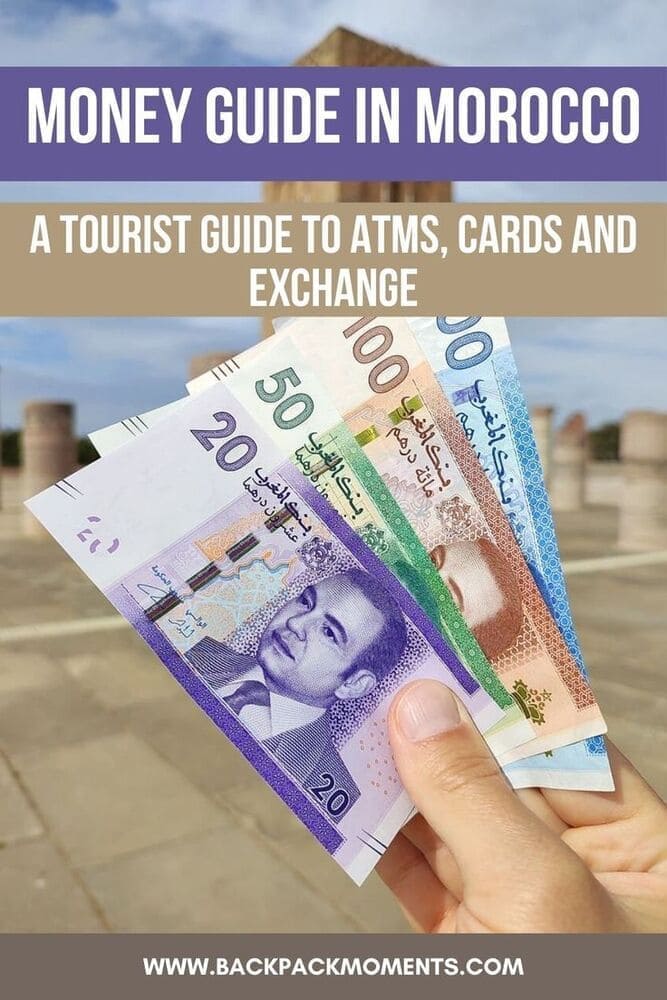
Banknotes come in denominations of 20, 50, 100, and 200 MAD. The largest banknote (200 MAD) is worth around 20 EUR, although I didn’t see it even once during my stay in Morocco.
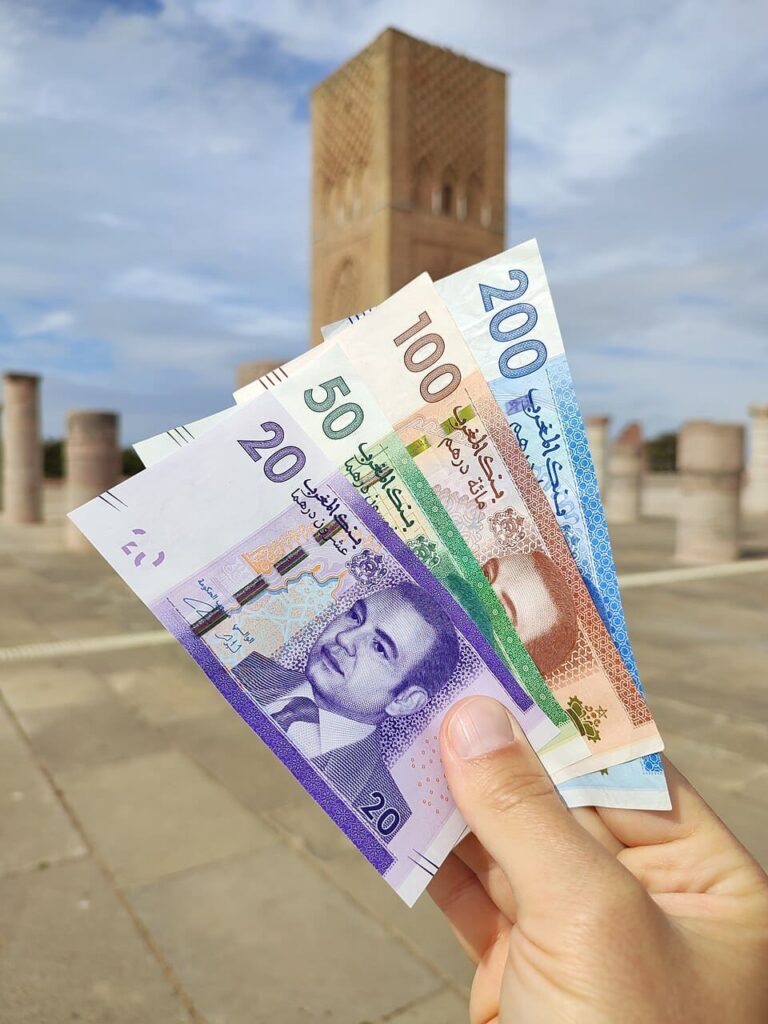
The dirham is a stable currency because it’s pegged to a mix of EUR and USD. A useful approximate conversion is 10 MAD = 1 EUR. This means you just need to remove 1 zero from any amount in dirhams to get the amount in euros.
Can you use your card in Morocco?
Mostly no. Paying by card in Morocco is very uncommon.
Only some restaurants, larger fast food outlets, and more modern shopping centers in larger cities will accept payment by card.
I didn’t pay at all using my card while in Morocco. At Marrakech Airport, I had the option to pay for a taxi (from the official taxi stand) by card, but they asked for a 5% mark-up, so I paid cash.
I paid for accommodation and tours online.
Nearly everywhere in Morocco, cash is king. Souks, markets, the medina, small eateries, etc., will only take cash.
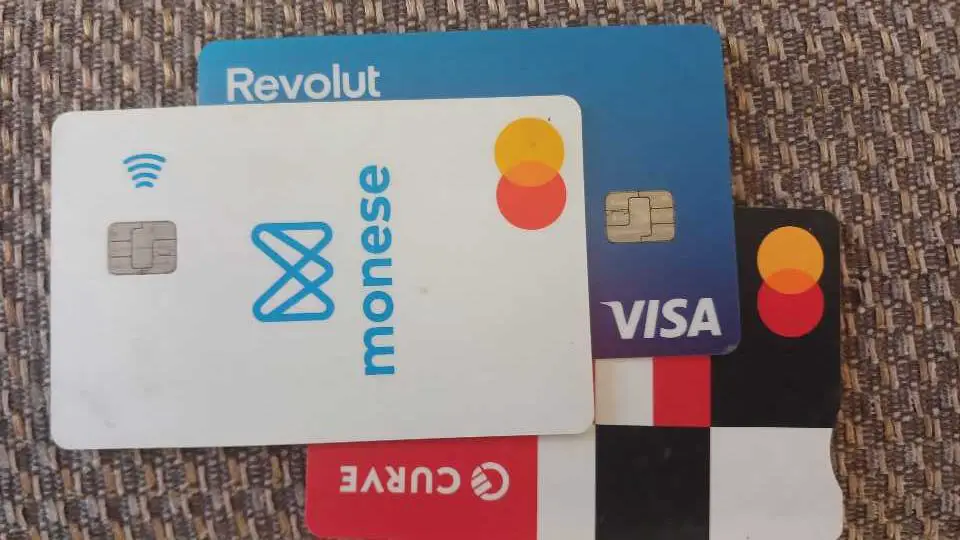
However, you can use your foreign cards to withdraw MAD from local ATMs. In this regard, you can definitely use your card while in Morocco.
ATMs in Morocco
ATMs are easy to come by in most cities. Finding one in the heart of the medina (old part of town) can be harder – go to the periphery, and you are bound to see a bank or a free-standing ATM.
You can only withdraw in the local currency, MAD, so never accept dynamic currency conversion (DCC), which gives a poor rate.
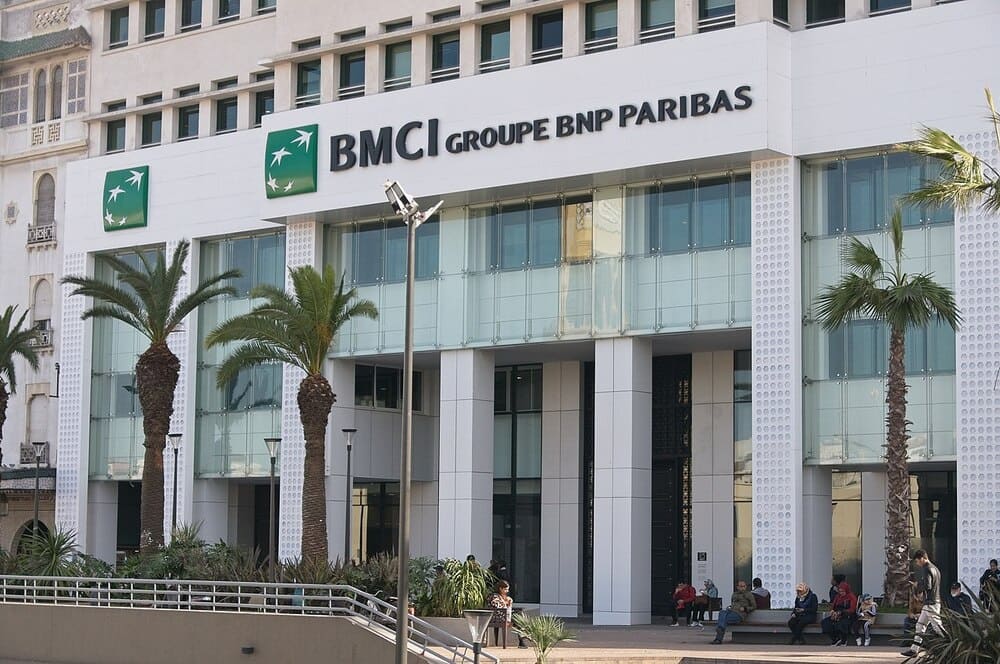
The standard ATM withdrawal limit is 2000 MAD (~187 EUR) per transaction. BMCI usually lets you withdraw 4000 MAD and up to 8000 MAD at a time in some locations – the highest possible in a single transaction (35 MAD fee).
Withdrawal Fees
Here comes the tricky part – avoiding those pesky ATM withdrawal fees. I’m not talking about the fees you get charged by your bank – those you can avoid by using a FinTech solution like Revolut or Wise.
The fee for withdrawals using a foreign card in Morocco is usually 35 MAD.
Most ATMs will tell you if there’s an access fee, right after you select the amount you want to withdraw. It’s up to you to accept it or reject it and take your card back.
Unfortunately, there are no longer any banks in Morocco that don’t charge for withdrawals.
Best ATM for foreigners in Morocco
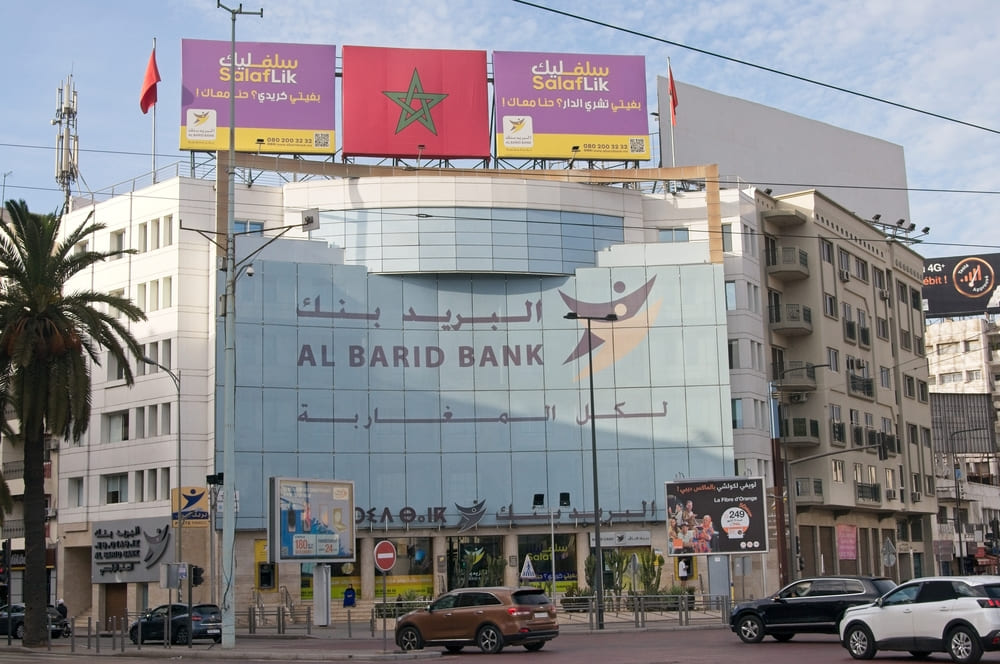
Since January 2026, there are no longer any banks in Morocco that don’t charge foreigners for withdrawals. Al Barid (Poste Maroc) ATMs used to be fee-free, but it also introduced a 35 MAD fee per withdrawal.
This made BMCI the best ATM for foreigners in Morocco due to its higher withdrawal limit per transaction.
Effectively, using BMCI, you will pay 35 MAD for every 4000 MAD, instead of every 2000 MAD at most other ATMs.
Mind your fee-free withdrawal limit by your bank or fintech to avoid additional fees. Revolut and Wise standard plans offer around 200-230 EUR before they start charging you.
All other banks in Morocco charge withdrawal fees at their ATMs too.
Exchanging Money in Morocco.
If you have a card with low fees like Revolut or Wise and use Al Barid ATMs to withdraw money, you may not need to exchange any money in Morocco at all.
Exchanging USD, EUR, or another major currency is also a good way to get dirhams, especially if you reach the fee-free limit or get a good exchange rate.
What currency to bring
Given the Moroccan Dirham’s peg to the EUR and USD, these are the two best foreign currencies to carry in Morocco.
You will have no issues exchanging other European currencies too, including the British Pound and the Swiss Franc.
Remember that the rarer your currency is, the bigger the exchange rate margin is.
If in doubt whether your currency will be accepted, just bring EUR or USD.
Where to Exchange Money
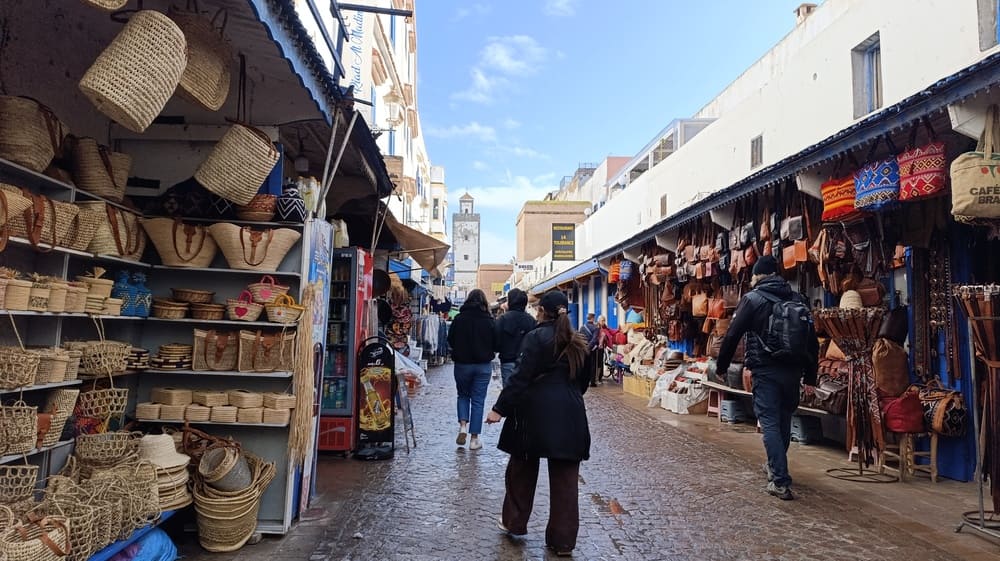
Morocco is a popular travel destination, especially for Europeans, and exchanging money is a common way to get hold of the national currency.
As a general rule, never exchange your money at the airport. The rate is much worse than in the city.
If you need cash and withdrawing from the ATM is not an option, change 10-20 EUR/USD – just enough to get you to the city and first purchases. Once in the city center, you will have a lot more options and much better rates.
Exchange offices (bureau de change) in the touristy areas of Morocco (medinas of Marrakech, Fes, Rabat, Agadir, etc.) are the best places to exchange foreign currency. The standard margin is around 1.5-2%, so if you see anything larger, walk around before you commit. A passport is generally not required.
Banks also offer money exchange services, but tend to have queues and stricter procedures, which take more time. Rates tend to be similar to change bureaus.
Lastly, stay clear of any dodgy guys on the street who offer to change money for you. Best case scenario is you get a poor rate; the worst case is you get scammed.
How much cash to bring to Morocco?
This depends on your way of traveling and your budget, doesn’t it?
Since fee-free limits are low and ATMs further charge you for every withdrawal, having some cash to exchange could end up being cheaper than withdrawing. Some emergency cash stashed away is also important, wherever you travel.
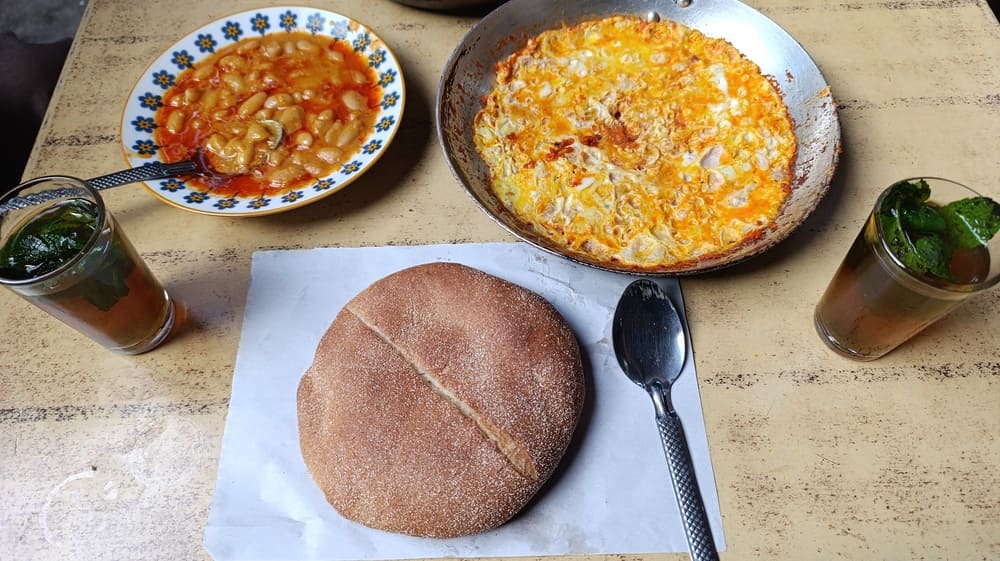
You can easily pay for accommodation, tours, and trains online, so all you need in cash is money for food, souvenirs, and taxis.
To give you a perspective, as a group of 4, we spent around 370 EUR for 7 days in Morocco, not including lodging, tours, and transport.
Example prices
Here are some example prices to get an idea of how much money you need in Morocco.
- Local-style breakfast + tea: 10-15 MAD (<1.5 EUR)
- Fresh orange juice: 7-15 MAD
- Whole rotisserie chicken: ~90 MAD
- Tagine meal in a restaurant: 60-100 MAD
- Public bus in Marrakech: 4 MAD
- Petit taxi ride in a city: ~10 MAD per 3 km
- Popular museums and tourist sites (e.g., Bahia Palace): 60-100 MAD
- Magnets: 5-20 MAD
- Trains: ~40 MAD per 1 hour of travel.
- Hostel dorm bed: 90-220 MAD (~8-20 EUR)
- Riads (traditional hotel-style accommodation): 500-1500 MAD (~45-135 EUR)
- Day tours: 10-40 EUR.
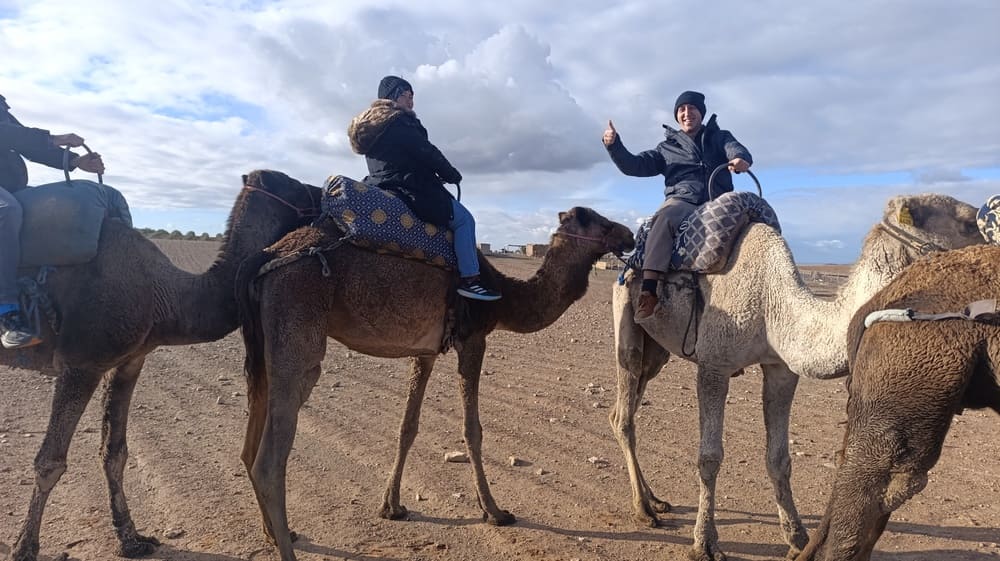
- Multi-day desert tours: ~40-50 EUR per day.
- Travel Insurance from SafetyWing (covers you in Morocco): ~28 USD for a 2-week trip.
Bargaining
Bargaining is paramount in Morocco. Price tags are rare, and even when they do exist, they are suggestive, not fixed.
You must haggle for everything!
Taxis, market goods, fruit, any services, anything. Make it a habit to try and get a lower price than the initially quoted.
Start by countering at 30-50% of the asking price and meet somewhere in the middle. As a rule of thumb, assume you are overcharged by the fair price tripled, but also that, as a foreigner, you will never get the fair price.
Remember that haggling is as much about the money as it is about the experience.
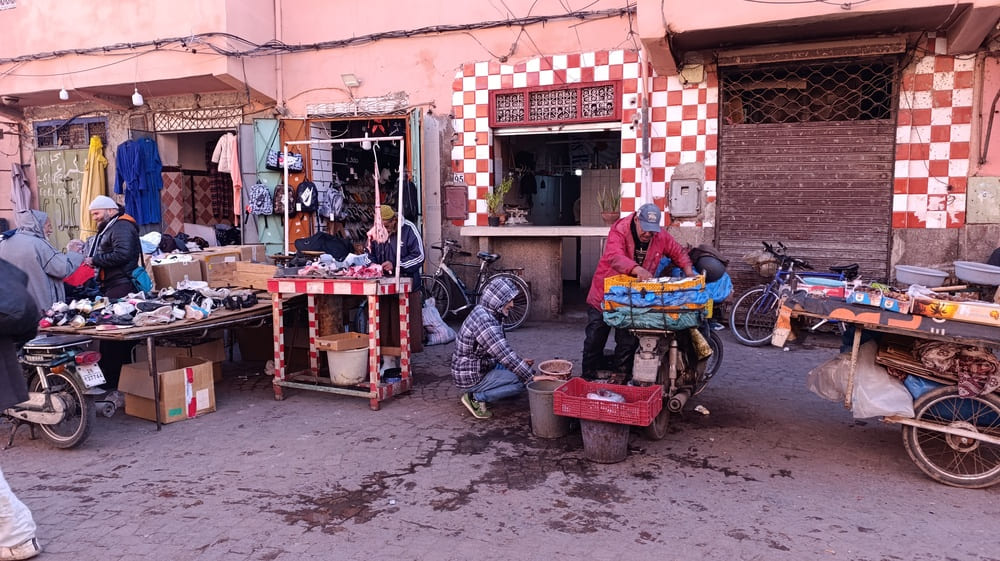
Having fun while doing it is important both for you and for the vendor. You’re more likely to get a better discount if you are fun and lighthearted. It’s part of the fun – bartering can be a travel highlight!
Tipping
Tipping is not strictly mandatory in Morocco, but it’s customary for good service.
If you encounter genuinely friendly staff, exceptional service, and are overall happy with the way you were treated/pampered, do tip. It will bring smiles and good fortune your way!
Frequently Asked Questions
Here are some of the travelers’ most common questions about the money in Morocco.
What is the ATM withdrawal limit in Morocco?
Most BMCI ATMs allow 4000 MAD per transaction. Some may allow up to 8000 MAD. However, the standard limit on most ATMs is 2000 MAD per transaction.
Can you pay using euros in Morocco?
Mostly no, but in touristy areas, euros will likely be accepted at a rate of 1 EUR = 10 MAD (thus slightly worse than the real rate).
Can you pay using US dollars in Morocco?
No, you cannot pay in USD, but you can easily exchange it to MAD.
Can you use Revolut in Morocco?
Yes, Revolut cards work in Morocco. Both VISA and Mastercard work. You can withdraw from ATMs and pay at POS terminals with your Revolut card.
Be mindful of your plan’s limits – check in the app if unsure.
Can you use Wise in Morocco?
Yes, you can! Wise normally offers better exchange rates than Revolut, but charges a small fee for it. All in all, it will cost you less, all other things being equal.
Best ATM for travelers?
All ATMs in Morocco charge a withdrawal fee of 35 MAD.
BMCI allows a higher withdrawal limit, which makes it the best Moroccan bank for travelers.
Actually (9.January 2026 ) AlBarid shows also 35DH.
That is correct – the fee was introduced in January 2026. The guide has been updated accordingly.