
The Perfect 10-day Morocco Itinerary (Cities, Desert, Coast)
This post may contain affiliate links. If you make a purchase using one of these links, I may receive a small reward at no extra cost to you. See my Disclosure Policy for more information.
When travelers visit Morocco, their stay is normally between 7 and 14 days. The average is just about 10 days – not too long to get tiring and not too short to feel insufficient.
Morocco is a rather large country, and you won’t be able to visit everything in 10 days. Its essence, though, can be distilled into three general types of places:
- Its cities and their old medinas, preserved from the Middle Ages and unlike other places in the world.
- Its deserts, especially the sandy behemoth, the Sahara.
- Its Atlantic Ocean coastline, where most of the population lives, has seen the development of several major cities.
This is why this 10-day Morocco itinerary you are about to read is perfect – it gives you a bit of each, still managing to package it all within just a week and a half.
Throughout it, I remain objective, basing my reviews on my experiences. Not everything in Morocco is marvelous, and I will tell you that straight, even if it’s included in the itinerary. However, this is the best way to appreciate the truly unique and amazing places in the country, of which there are just as many, if not more.
Is this Morocco itinerary for you?
While I’d like to say this itinerary is for everyone, there’s no way that’s true.
It gives an example of a general trip to Morocco, which ticks the main boxes that define the country – its unique cities, the Sahara Desert in the east, and the long Atlantic coastline in the east.
Yes, this 10-day itinerary is perfect if this is your first time going to Morocco.
If you want to pack as many activities and places as possible within a relatively short amount of time, then again, yes, this itinerary is suitable.
But if you’re into delving deeper into places, slower travel (or slowmadism), spending more time on the beach, and/or surfing, then I will likely disappoint you, so you’re better off finding another guide.
10-day itinerary at a glance
This itinerary starts in Marrakech and ends in Rabat, because both have very busy international airports with loads of connections to European cities. It is perfectly reversible, too.
It includes:
- 3 days in Marrakech with day trips to Essaouira and the Agafay Desert.
- 3 days crossing the Sahara to get to Fes.
- 3 days in Fes with day trips to Chefchaouen and Meknes.
- 1 day in Rabat.
This way, the itinerary covers all of Morocco’s Imperial Cities, two deserts (one sandy and one rocky), two coastal cities, and a ton of culture and Islamic architecture to feast your mind and eyes on.
Day 1-3: Marrakech + day trips to Essaouira and Agafay
We start in southern Morocco, though not too far south, in a place known far and wide, almost as synonymous with the whole country – Marrakech.
It’s a logical start, given the location and the well-connected airport. It’s also a good introduction to Morocco in general, which also makes it ultra-popular and busy year-round.
Best of all, there are more than a few worthwhile places within a 3-hour radius, so even if you only stay in Marrakech, you can do day trips to different attractions every day.
Marrakech – A sensory overload with a bit of everything
I have mixed feelings about Marrakech. On one side, it’s a marvelous city with a grand history as the Imperial Moroccan capital for centuries, palpable in the architecture, layout, and detail. On the other hand, it’s overwhelming, very touristy, and to some extent a victim of its popularity.
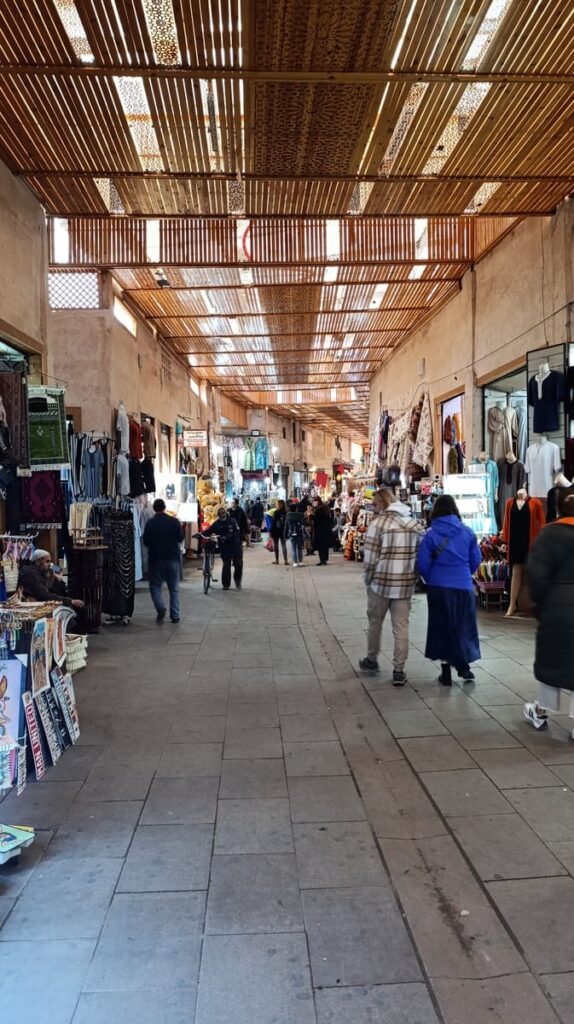
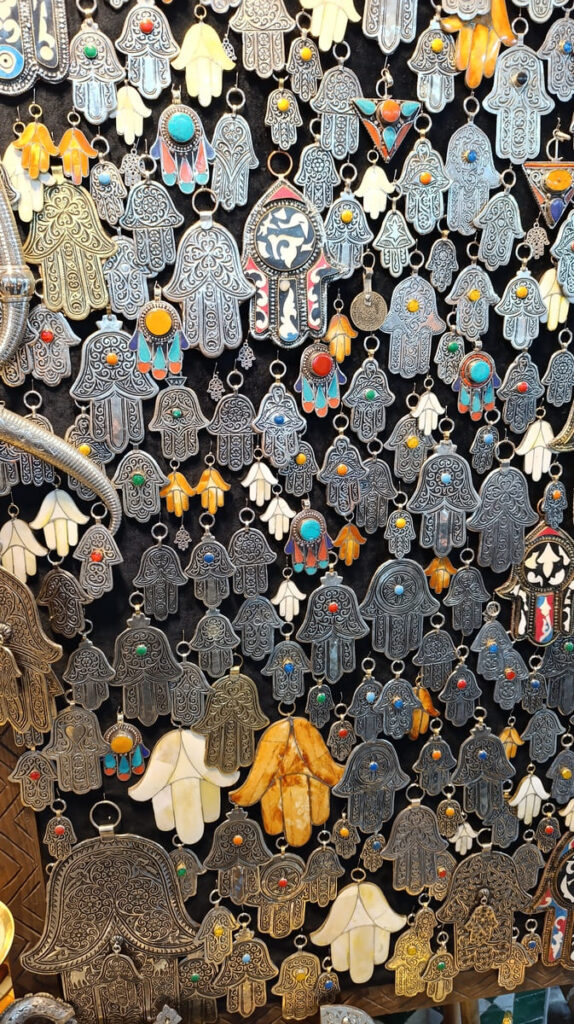
It’s both chaotic and imposing. It’s a show-off city, though some places are supposed to be awe-inspiring but have instead become overpriced, crowded, and full of ethically dubious practices, and swarming with scammers. I am looking at you, Jemaa El-Fnaa.
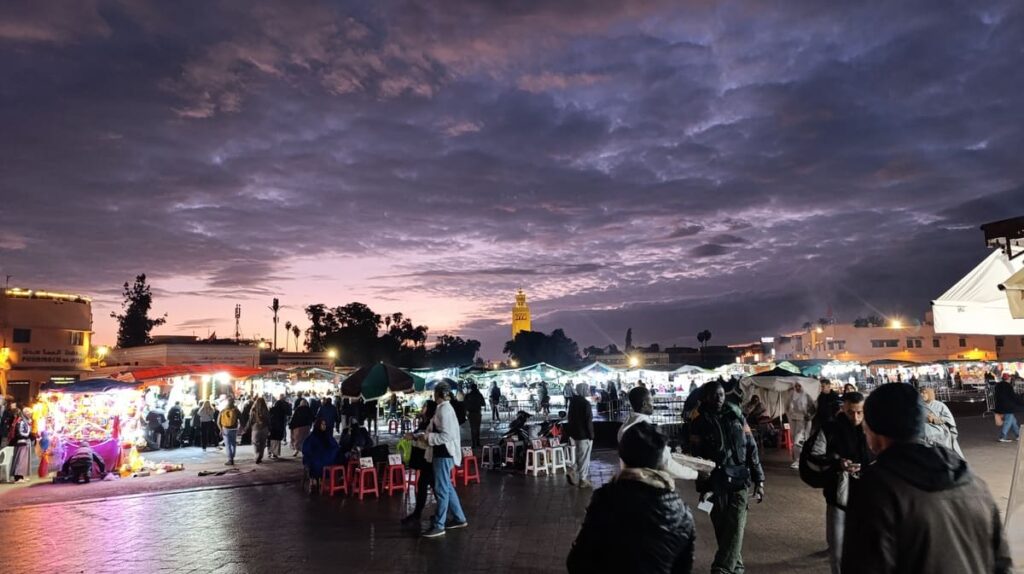
It’s hard to justify skipping Marrakech, though. It’s a good introduction and sets the mark for what you can expect in Morocco.
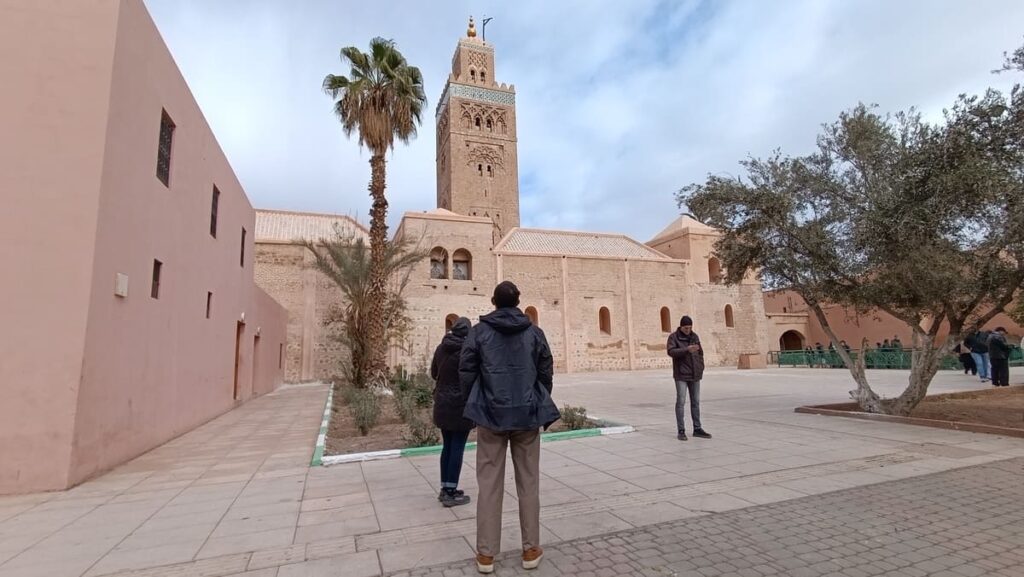
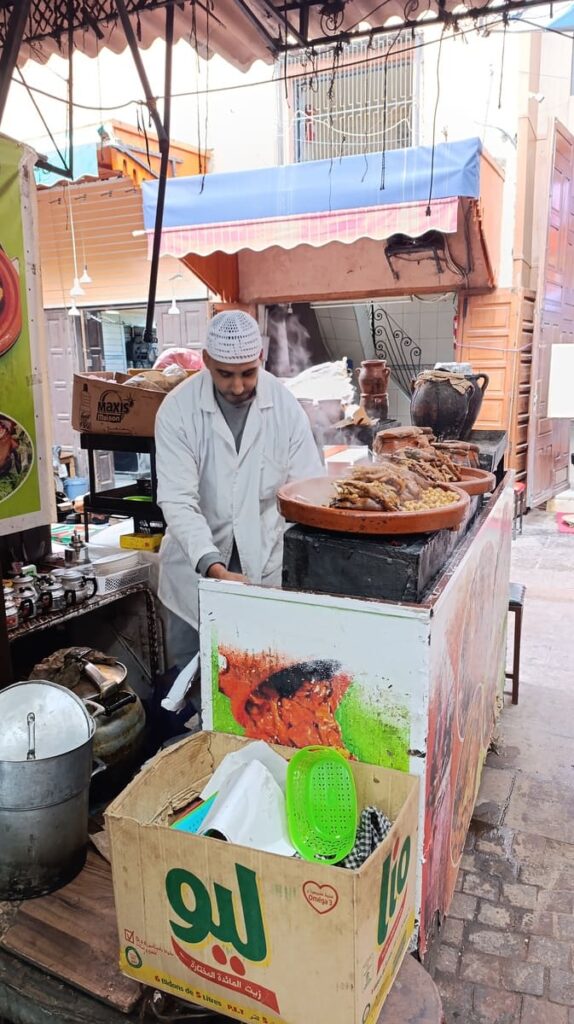
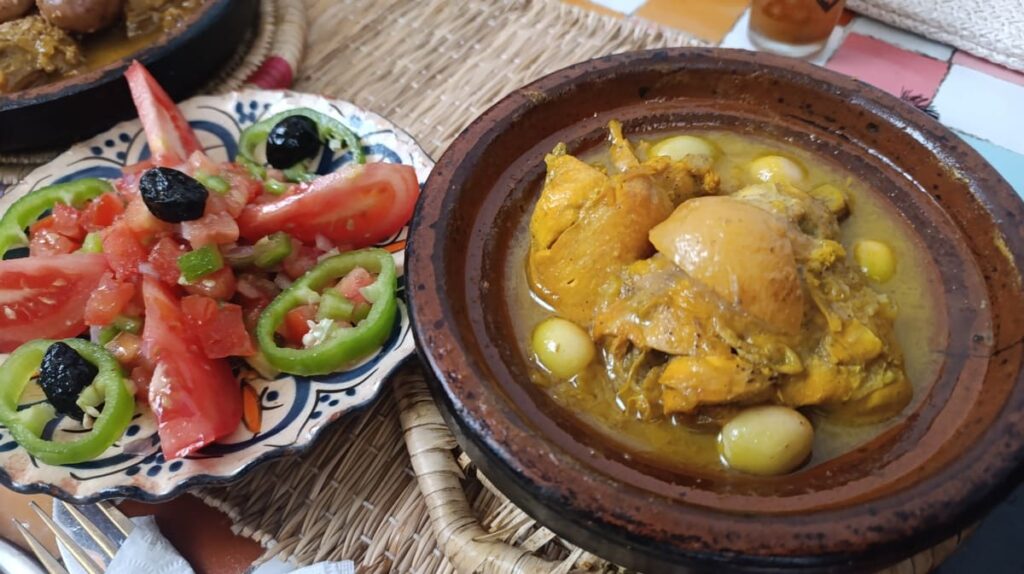
That said, you don’t need more than 1-2 days to appreciate the spirit of Marrakech. You can browse the souks in the medina, check out the Koutoubia Mosque, visit 1-2 museums (I recommend the Synagogue and the Jewish cemetery, which are also not as expensive as some other attractions with disproportioned price tags), have tagine for lunch, couscous for dinner, and lentils for breakfast, and that’s a day well spent.
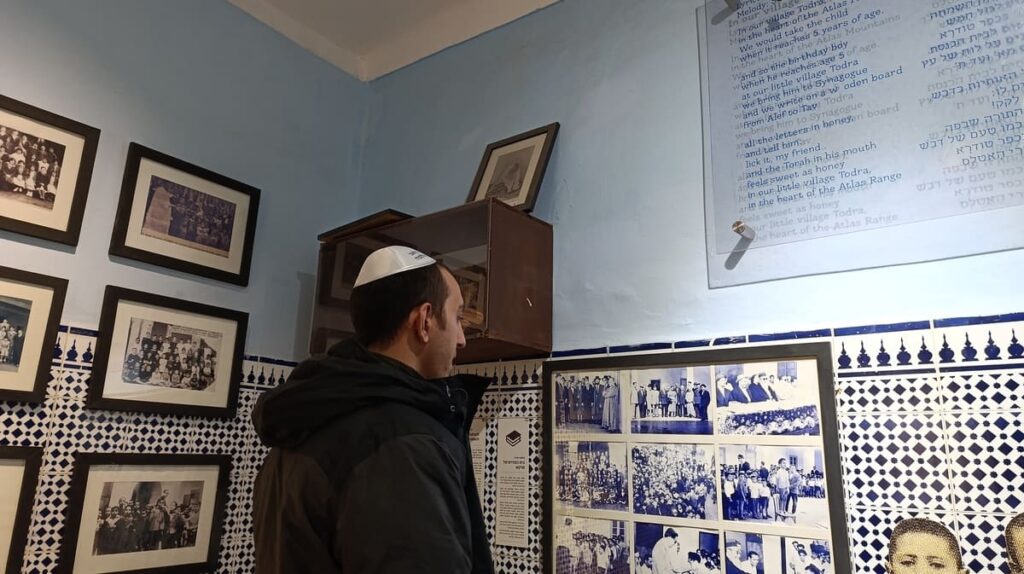
And since you will be doing day trips the next two days, it will give you extra hours in Marrakech to visit anything you wished you had but couldn’t in that first day.
Essaouria – A day trip to the Atlantic Ocean and a Game of Thrones Pilgrimage
Essaouria is a coastal city about 3-4 hours away from Marrakech. It got famous when it was used as the set of several scenes in Game of Thrones.
The scenes feature the famous ramparts, Sqala, that protect the city from the unwavering might of the ocean waves.
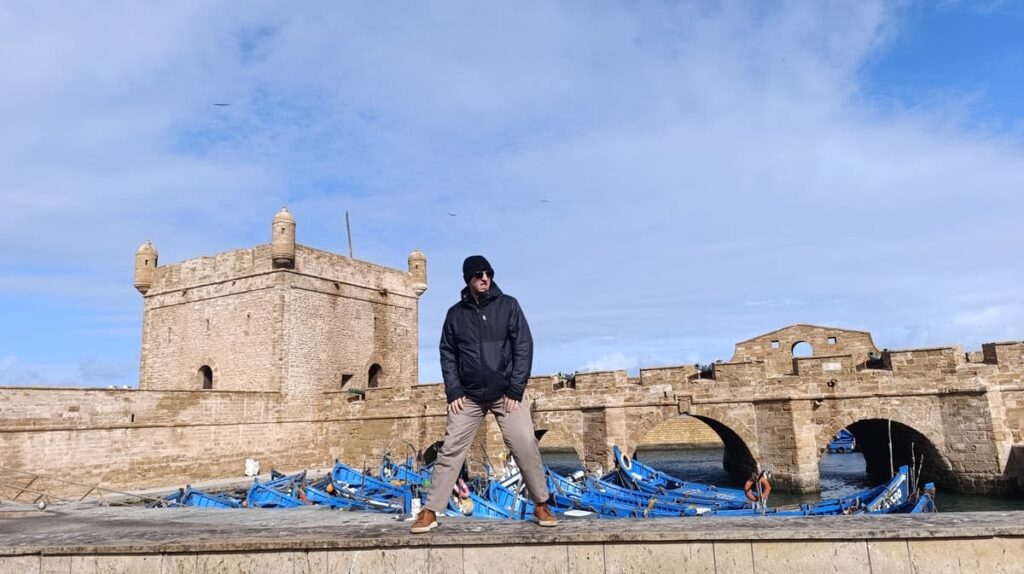
Essaouira also has a well-preserved medina with winding alleys, small shops, and a million cats.
It’s a wonderful city to slow down and spend a few days, but we have limited time in this itinerary, so a logical way to visit is as a day trip from Marrakech.
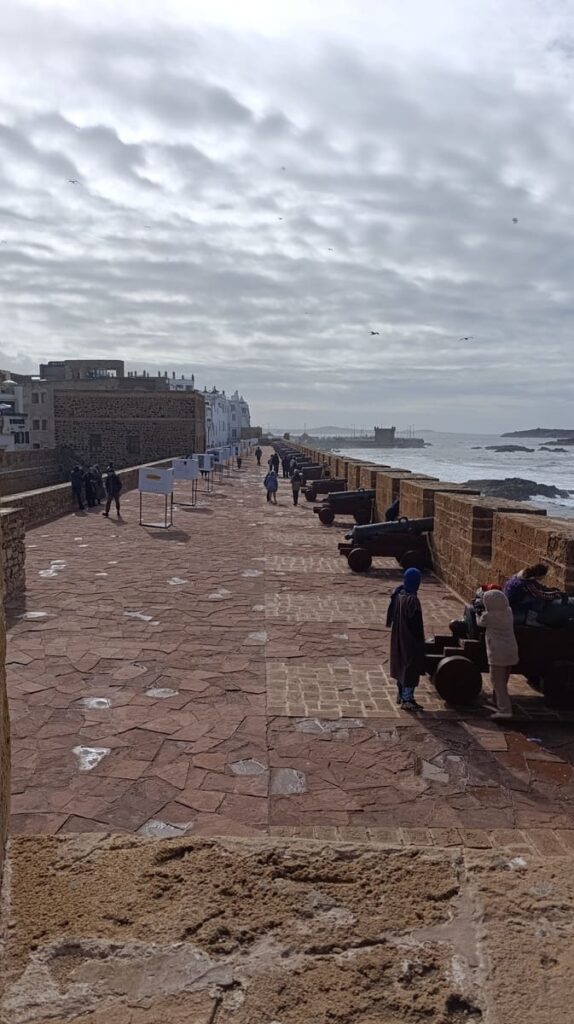
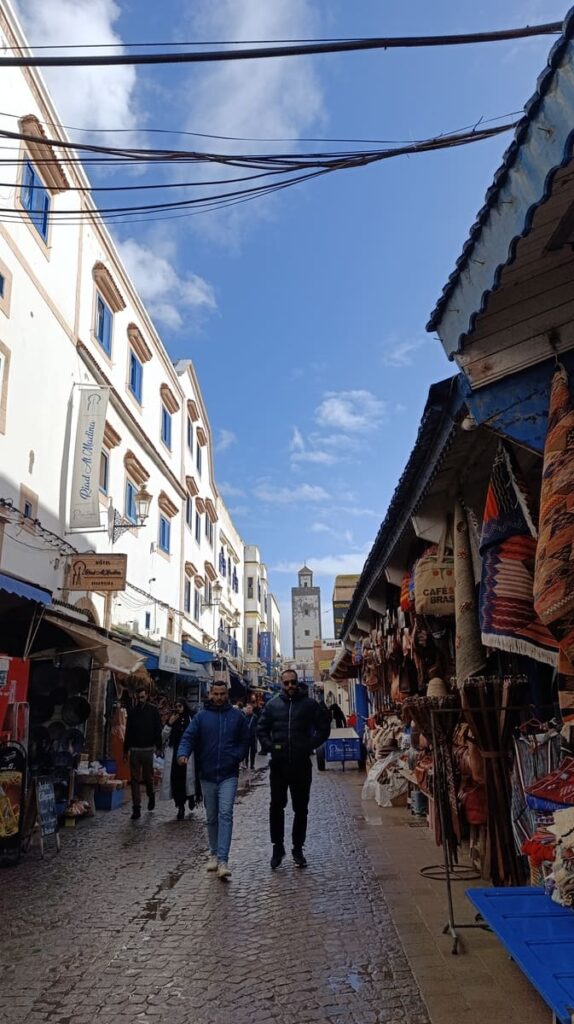
I picked this 1-day tour, which includes transport and gives you 4 hours of free time in the city – a totally adequate amount of time to explore without rushing too much.
Agafay Desert – a half-day trip with several exciting activities
The Agafay Desert is just 25 km from Marrakech and makes for an exciting half-day tour. Organized tours pick you up sometime in the afternoon, depending on sunset times, and drop you off back in Marrakech around 10 PM.
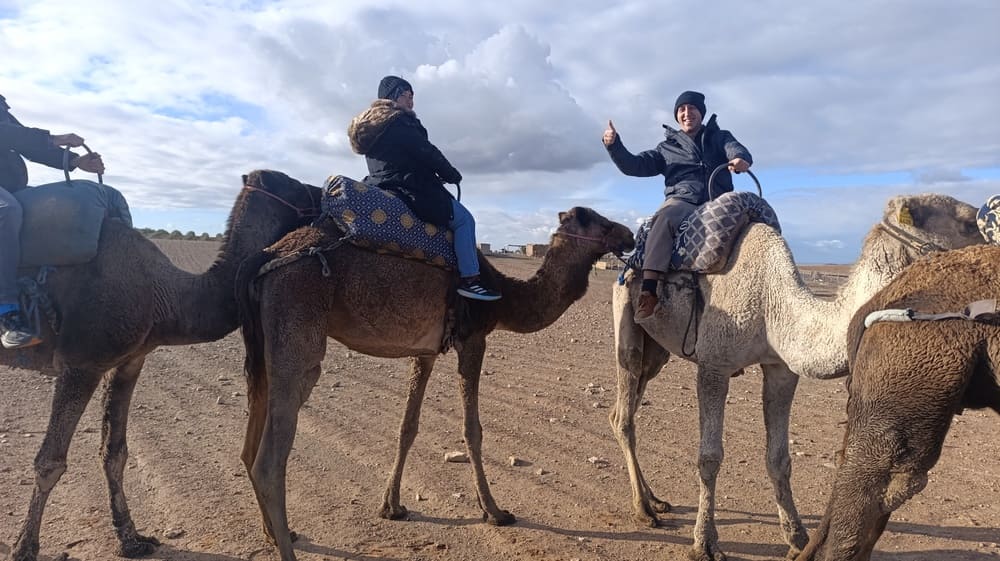
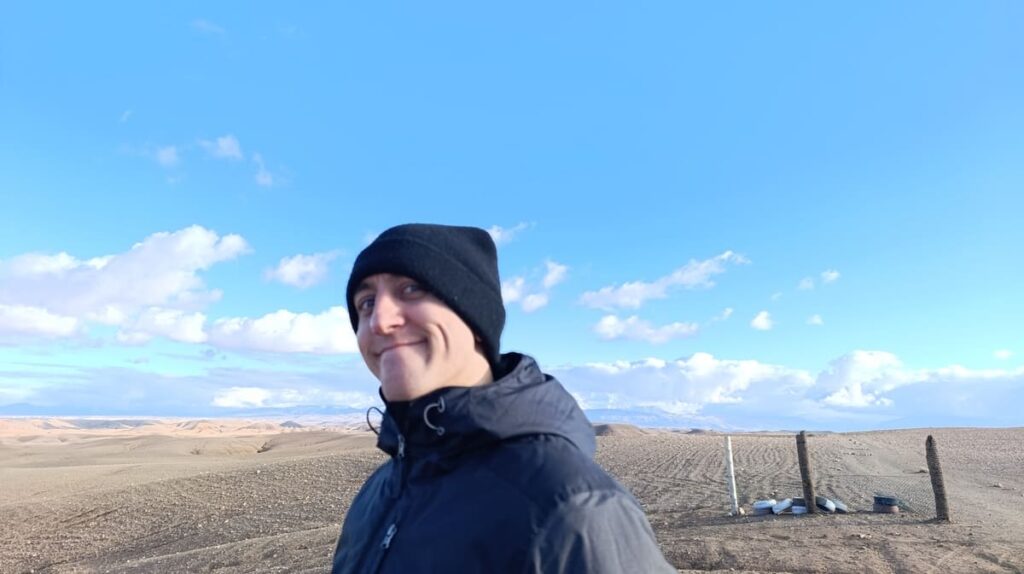
It’s perhaps the most popular trip option, but that doesn’t take much from the experience – you will get to enjoy a dinner with live entertainment in a Berber camp, ride a camel, and drive a quad bike. Optionally, you can spend the night, glamping, but I think the Sahara (coming up) is a better setting for this.
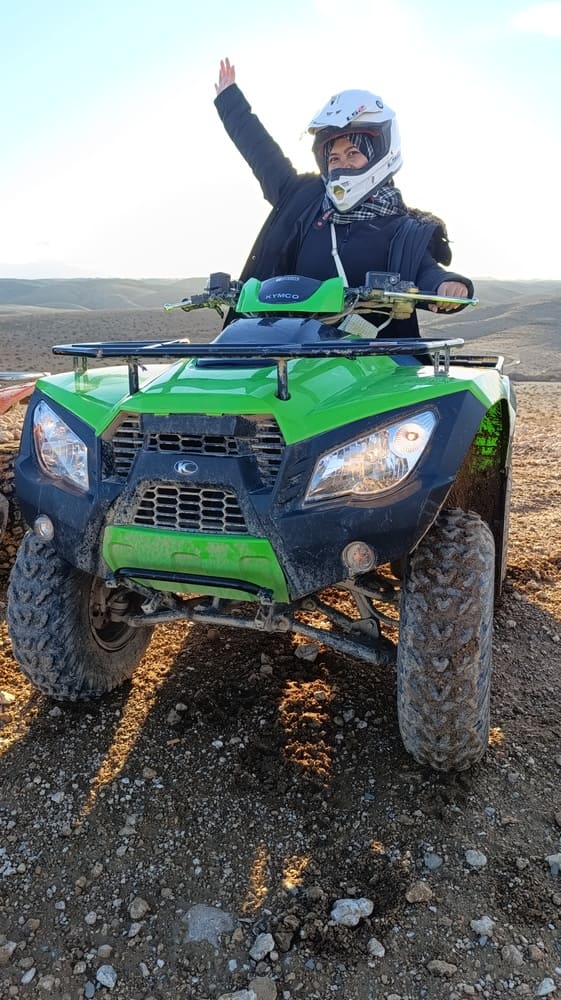
Note that this is a rocky desert and does not have sand dunes, as you may be led to expect. Read my take on whether a day trip to Agafay is worth it.
Day 4-6: Sahara desert tour ending in Fes
After a few days of roaming medieval small alleys inside medinas, it’s time to dive into the wilderness.
In Morocco, the “wild” means the Big One – the Sahara. The largest hot desert on the planet covers large parts of eastern Morocco.
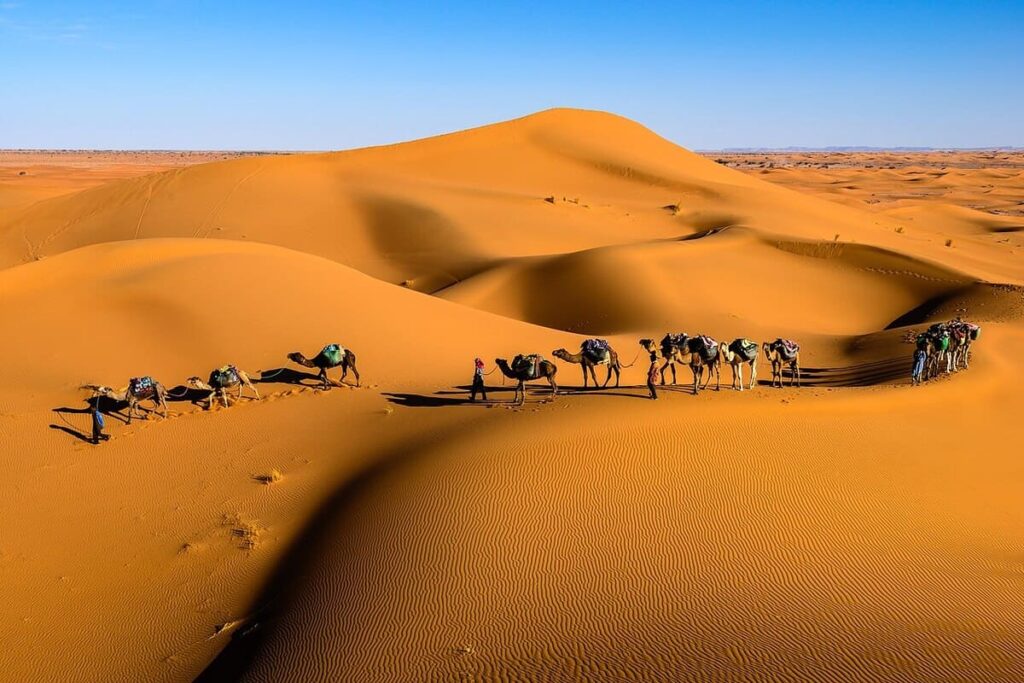
The roads are difficult, the journeys are long. Some do it as a 2-day return trip from Marrakech, but I think this is a massive waste of time, especially if you’re going north towards Fes after.
Thus, the best option is to go through the desert on your way between the two imperial cities.
You will visit:
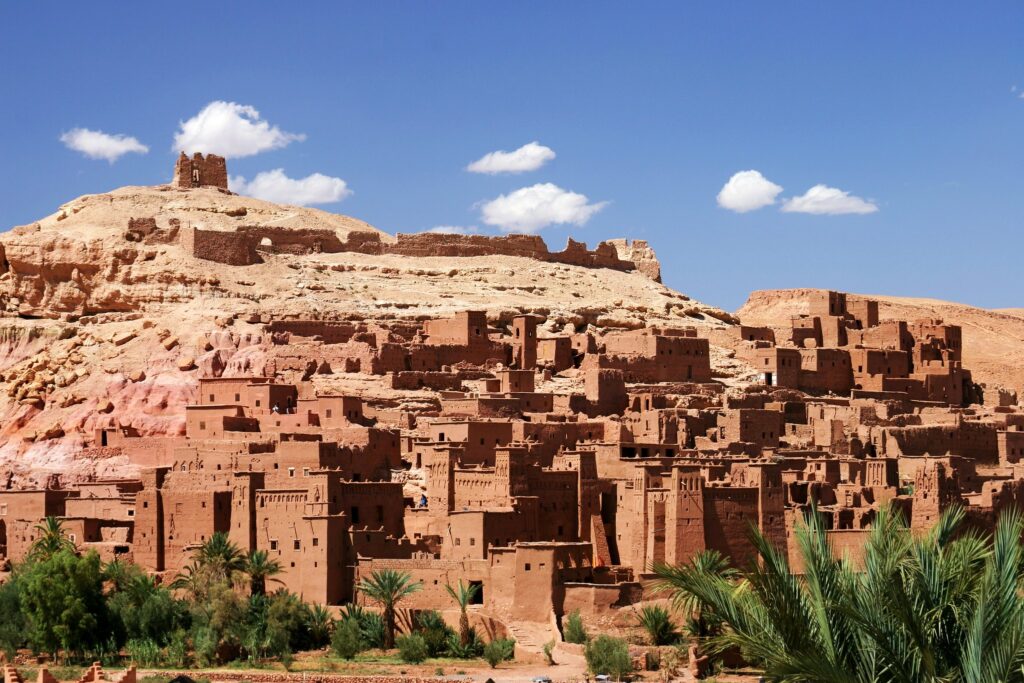
- Aït Benhaddou: A historic fortified village with unique and recognizable earthen-clay houses.
- Tinghir: The largest palm oasis in Morocco.
- Todra Gorge: A breathtaking limestone river canyon.
- The endless golden sands of the Sahara.
- Erfoud: An oasis town used as a setting for several movies, including Prince of Persia and The Mummy, and one of the closest Mars-like places on Earth.
You will sleep in a traditional desert camp under the stars and have the option to ride a camel just like the caravans of olden days.
While it may be theoretically possible to do this independently, it’s a massive hassle. The logistics are absolutely ridiculous to organize without local guides. There is no public transport in this part of the country, so it’s only viable if you have rented a car.
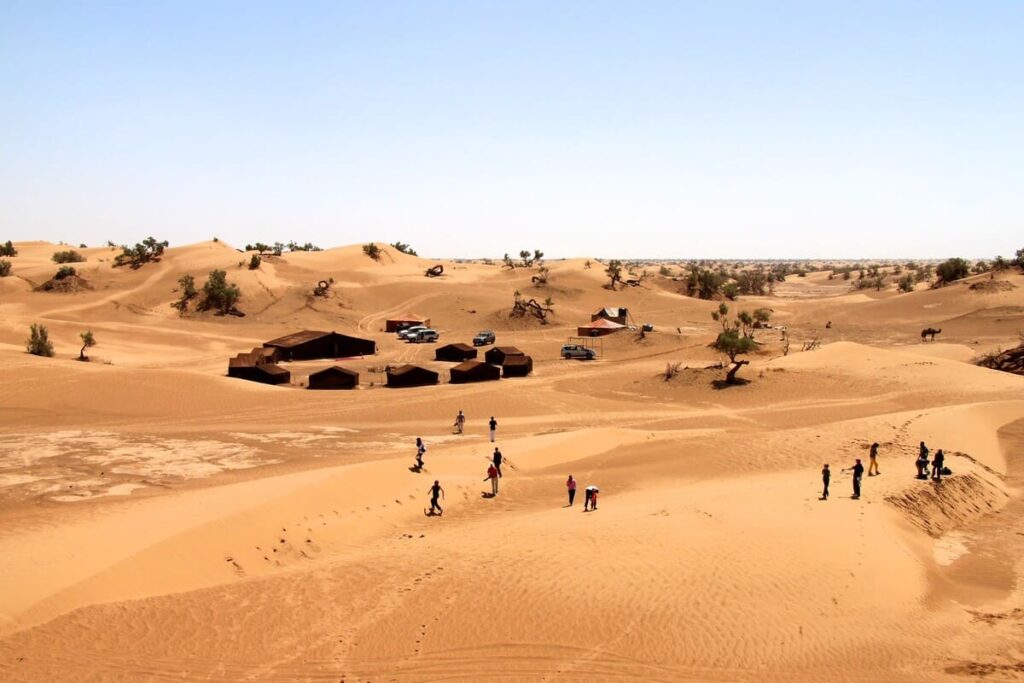
But worry not, organized tours are incredibly affordable and provide a ton of value.
I recommend this 3-day Sahara trip from Marrakech to Fes. It has over 3000 positive reviews with a score of 4.8/5.0. Best of all, it saves you a 12-hour return journey, as the drop-off point is Fes.
Day 7-9: Fes + day trips (Chefchaouen, Meknes)
In the lines below, you will read about one possible way to spend your 3 days in the northern parts of Morocco.
My love for Fes is great, but I only wish I could say the same about Meknes or Chefchaouen. Still, they are here as optional day trips, if you’re into packing as much as possible.
If not… Fes can keep you entertained for 3 days, I fully believe that.
Fes – The living museum
Fes is my favourite city in Morocco. It’s sooo unique with the way it tickles my labyrinth fascination.
I have written an extensive review of Fes and the reasons why I think it’s the best city in Morocco, which perfectly complements this section.
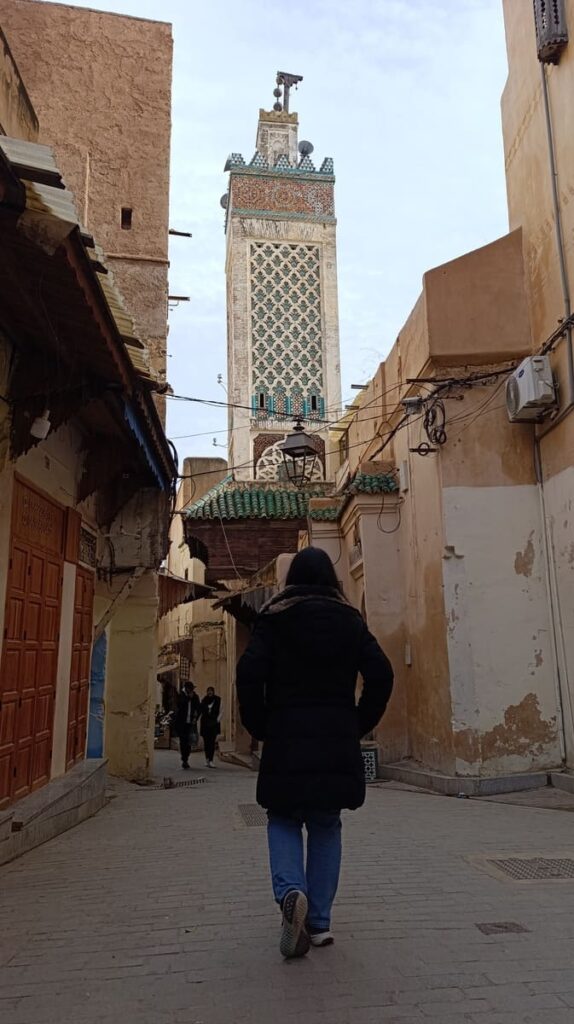
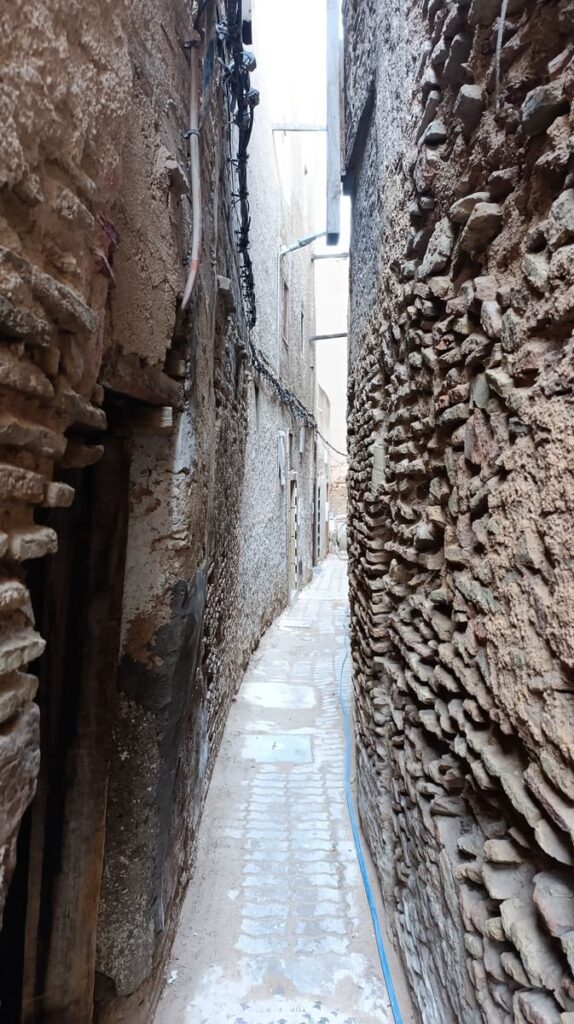
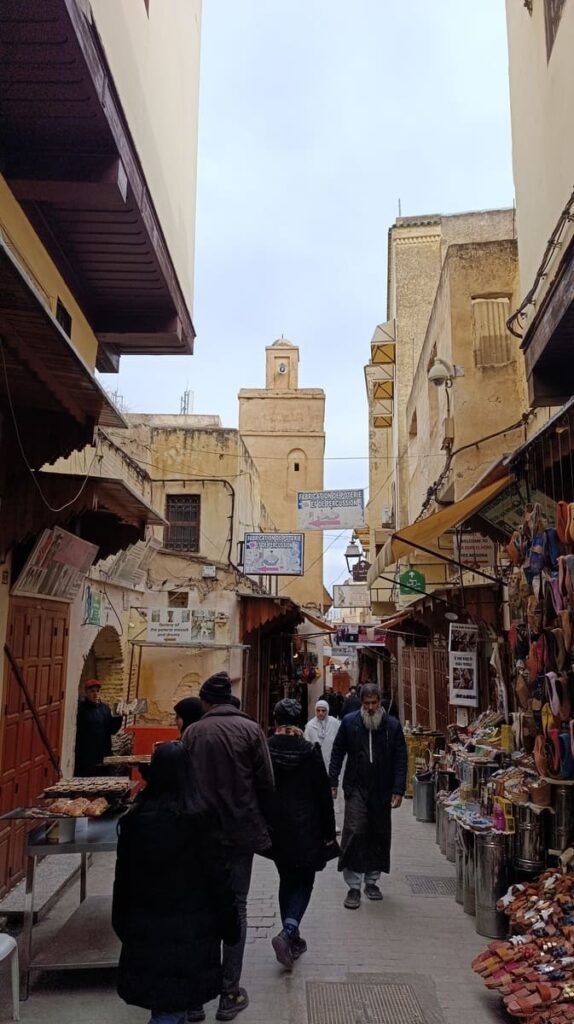
The main attraction is simply the old medina (Fes el-Bali) and its maze-like layout. Just roam around like you have no other place to be.
Visit Fes with the attitude that you will one day return. Get lost – no, I am not flipping you off – just close the map and try to make it from one side to the other. It’s the largest pedestrian-only area in the world!
If you’d like some targets anyway, try to visit at least one of the tanneries (e.g., Chouara Tannery) and see the leather being dried. They still do it in the traditional way they’ve used for centuries – hence why you should mentally prepare for the smell.
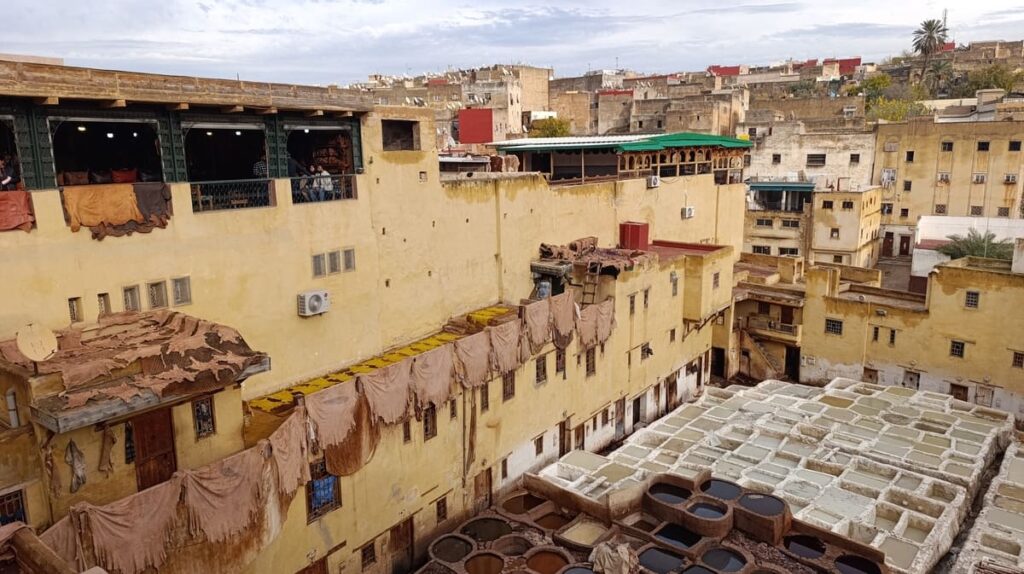
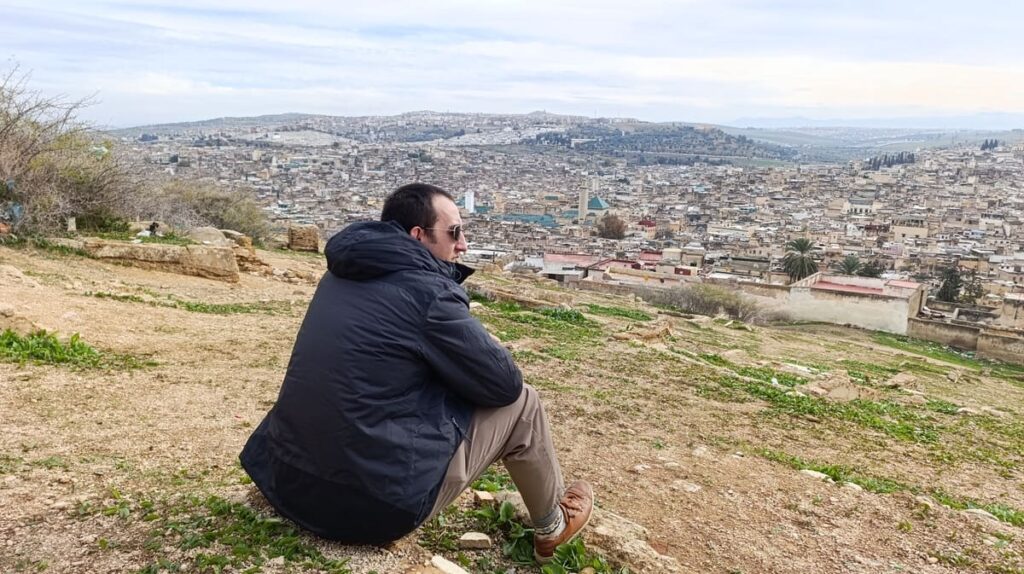
Another cool place in Fes is the cliffs near the Marinid Tombs north of the medina that present sweeping views of the entire city. Getting there is an easy 20-minute walk, if you can navigate the alleys…
Chefchaouen – If blue is your hue
Chefchaouen is a mountain city famous for its powder-blue colored houses.
To be frank, this is actually the main thing going for it. It lacks the scale of other cities you’ve visited so far in this itinerary (even Essaouira) and has little to offer apart from countless opportunities for picture taking.
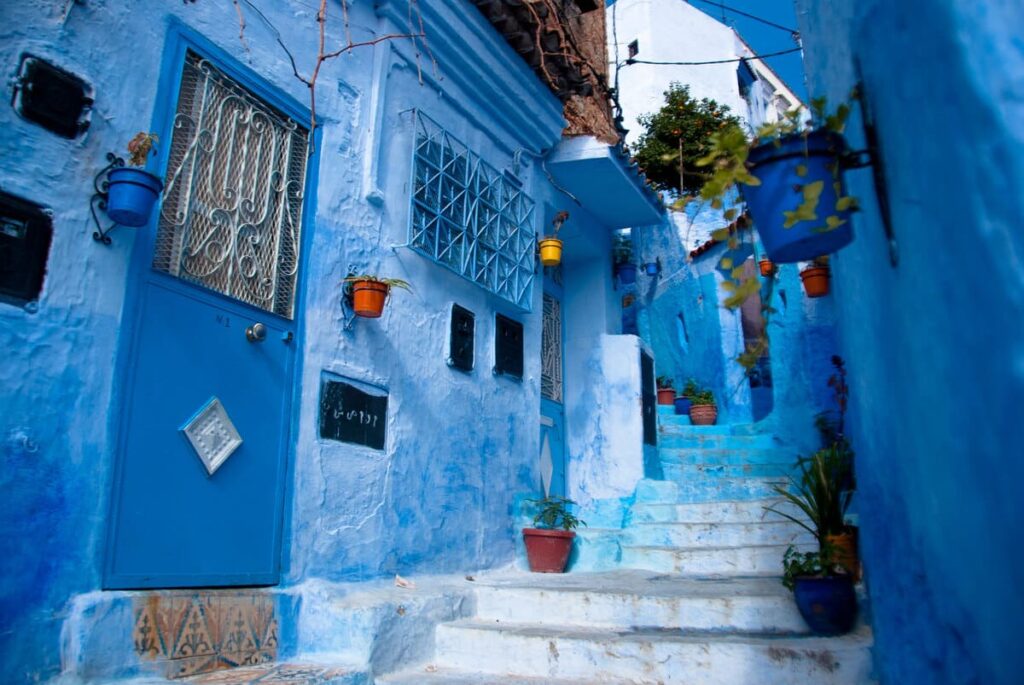
This is, however, enough for most people. It’s indeed original, having been painted blue by Jews in the 1930s to represent the sky and heaven. Other blue towns throughout the world include Santorini, Jodhpur, and Júzcar, though they ended up blue for different reasons.
The unfortunate fact is that Chefchaouen is not that close to Fes. It’s a roughly 4-hour bus ride, meaning a day trip is possible but exhausting. If you don’t mind the long journey, this shared trip to Chefchaouen from Fes is the best-rated one available.
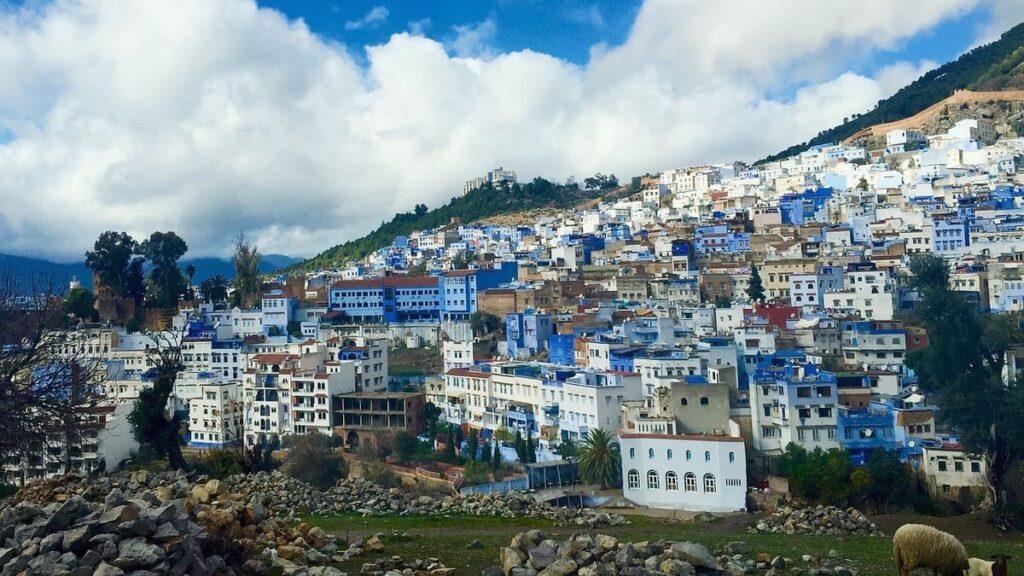
If you’re not pressed for time, you can spend the night in Chefchaouen and go straight to Rabat or Tangier the next day, thus skipping Meknes, which is not that exciting either. Consider sleeping in Casa Hamidane – a traditional dar in the old medina with stellar reviews.
Places worth checking out in Chefchaouen include:
- The old medina and its blue alleys and houses.
- Cute little shophouses.
- The Spanish Mosque and the views towards the city from there.
- Have lunch at a restaurant with a terrace. Restaurant Aladin is a good option.
Meknes – The least exciting imperial city
Meknes was an imperial city for the shortest time (only 55 years), and this is perhaps the reason why it never developed into an awe-inspiring place like Fes or Marrakech.
You can see the medina, the main square (Place el-Hedim) with its Bab Mansour Gate, and the Mausoleum of Moulay Ismail, and that’s about it – even just 2 hours is enough.
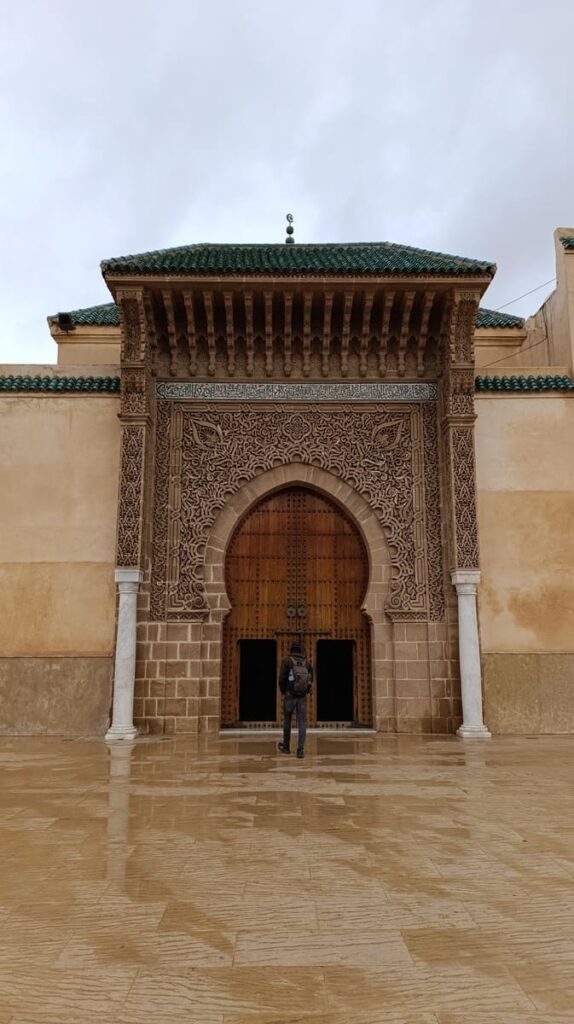
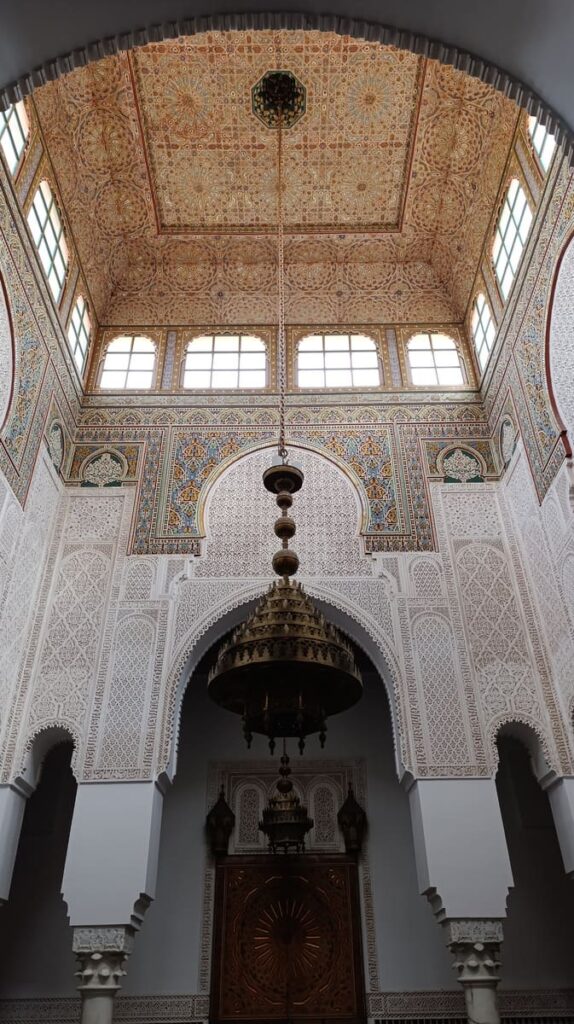
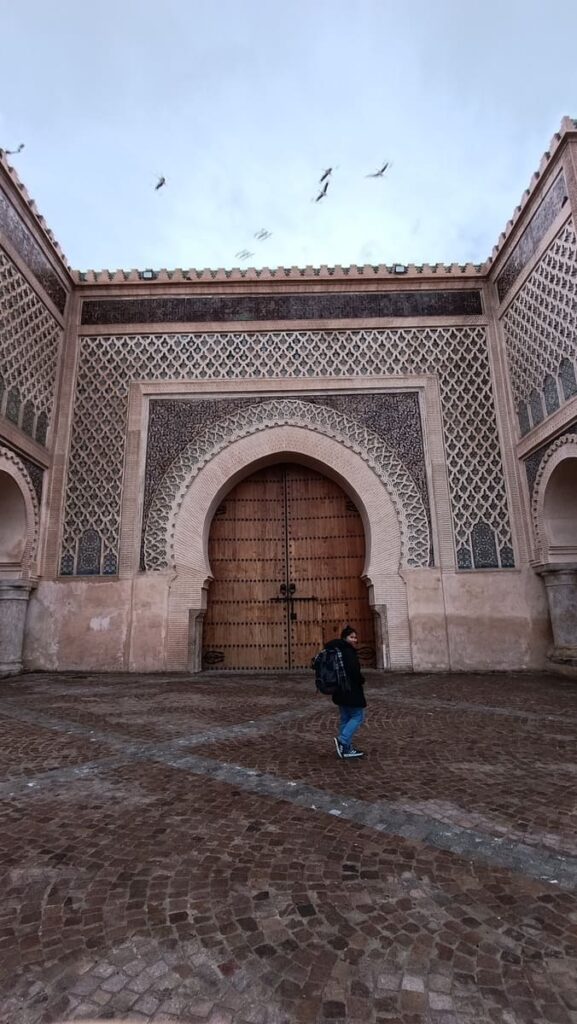
Unfortunately, many of Meknes’ museums are in a dreadful condition. The Royal Stables and the Qara Prison are both practically ruins, but still charge hefty entrance fees. The Bou Inania Madrasa offers barely any information about it inside, and although visually striking, its significance is lost on most visitors (myself included).
Thankfully, Meknes is just 45 minutes by train from Fes. These trains run every hour, which allows you to stop over for a few hours in Meknes, then hop on another train for Rabat (which is what I did), or return to Fes.
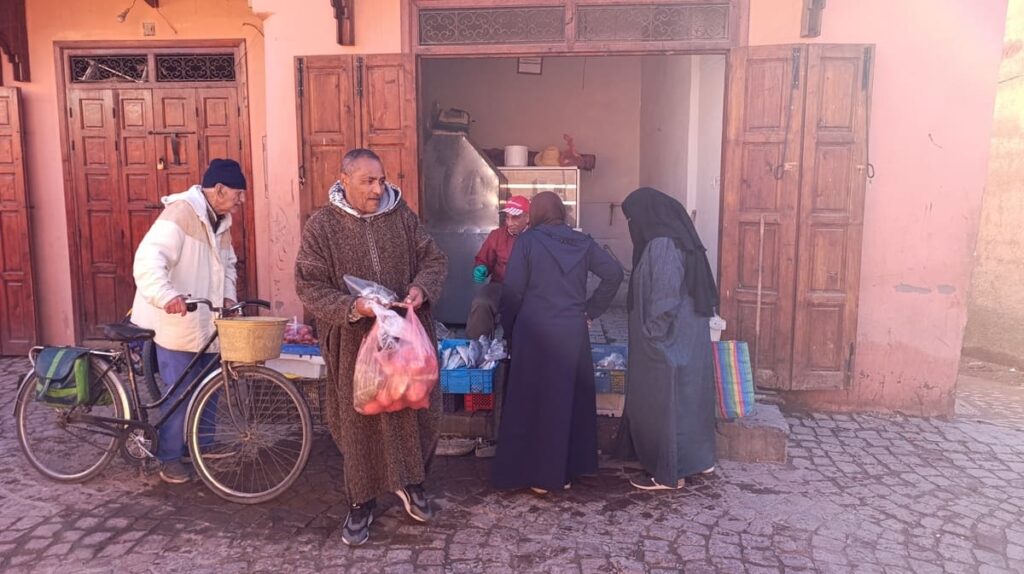
Alternatively, you can also visit Volubilis – one of the farthest Roman settlements still extant. The nearby town of Moulay Idriss is a major pilgrimage site, considered the birthplace of Islam in Morocco and the holiest place for Moroccan Muslims after Mecca.
Day 10: Rabat
Rabat is Morocco’s most modern city. It’s the country’s most recent (and current) Imperial capital, and it shows in the polished architecture and the somewhat hip vibe, at least in the new part of the city.
The old side is another medina full of shops, stores, food vendors, and everything in between. It also includes the Kasbah of the Udayas, a renovated quarter with very Instagrammable alleys, that hugs the ocean and is surrounded by high walls on the other side.
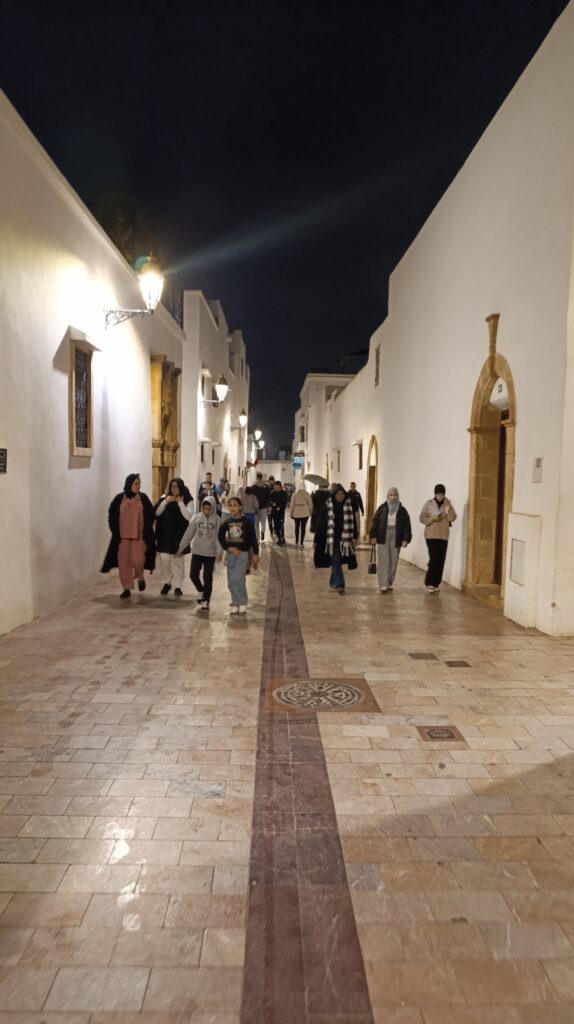
Rabat is the city where the old meets the new, both literally and figuratively. It’s refined and offers a taste of contemporary Morocco without compromising on what makes the country such a charming destination.
Its airport (Rabat–Salé Airport) is only the sixth-busiest in Morocco but has direct flights to several major European cities, thus allowing you to conveniently end your trip here.
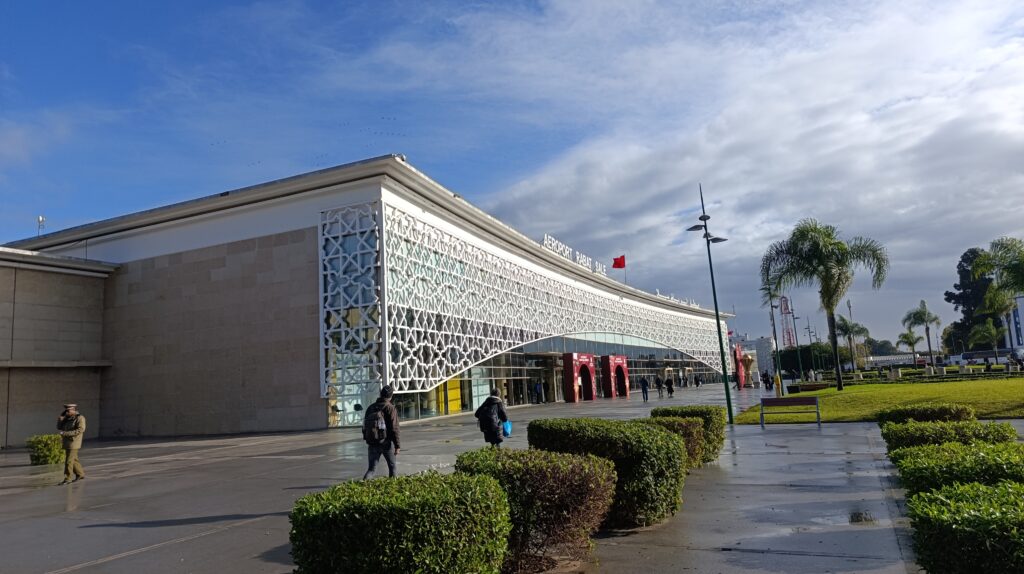
You may also fly out of Casablanca, which is served by the busiest airport in Morocco (Mohammed V International Airport), which is about 1.5 hours away from Rabat by car.
Notable places missing from this itinerary
Of course, you need to compromise – a 10-day trip will never be enough time to visit everything worthwhile in Morocco.
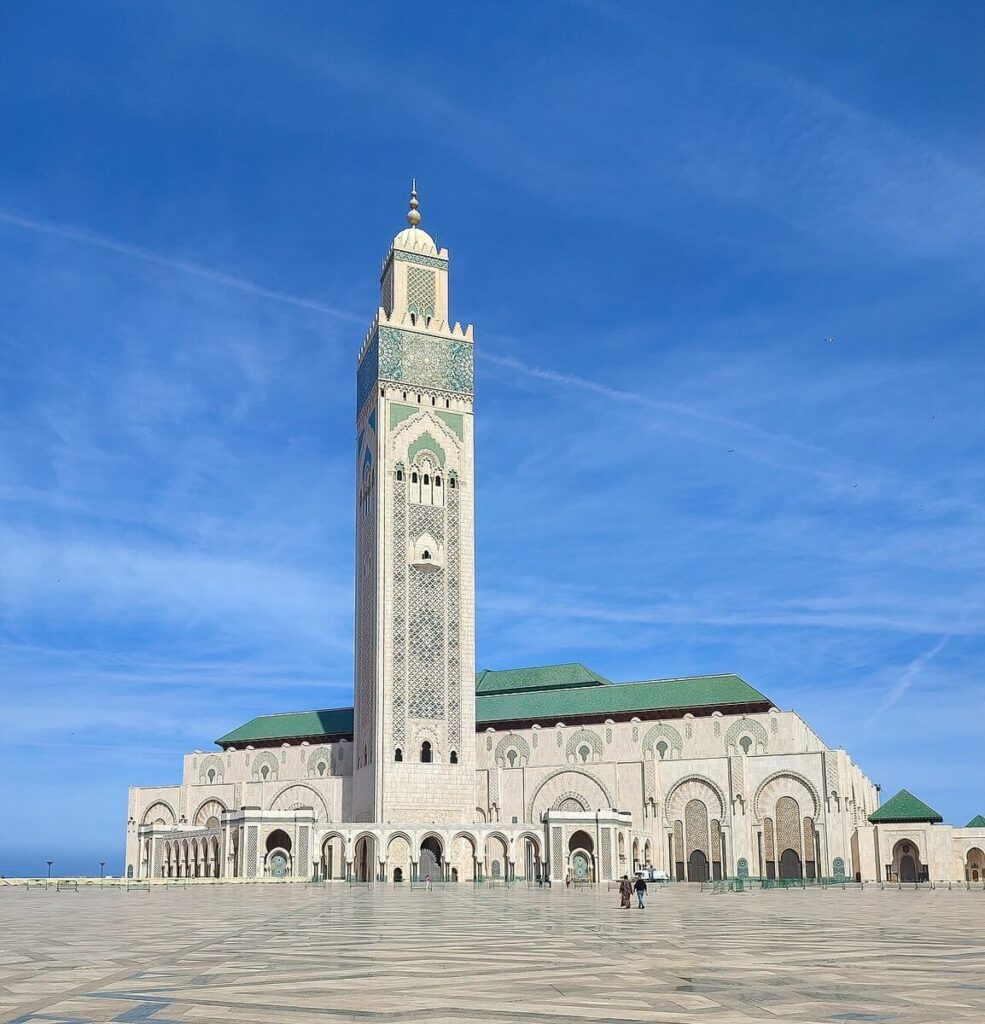
For example, Casablanca is a noteworthy modern coastal city famous for its stunning Hassan II Mosque and its Art Deco, Neo-Mauresque, and Modernist architecture. It’s similar to Rabat in the way it blends old and new.
Far in the south, 3 hours from Essaouira or 3.5 hours from Marrakech, is Agadir – a relaxing, modern, and sunny destination, suitable if you’re looking for a slower seaside holiday.
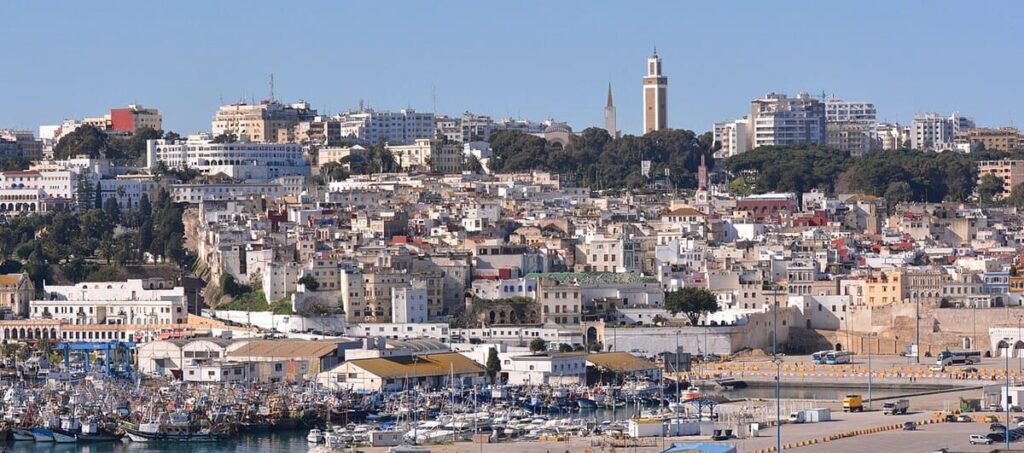
Far in the north, about 3 hours from Rabat, is Tangier, a coastal city on the other side of the Strait of Gibraltar from Spain. After a complex 20th-century history, when the city functioned as an international zone for a long time, it has now retained much of its multiculturalism in what can be described as a melting pot of Arab, Spanish, Portuguese, and French culture.
The guide also hasn’t explicitly mentioned Ouarzazate, Aït Benhaddou, Tinghir, Errachidia, Midelt, and Merzouga – six of the many towns and villages on the outskirts of the Sahara Desert. Since you will spend 3 days traversing the desert, you will pass by at least a few of these oasis settlements. They have unique earthen dwellings, though it’s hard to justify the long travel times to visit any that are not on the way.
Of the natural attractions missing, the main one is Mount Toubkal – the highest peak in Morocco and the Atlas Mountains at 4167 meters.
Hiking it is a minimum 2-day affair (from Marrakech), only viable during the summer, and requiring a good level of fitness. This is the best 2-day, all-inclusive, organized hiking trip to Mount Toubkal from Marrakech.
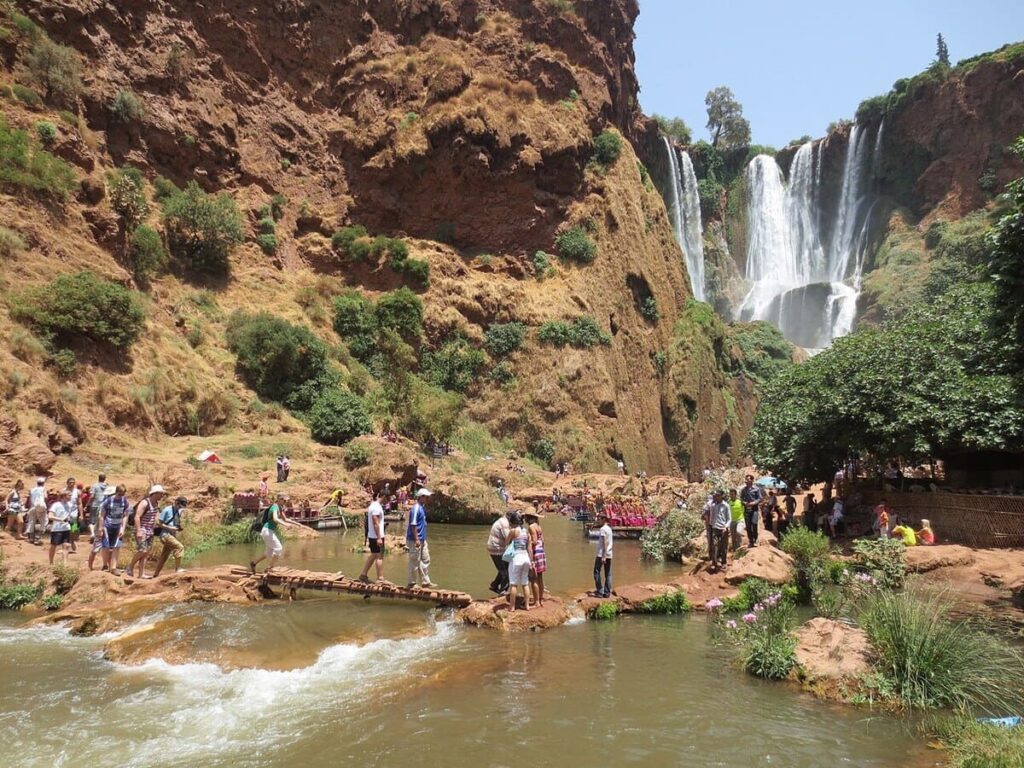
Also notable mention to the Ouzoud Waterfalls, which make for a nice day trip from Marrakech.
Is 10 Days Enough for Morocco?
It’s the most common question without a clear answer, isn’t it?
If you’d like a simple answer, then here it is – 10 days is a perfect amount of time for a rewarding visit to Morocco.
Yes, you won’t visit every corner of the country, but the highlights are more than enough to give you a lasting impression.
Transportation
Transport in Morocco varies between modern and ultra-fast near the coast, to tricky, slow, and/or borderline dangerous in remote regions.
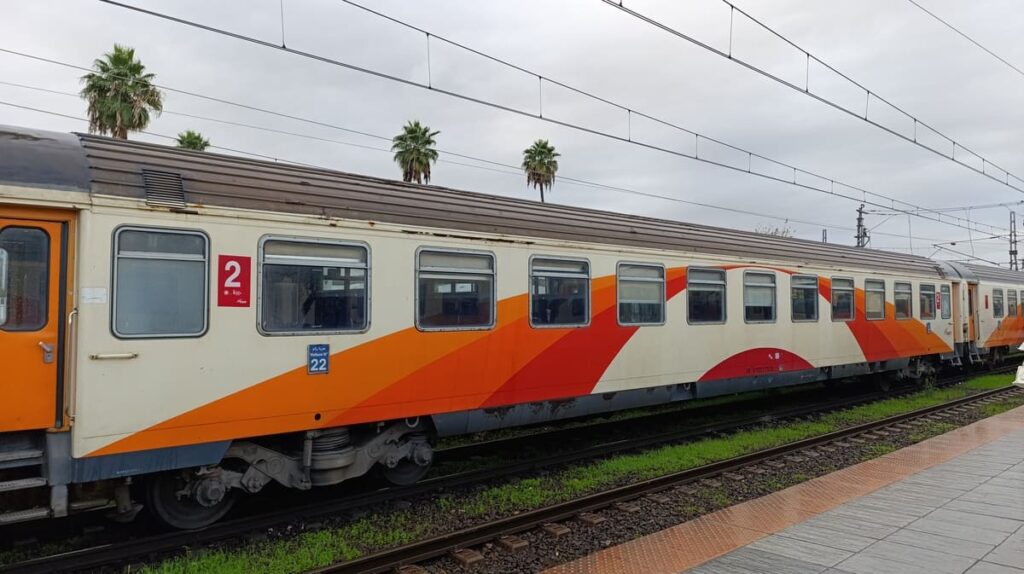
Trains connect most of the major cities. The Al Boraq is a high-speed service linking Tangier and Casablanca via Kenitra and Rabat in about 2 hours. Marrakech and Fes are also connected to the network, though the trains are slower. You can book train tickets in Morocco easily on the official ONCF website. Unless it’s for Al Boraq, you don’t need to book way in advance.
In other areas of Morocco, the main form of public transport is minibuses. Towns normally have a bus station where all services depart from. There’s rarely a timetable; instead, buses leave when full.
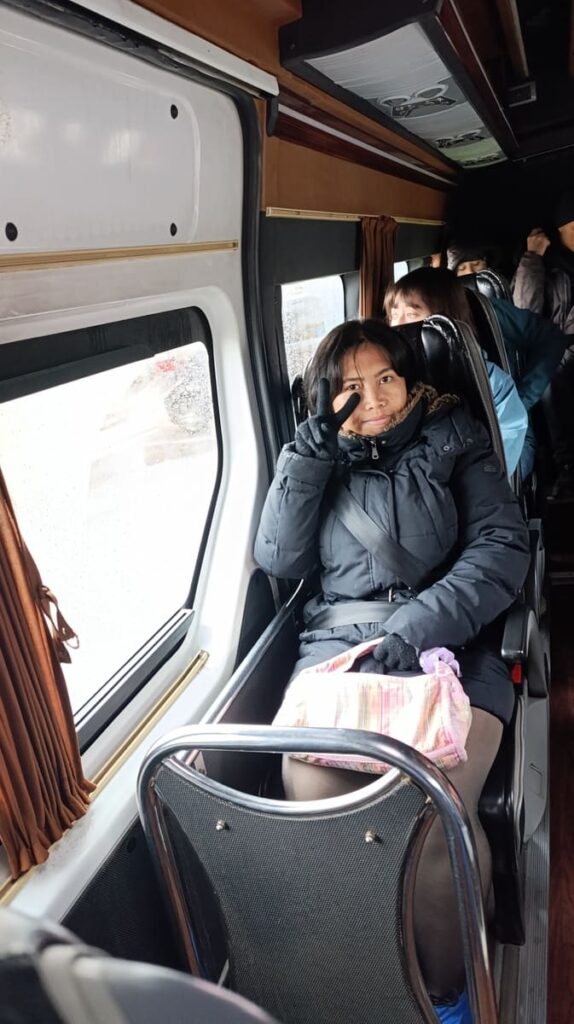
All organized tours recommended in the itinerary include transport. It is often the case that a tour may cost you less than if you go by public transport independently – go figure.
A popular way to explore Morocco is to rent a car. This way, you can go where you want, when you want. It is usually a bit more expensive if you’re solo or a couple, but you pay for the convenience. Driving in Morocco can be stressful, especially if you compare it to Europe, but I found traffic to be not that bad compared to most places in Southeast Asia, for example.
It is possible to land at an airport and rent a car straight away, but you will often find better deals online. Check the best rental car deals for Morocco here.
Accommodation
One of the distinctive features of Morocco is the riad – a traditional, inward-facing house with an open-air, garden-like courtyard in the middle.
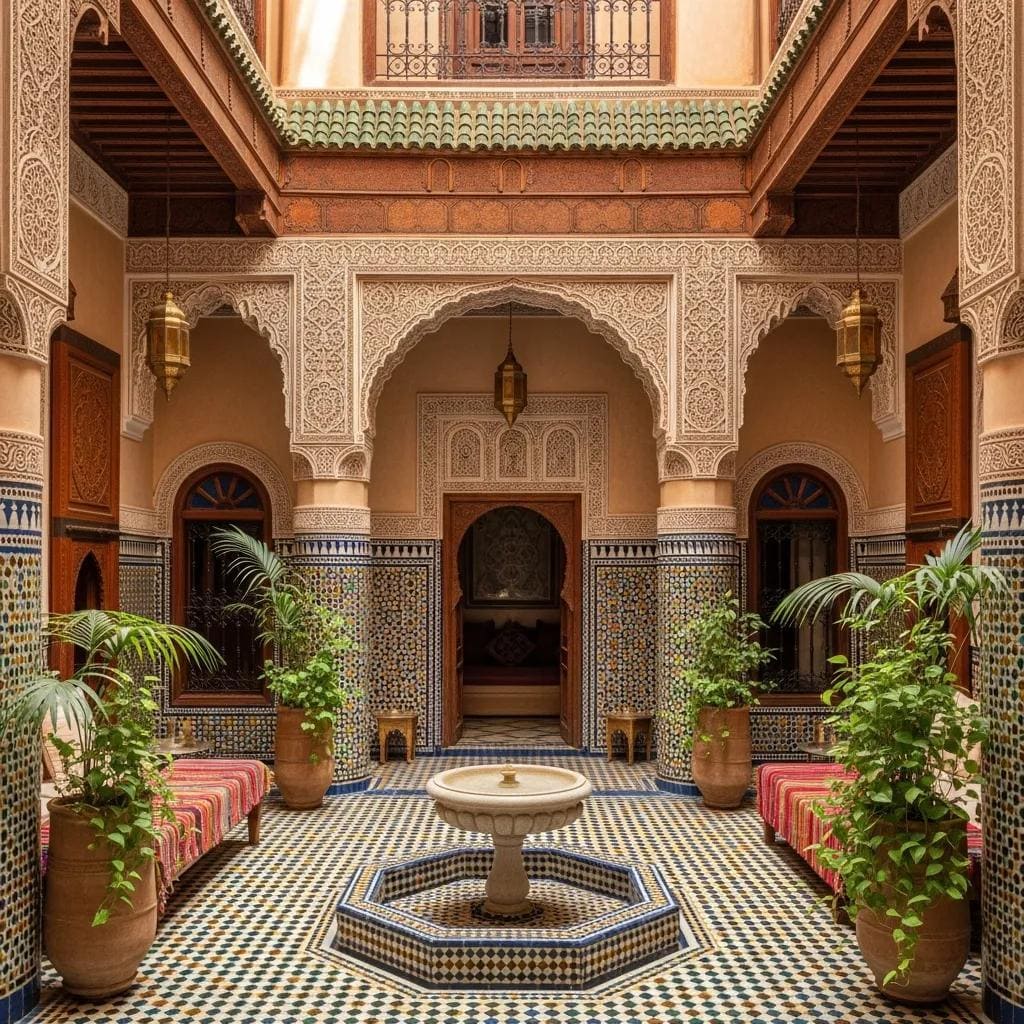
You should sleep in one at least once.
Do beware, though – pretty much every and any hotel these days is advertised as a riad, even if it isn’t. A lot of the guesthouses of Marrakech, Fes, etc., do not have an inner garden, nor many of the other features of a riad. The term is so overused that many seem to think it means any Moroccan house (myself included, initially).
Check the photos in the listing and read the reviews carefully.
Other types of accommodation include standard hotels, family-run guesthouses, and, of course, hostels.
As to where/how to book…the usual places work just fine. I used Booking.com and Airbnb only and found them sufficient.
Is Morocco safe?
Morocco is generally a pretty safe country. It’s often considered the safest country in North Africa.
The number of tourists speaks for itself – Morocco welcomed nearly 20 million international tourists in 2025 and is expected to only increase until at least 2030.
Most of them have trips without any issues.
Of course, you need to exercise a standard degree of caution. Most travel advisories explicitly mention the threat of terrorism (the last serious attack being in 2011), but this has also been the case in France, Germany, and Belgium, with several attacks since 2010, and few consider them particularly more dangerous than Morocco.
In my country, we say you shouldn’t go to the forest if you’re afraid of bears. Same thing here.
As for petty crime, it is common in crowded areas. Just because I haven’t been a victim doesn’t mean it won’t happen to you. Pockets closed/zipped up, valuables hidden, jewelry minimized or covered, and just generally being street smart help a lot.
Again, most travelers experience zero crime while in Morocco. Scams, on the other hand, are much more common.