Is it Ethical to Visit a Long-neck Karen Village in Thailand?
This post may contain affiliate links. If you make a purchase using one of these links, I may receive a small reward at no extra cost to you. See my Disclosure Policy for more information.
Traveling through northern Thailand, especially in Chiang Mai, Chiang Rai, or along the Mae Hong Son Loop, you’ll come across signs (or tours to) for “long-neck Karen villages,” often advertised as must-see cultural attractions.
Curious backpackers flock to take photos of the women with brass rings stretching their necks.
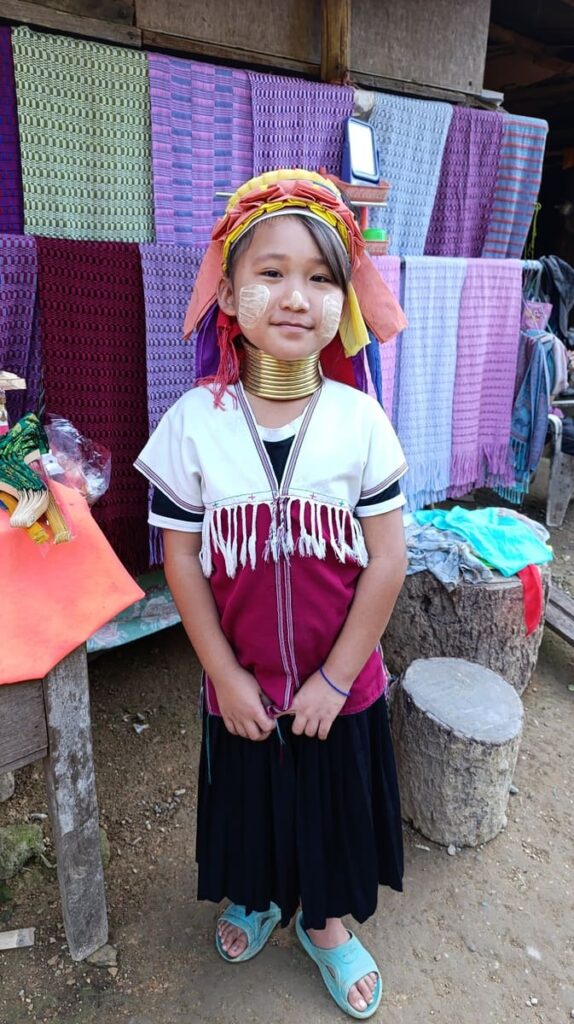
The villages are often just a street lined with these Karen women selling their handcrafted items. But behind the souvenir stalls lies a deeply complicated, often uncomfortable reality.
Some have likened them to “human zoos”. Are any of them truly authentic? And what should you, as a respectful traveler, do when deciding whether to visit?
The ethics of visiting these villages is not clear-cut, and I’d like to delve deeper – for myself, having visited one, and for you too.
Who Are the Long-Neck Karen?
The “long-neck Karen,” or more accurately, the Kayan subgroup of the Red Karen (Karenni) people, originally hail from what is now eastern Myanmar.
Fleeing ethnic conflict and persecution by the Burmese military since the 1980s, many crossed the border into Thailand seeking refuge.
Read more about the decades of civil war in Myanmar and my take on whether it’s ethical to visit the country now.
Rather than being fully integrated into Thai society, many of these families ended up in government-controlled refugee camps or in purpose-built villages, where they’ve remained for decades.
Their lives are often marked by extreme poverty, limited rights, and little to no access to Thai citizenship.
The brass rings worn by the women are a genuine part of their cultural tradition. But they have also become their most profitable asset.
And the Thai tourism industry took notice.
The Problem With “Long-neck Karen” Villages
Starting in the 1990s and early 2000s, several “long-neck Karen” villages were constructed specifically for tourism, often with the blessing of Thai authorities and local businesspeople.
These villages, typically within easy reach of Chiang Mai, Chiang Rai, or Mae Hong Son, are fenced off, charge entry fees (usually 300–500 THB), and are filled with houses that double as souvenir shops.
Travelers walk through, gawk at the women, take photos, maybe buy a trinket, and leave. Very few engage in meaningful conversations or understand the complex lives of the people they’re photographing.
Worse yet – the Karen women don’t even live there! They are bussed in the morning and returned to their real homes in the evening.
This practice is quite obviously exploitative and dehumanizing, with many NGOs and human rights observers labeling them “human zoos”.
Some of the strongest critiques include:
- Lack of mobility: Karen residents in these villages often aren’t allowed to leave. They don’t have Thai citizenship and require special permits to travel beyond the village.
- No formal education or work options: Because they are technically stateless, many residents cannot legally work outside the village or access higher education, locking them into a tourism-dependent life.
- Profits don’t go to them: The Thai business owners and authorities organizing the village typically collect the majority of entry fees and tour profits. The residents get a cut from souvenir sales, but rarely benefit proportionally from the attraction their culture provides.
- Cultural stagnation: The economic pressure to maintain a certain “look” for tourists means that young girls are often encouraged (not forced, but incentivized) to wear the neck rings and keep up appearances, even if they might not otherwise choose to.
The very system that sustains their survival also restricts their freedom.
They are made to perform their identity for profit.
My Experience: Was It Ethical?
While on the Mae Hong Son Loop, I visited a long-neck Karen village near Mae Hong Son.
I did my research – I already knew about the exploitation that happens behind the surface.
I wanted to visit an actual village – where they really live, not their workplace. So I set off to visit the Kayan Taryar Karen village [map].
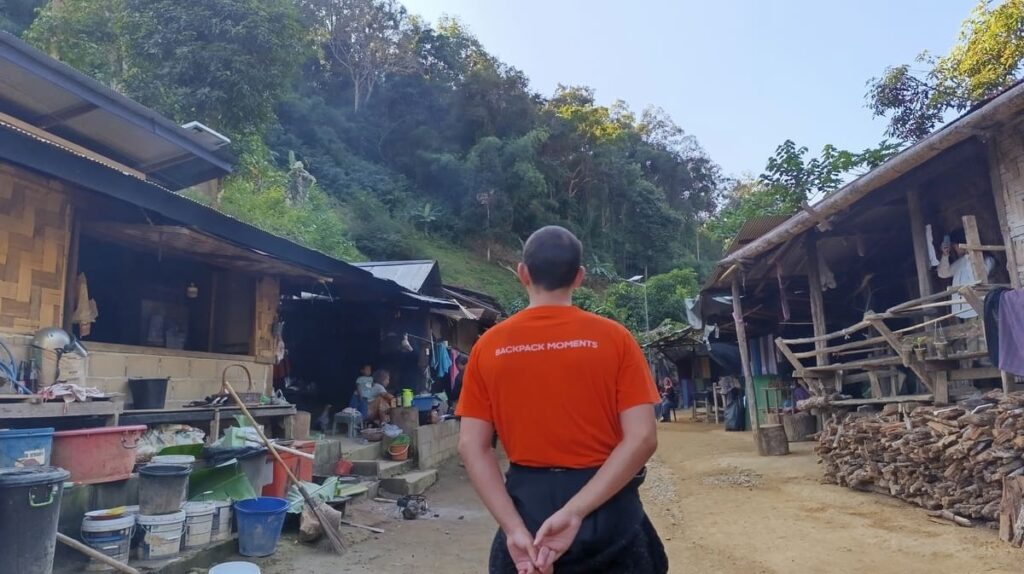
I still had mixed feelings about. It was still called a “Karen Village” (you know how Chinese food is called just food in China. Same idea.) and marked as a tourist attraction on Google Maps.
Was I about to become yet another tourist contributing to the commodification of culture under the pretense of being marginally better than the ‘insensitive’ mass tourists?
Inside Kayan Taryar
There was no entrance fee, no ticket booth. That’s a good start – no Thai overlords to make a buck on their behalf. There was a donation box.
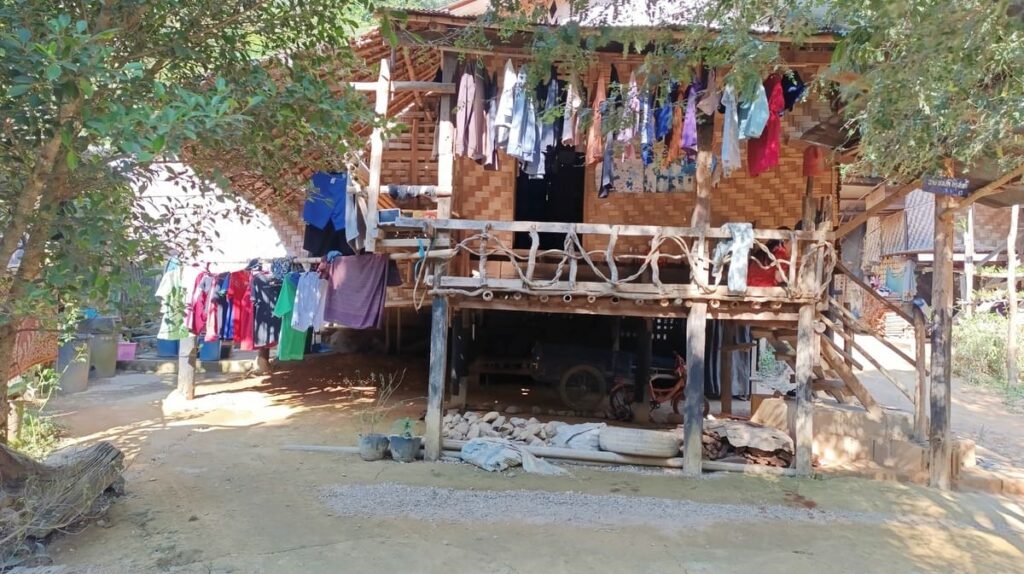
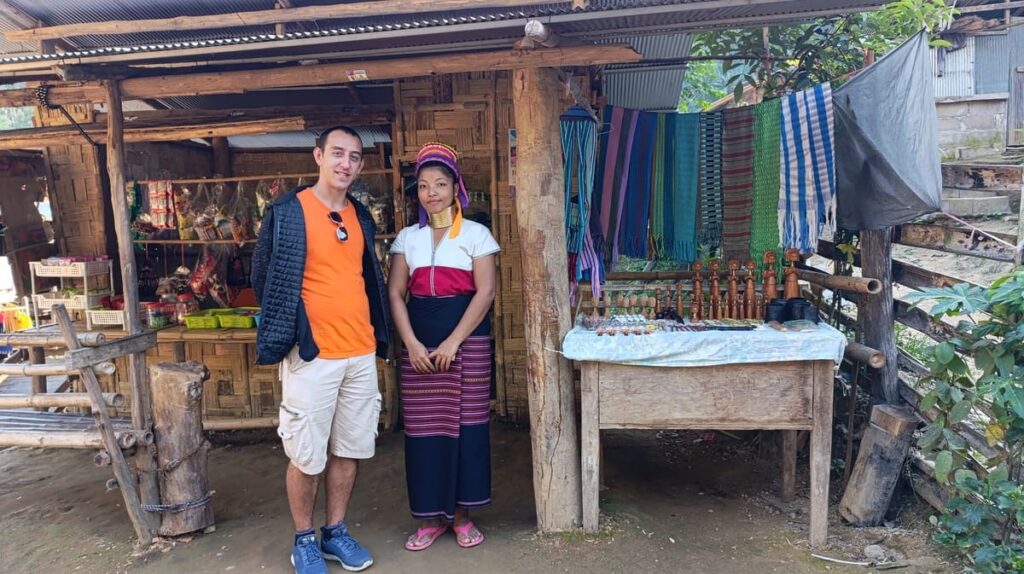
Nobody was hustling us to buy anything. Yes, nearly every house doubled as a souvenir shop, but it was quite obvious that it was secondary to the primary function of the dwelling.
Most people were just going about their lives: washing clothes, tending to babies, chatting on the porch.
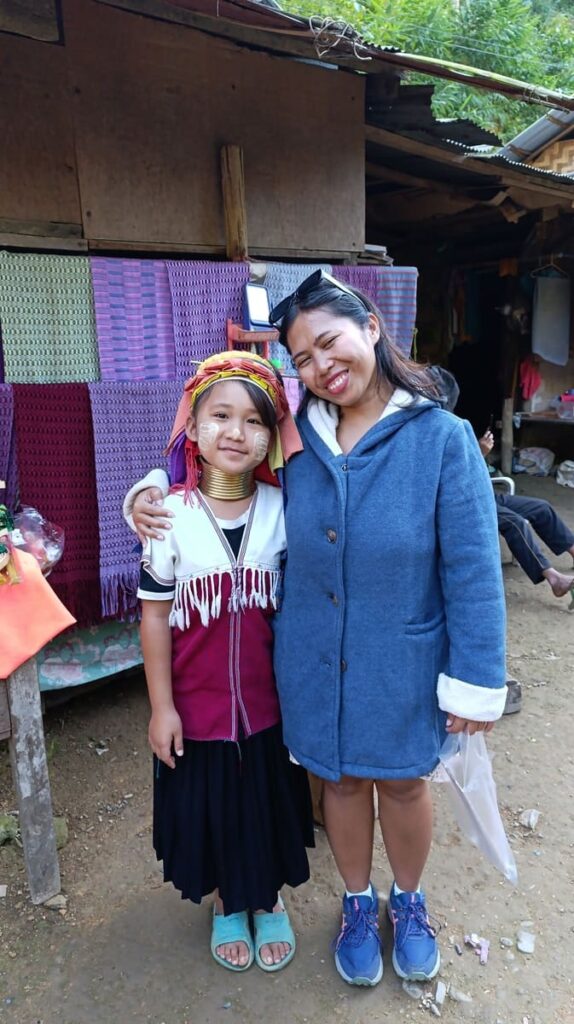
We talked with one of the girls. Her English was limited, but she smiled, showed us her handwoven scarves, and told us about her age and school.
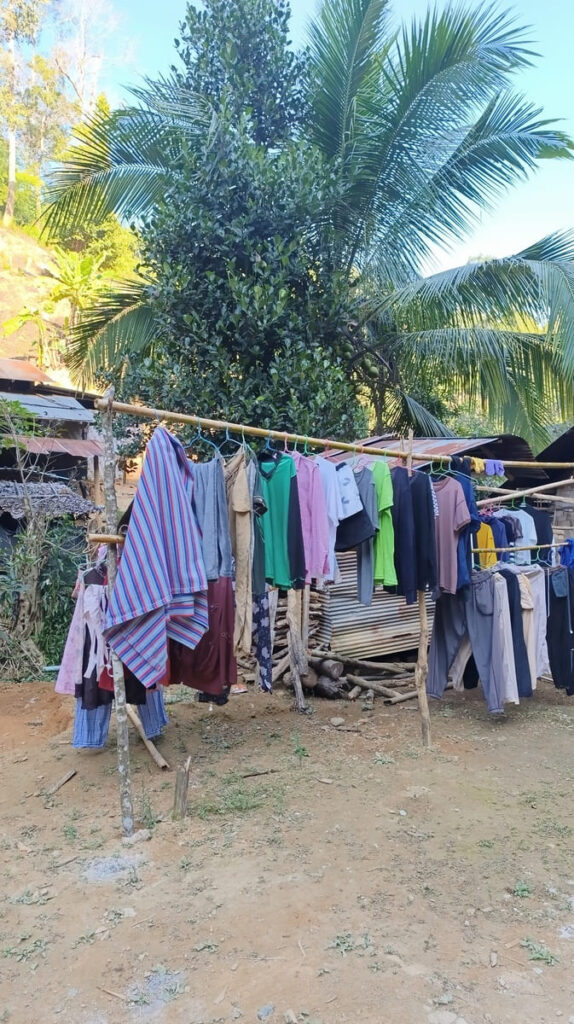
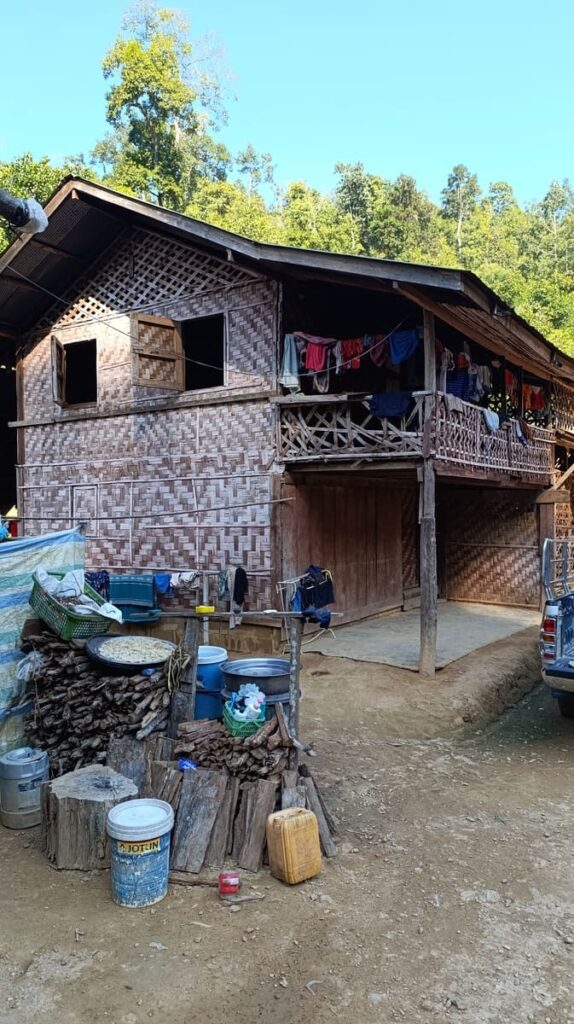
I really wanted to know about the rings. She said she wore them because she wanted to, just as her mother had. Whether she truly had a choice is harder to answer.
Other corroborated the same.
Do they keep the rings on, by choice, during the day for the occasional tourist or because they truly associate with the image they give them?
I don’t claim the visit was fully ethical. We were still outsiders, walking through someone’s life. But compared to the commercialized, fenced-in villages near Chiang Rai or Pai, this felt far less performative and far more lived-in.
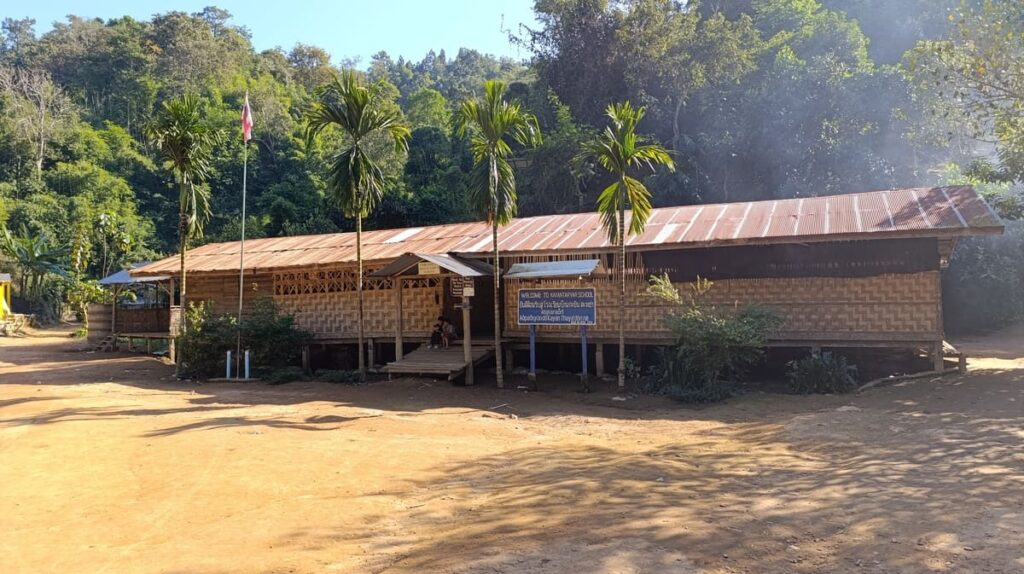
Oh, and 3 km further near the border, barred by Thai Immigration, entry forbidden to all (probably exit too), is the actual refuge camp.
Ethics is hard. There is no easy verdict. But that’s exactly why this conversation matters.
The Bigger Issue: Statelessness and Systemic Injustice
To understand the situation better, you need to look beyond the villages and at Thai policy.
The Kayan and other Karen subgroups, along with many other ethnic minorities who fled Myanmar, are not automatically granted citizenship in Thailand, even after living there for decades.
As a result, they:
- Cannot travel freely
- Cannot vote
- Have limited access to healthcare
- Are legally barred from many jobs
- Often lack legal protection
Some progress has been made through birth registration programs and legal pathways, but red tape, discrimination, and bureaucracy slow things down.
The Thai government is content to use these groups as a cultural attraction, but resists fully integrating them into society.
It’s not much different than turning a blind eye on unethical elephant sanctuaries, which are also a major tourist attraction in Northern Thailand.
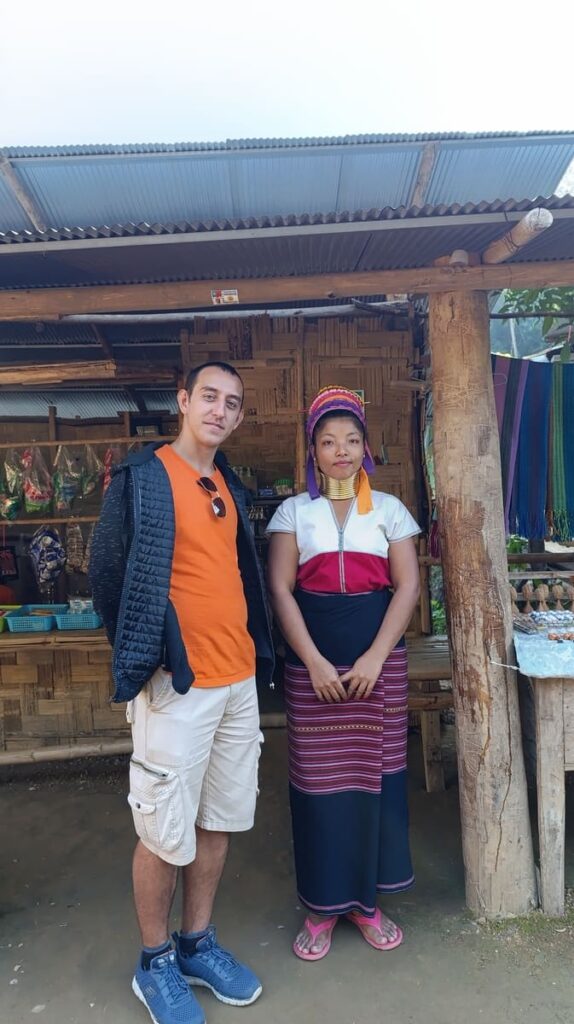
The women we saw in Kayan Taryar, a daughter, a mother, and a grandmother, have lived in the village their entire lives.
Unable to go even to Mae Hong Son (~30 km away) unless they wear the neck rings, as it’s the only thing that gives them a pass with the authorities. Because then they are considered a (slave) worker, not a refugee/immigrant/actual human.
This creates a systemic imbalance of power, where Karen people are economically incentivized to perform “traditional culture” to survive.
Often with no alternatives.
So… Should You Visit?
That depends. There’s no black-and-white answer.
But here are some guiding principles to help you make an informed, respectful decision:
If You Decide to Visit a Karen Village
- Do Your Research: Find villages that do not charge entrance fees or are not run by tour operators. Look for places where locals live freely and share their culture on their own terms, not as a stage performance.
- Support Through Buying, Not Gawking: If you take photos, buy something. A scarf, a bracelet, a drink. It’s not about pity – it’s about recognizing the value of their labor.
- Ask Before Photographing: Always ask for permission before taking photos. Don’t shove a camera in someone’s face or zoom in like you’re at a safari.
- Engage Like a Guest, Not a Spectator: Ask questions with genuine curiosity. Learn a few phrases in Karen if possible. Don’t just observe – connect.
- Be Humble: This isn’t your moment. This is their home (assuming it’s not one of the fake prop villages). You are there because they’ve allowed you to be. Treat that access with care.
If You Choose Not to Visit
That’s perfectly valid, maybe even wise.
You can still support Karen communities by:
- Buying Karen-made goods at ethical shops or markets.
- Donating to NGOs working on minority rights in Thailand and Myanmar.
- Reading and sharing information about statelessness and refugee rights.
- Staying informed on the ongoing struggles of ethnic minorities across Southeast Asia.
Final Thoughts
Visiting a long-neck Karen village in Thailand will always raise ethical questions. Tourism sustains many of these communities, but it also traps them in a cycle of performance, dependency, and restricted freedom.
The least we can do as travelers is confront these truths head-on. Learn, question, and choose experiences that empower (but not exploit) the people we meet.
If you go, go thoughtfully.
And if you don’t go, speak up for the rights of those who don’t have the luxury of choosing their path.