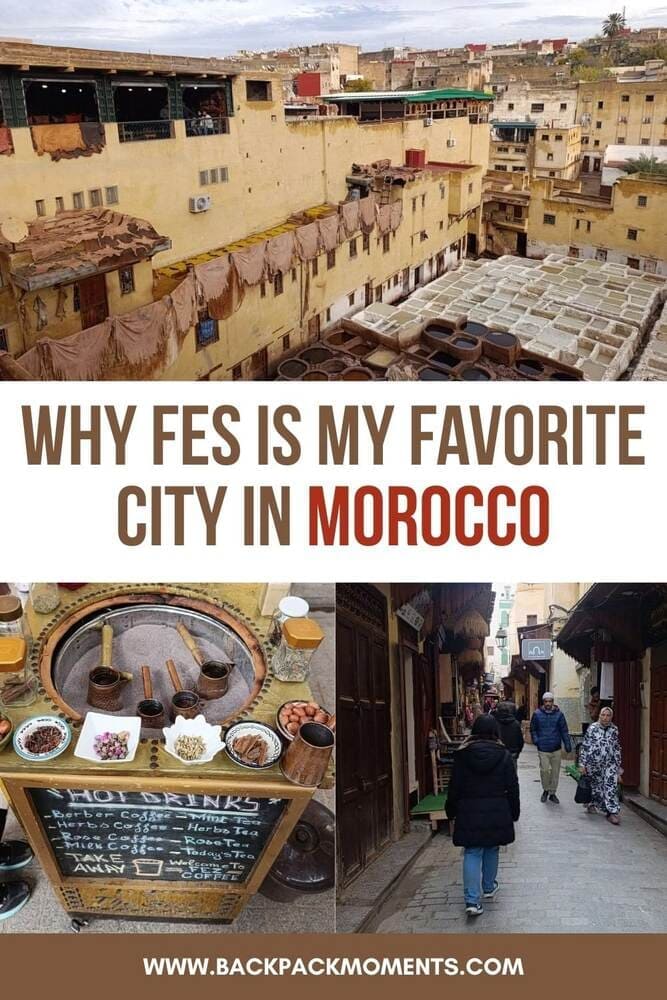
Why Fes is my favorite city in Morocco (and how to best enjoy it)
This post may contain affiliate links. If you make a purchase using one of these links, I may receive a small reward at no extra cost to you. See my Disclosure Policy for more information.
The title says it all – I love Fes and remember it fondly. Learn the reasons why and a ton of practical tips to make your stay there as enjoyable as it can be!
Reason 1: It’s an authentic open-air museum
Most cities in the world present their history behind ticket counters and velvet ropes. But not Fes. It feels alive! Fes still carries on as it has for centuries; you step right into the action, easy to imagine it’s the 12th century without the need for VR/AR.
Isn’t this the definition of a museum? A place that preserves old artifacts with the aim of letting people imagine life in the past. Well, Fes does that by virtue of its architecture, layout, workshops, medreses, people, and more. A true open-air museum.
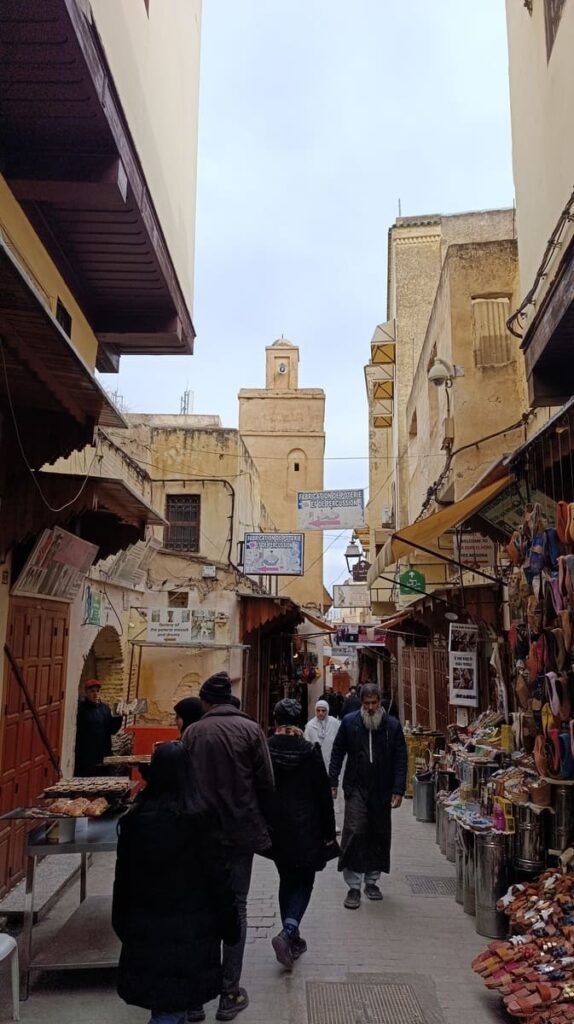
This phrase is most often used to describe Fes el-Bali, the older of the two halves of the medina (the other being Fes Jdid, just a little newer, on the western side). It’s a functioning medieval city where donkeys still haul goods through alleys too narrow for cars (and sometimes larger humans too), where families have lived in the same homes for generations, and where commercial life unfolds as it has for centuries.
What I liked about Fes is that nothing is staged. You walk through history, not watch it. The writing maxim we know from school, “Show, don’t tell,” but applied in real life.
No amount of describing will suffice until you go there and take a dive in Fes’s medina and roam the alleys.
Fes is not polished. It’s indifferent to tourists, and this is exactly what makes it so real and so captivating.
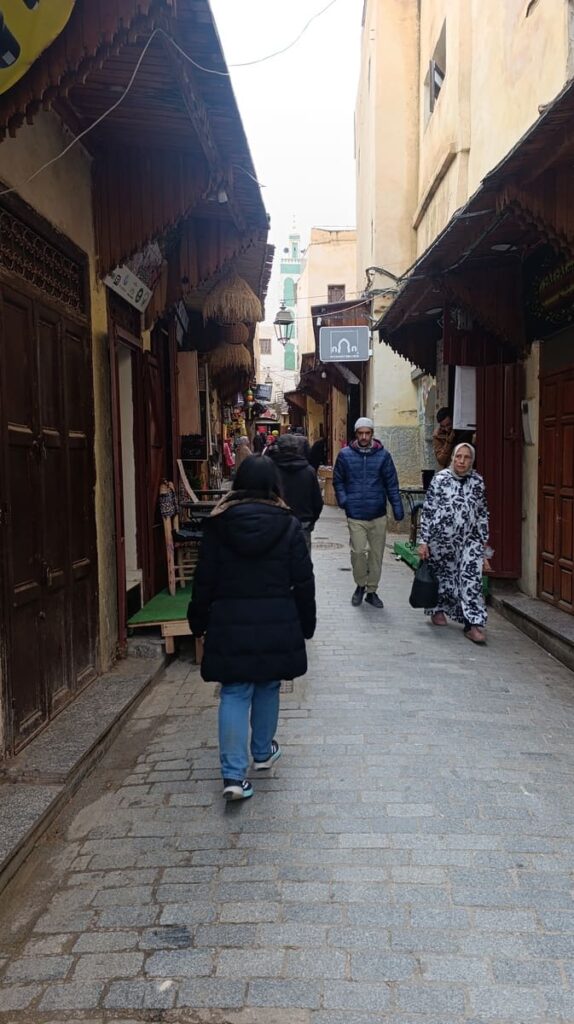
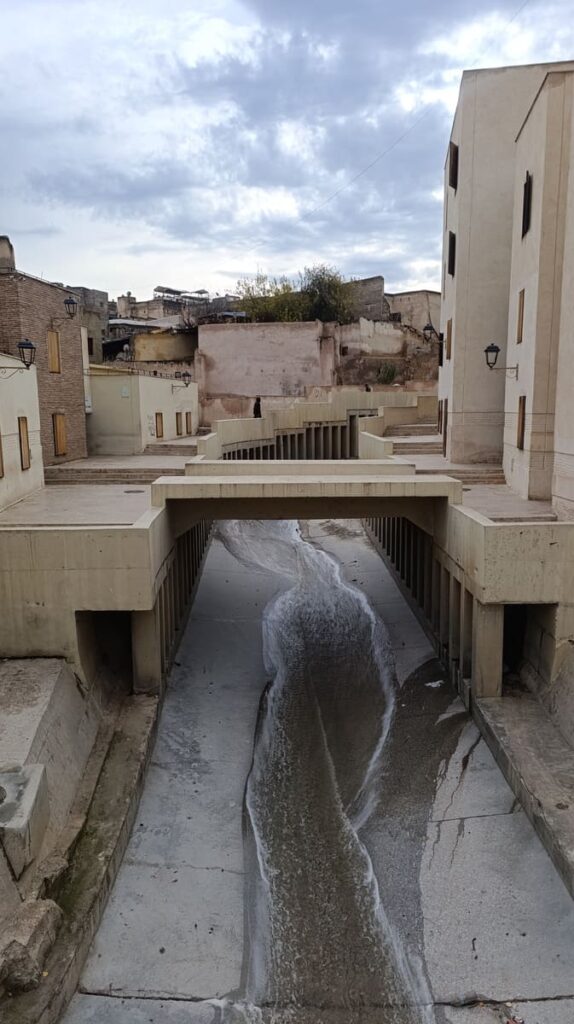
Yes, parts of Fes are rough around the edges. The centuries take their toll. Crumbling buildings, overpowering smells (rarely of kebab), dark and confusing alleys. Honestly, it is precisely that rawness that appeals to me.
I scream on the inside when I hear someone didn’t like Fes because they thought it was too shady, seemed too dangerous, or something – that’s the point! It’s messy, noisy, imperfect, and deeply human, and leaves a lasting impression. Andby the way, I don’t think it’s more dangerous than other places in Morocco either.
Reason 2: The Medina of Fes is an addictive maze
I’ve always had a fascination with labyrinths. I believe many others do too, otherwise movies like Maze Runner, Cube, and Pan’s Labyrinth, and corn/shrub maze agritourism attractions wouldn’t exist. Disneyland Paris also features a maze based on Alice in Wonderland.
What about a real-world maze? Well, Fes is just that!
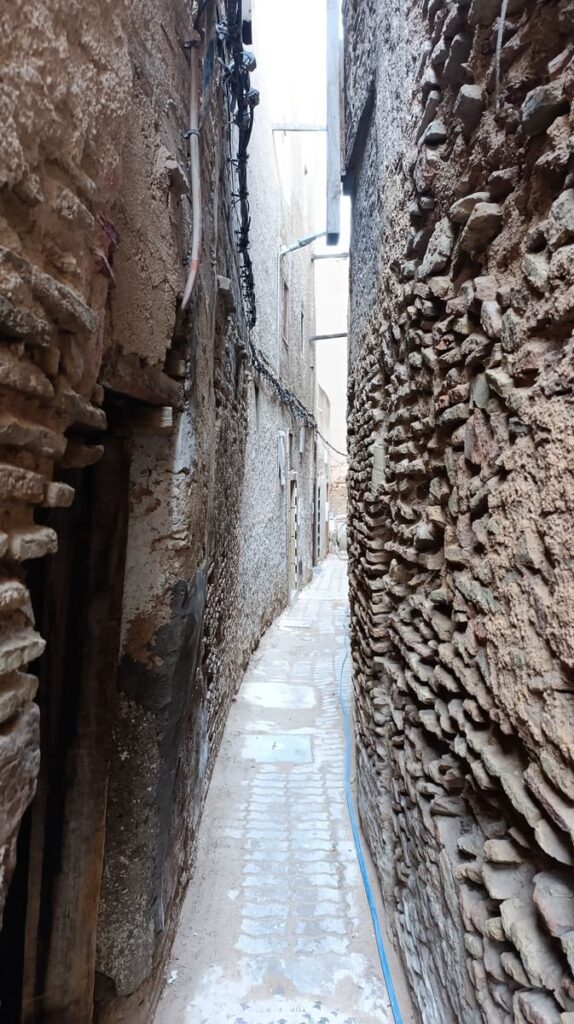
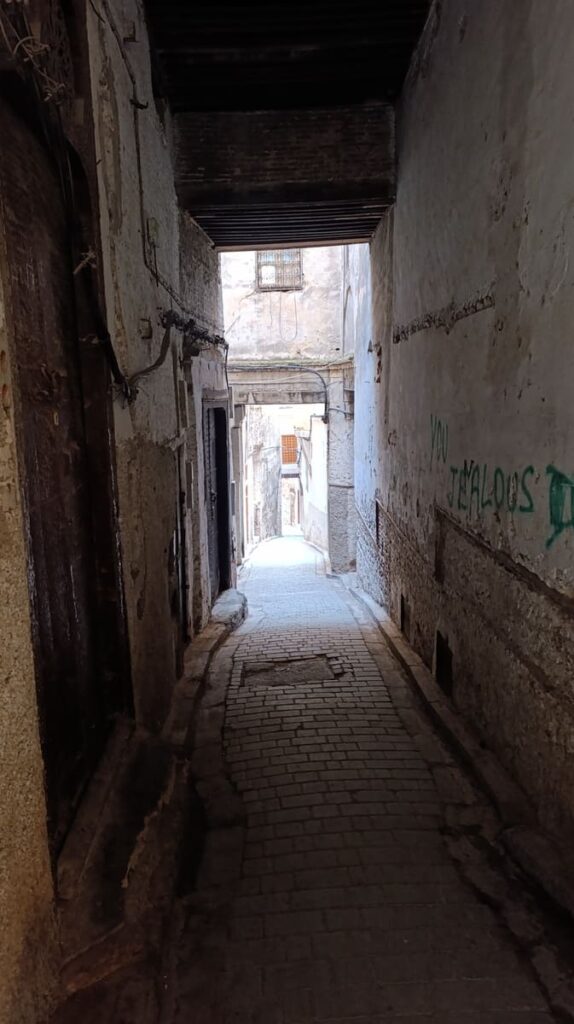
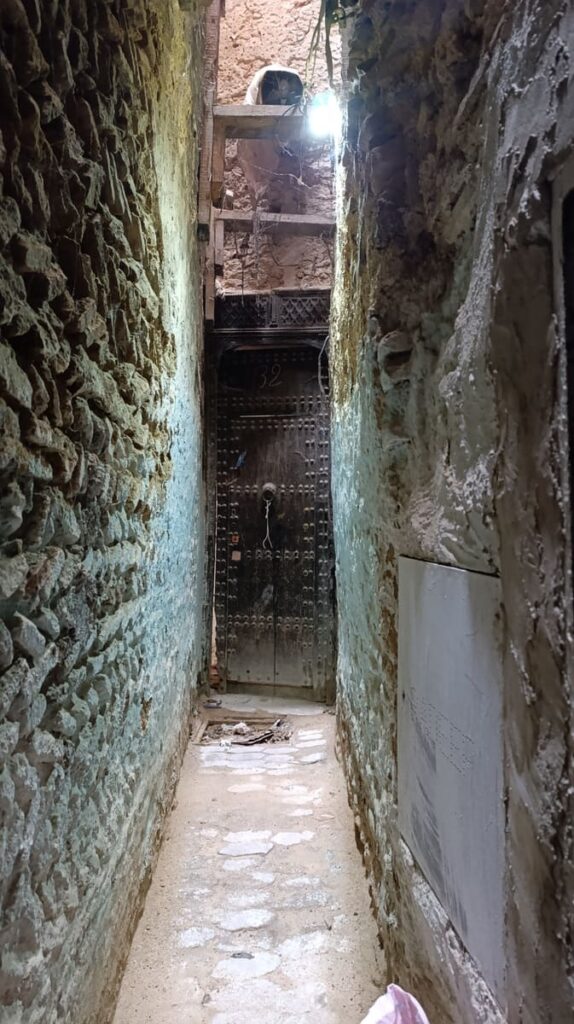
Due to its origins in the Middle Ages, when there was no central planning, and streets evolved naturally between dwellings, Fes’s layout is very much akin to a labyrinth. Definitely so for first-timers, but I can imagine it takes kids there a few years to get used to the 9000+ alleys.
It reminded me a lot of Venice and Jerusalem, both emerging during the Middle Ages too (N.B. Jerusalem is much older, but most of the present buildings date to the Ottoman period, 16th century), and both having the same maze-like ambiance.
Well, Fes is similar but on steroids. You can actually get lost there, no joke.
I found it thrilling, and I bet you will too.
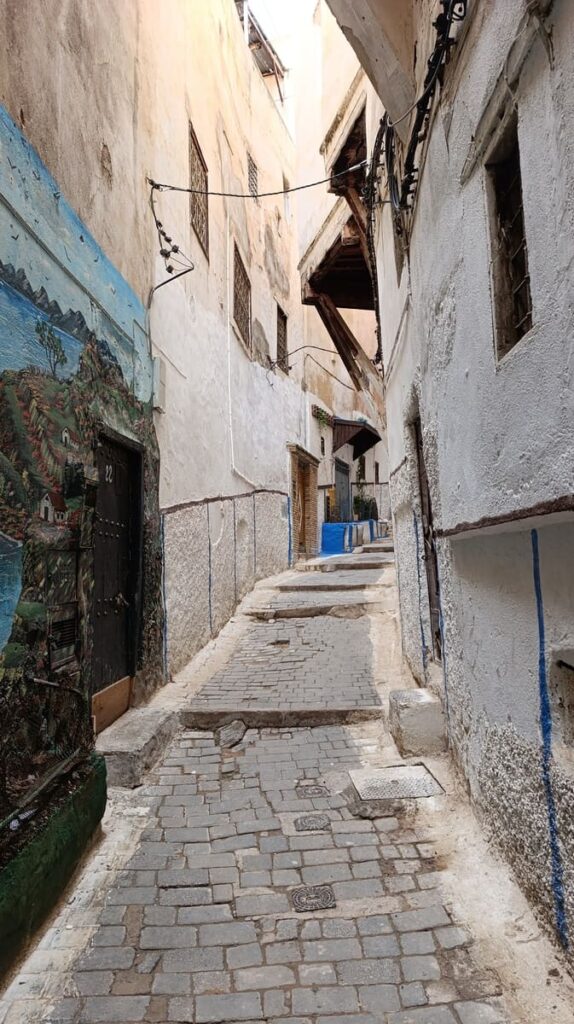
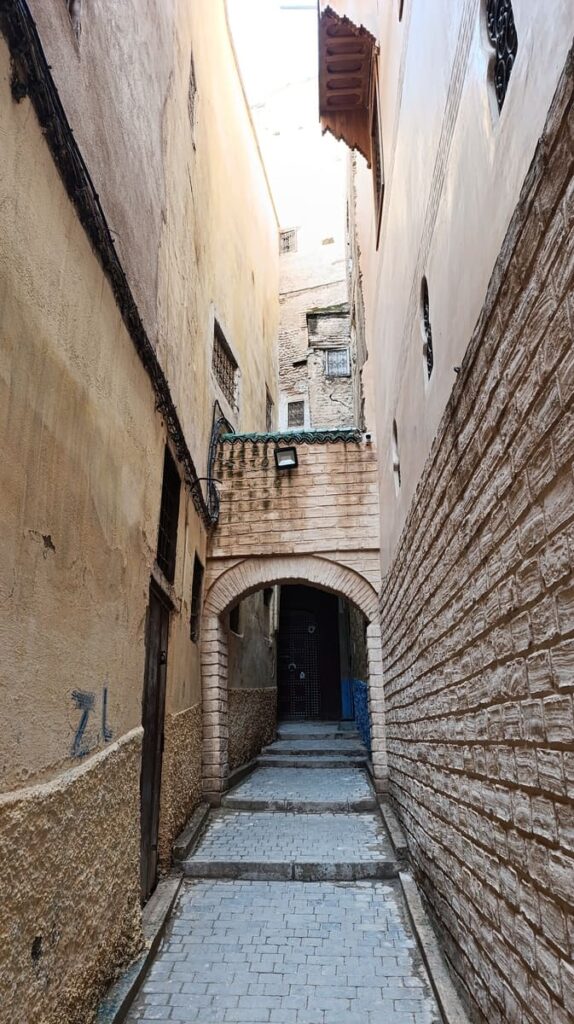
Challenge: Get Lost in Fes!
So here’s a challenge for you.
Instead of trying to fight the maze by figuring out a way out on the map, why not embrace it?
Like, get lost deliberately? You will have a lot of fun, I promise.
Put your phone away and challenge yourself to get from one side of the city to the other. Start at Place Boujloud, the big square at the western end of Fes el-Bali, and try to get to Bab Khoukha at the eastern end.
For this to be interesting, don’t use the main streets (Talaa Kebira and Talaa Sghira)!
Unlike commercial mazes, there are no prizes here, just bragging rights and an unmatchable sense of exploration.
Reason 3: The crafts are alive and traditional
In my home country of Bulgaria, many of the traditional crafts have disappeared in favor of automation, heavy industry, and modernity. Somewhat artificially, they are showcased in ticketed “theme parks” and on very few streets, kept in their original look as much as possible.
I believe traditional crafts in many places around the world are preserved only for tourism and education. Well, once again, not in Fes.
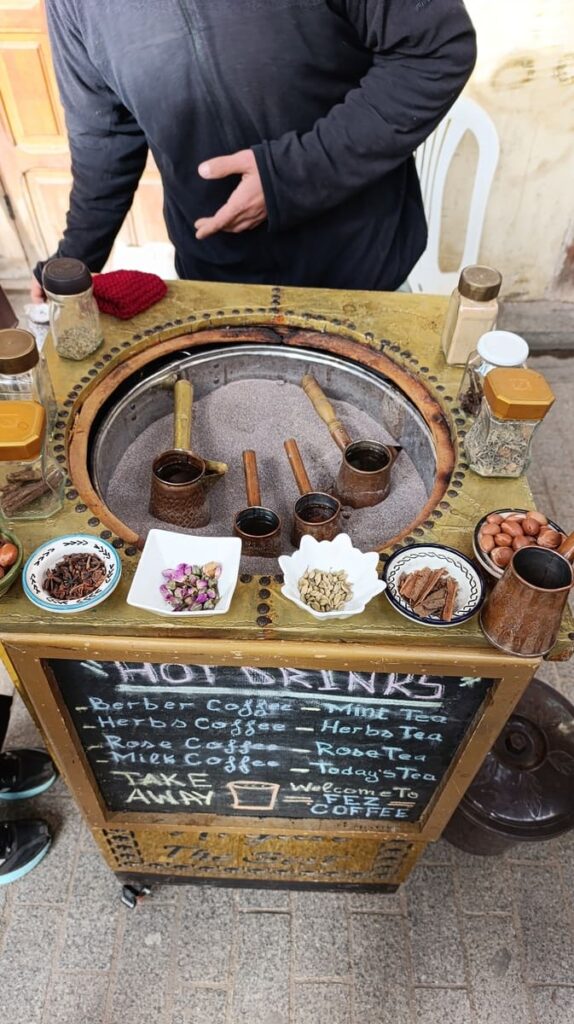
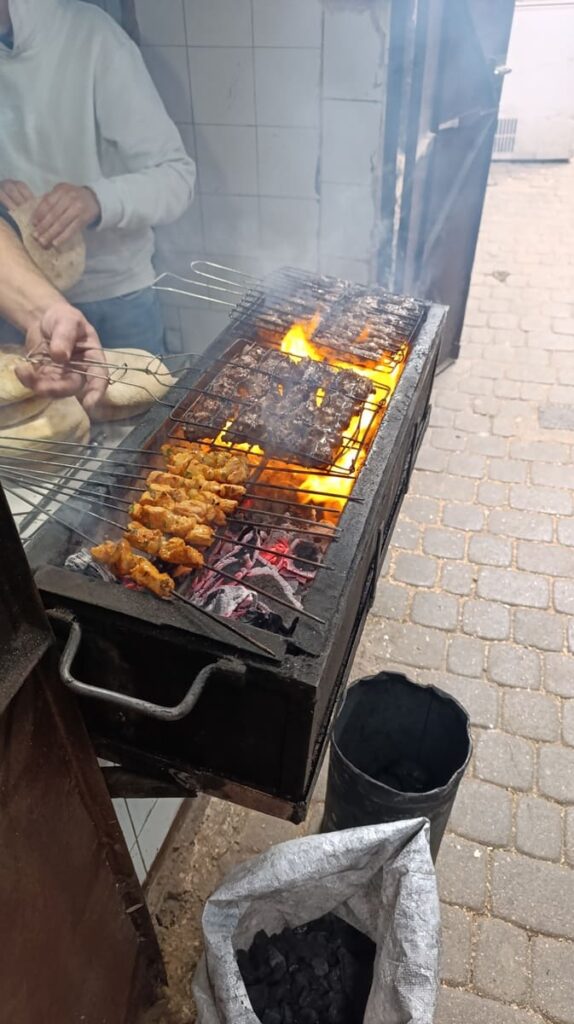
Walking through the medina, it quickly becomes obvious that the workshops are not for show. You don’t need to seek out craftsmanship – you will constantly stumble into it.
You’ll hear the tap of chisels, the whirr of looms, or the dull thud of leather being worked… It’s an entire ecosystem that’s still functioning exactly where it always has.
Talking of leather, Fes is notorious for its three, still active, tanneries. Chouara Tannery, both the largest and the oldest, has produced leather the same way for over 1000 years.
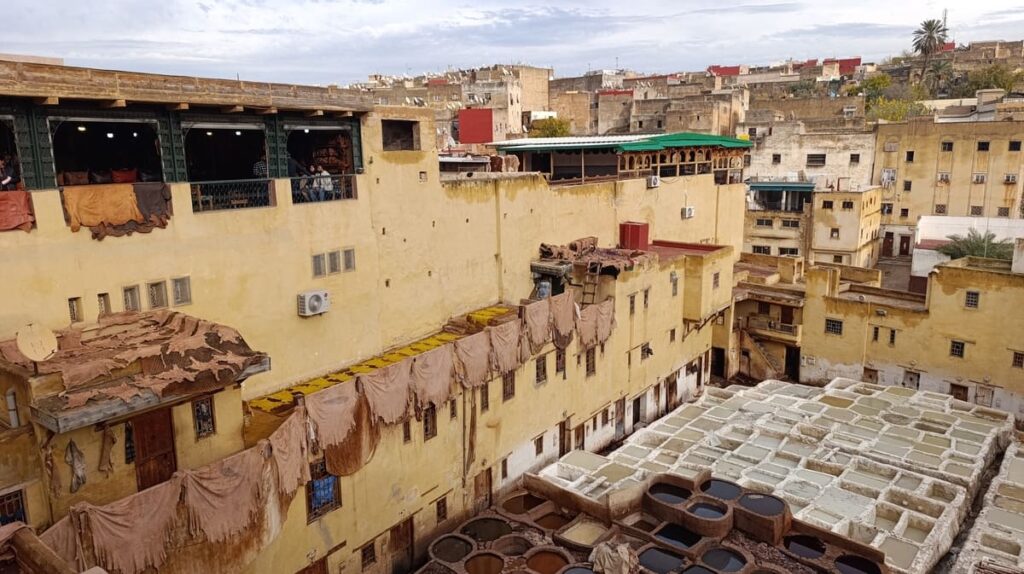
This includes the initial processing of the skins in a mixture of cow urine, pigeon feces, and a bunch of other ingredients, giving the entire area a salty, sour smell, unpleasant to most (hence why they give mint leaves as you enter). Surprisingly, I didn’t find the smell too overbearing.
Similarly, throughout the medina, woodworkers carve cedar doors, weavers produce fabric on hand looms, and metalworkers shape trays the slow way because that’s the only way they know.
It’s not a spectacle – Fes’s workshops are the city’s blood.
Places of interest in Fes
This may be a bit counter to me telling you to go lose yourself in the medina without a plan, but if you are an obsessive planner, having some sights to aim to visit is useful.
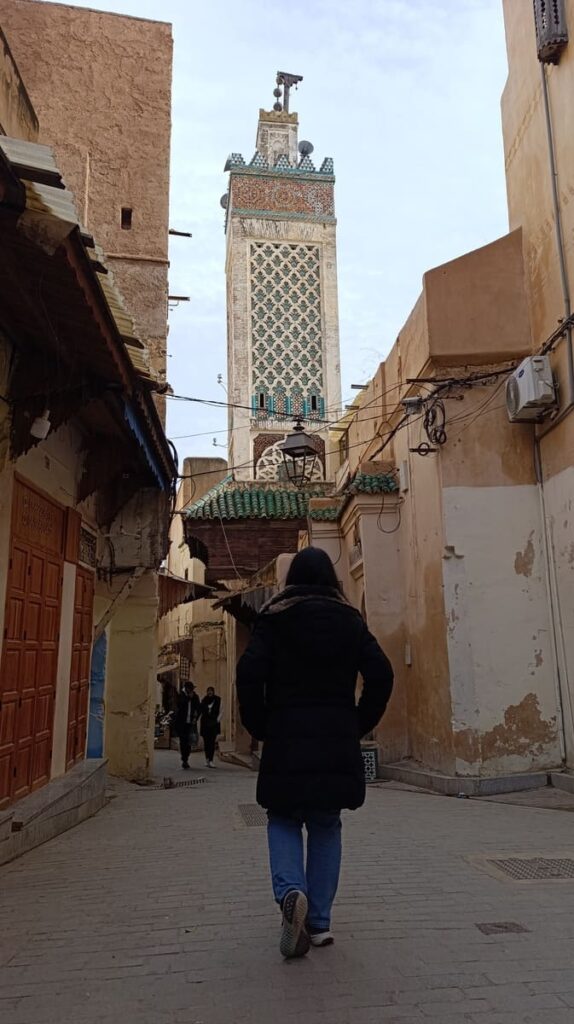
If you think that’s you, bookmark these places on Maps.me or whichever map you use:
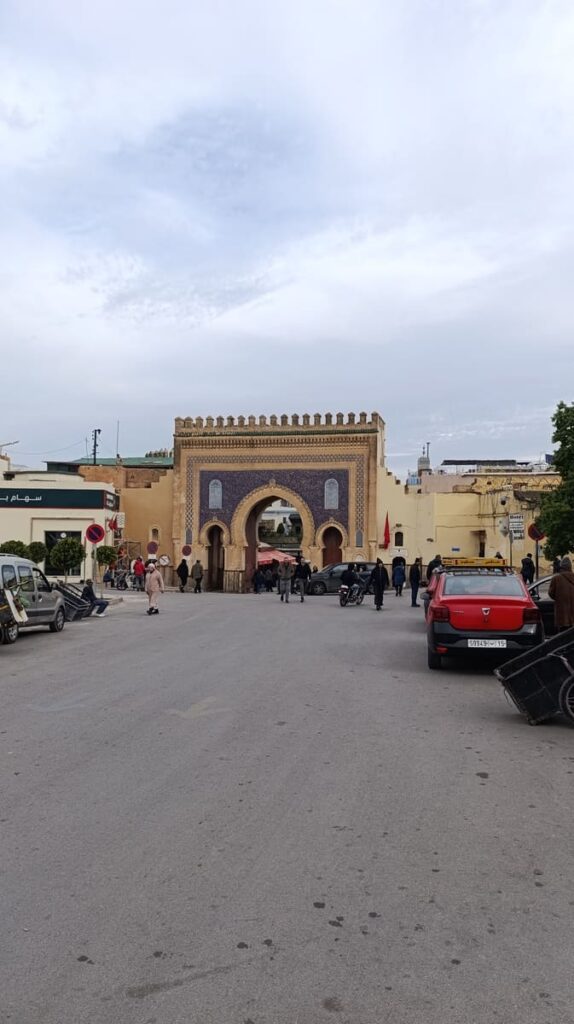
- Bab Bou Jeloud (Blue Gate): The most famous entrance to the medina, blue on the outside and green on the inside, and a natural starting point for exploring Fes on foot. The largest square in the medina is beside this gate
- Al-Qarawiyyin Mosque and University: Founded in 859 AD and considered the oldest continuously operating university in the world; non-Muslims can’t enter, but the surrounding courtyards are still impressive.
- Chouara Tannery: The iconic leather tannery of Fes. Best viewed from surrounding terraces, most of which are privately owned leather shops, which may or may not ask for a small entrance fee (they didn’t for us, but I’ve heard different stories too). You can have a raw look at centuries-old leather-making techniques.
- Bou Inania Madrasa: One of the few religious buildings in Fes open to non-Muslims, known for its intricate zellige tilework, carved wood, and peaceful inner courtyard.
- Nejjarine Fountain: A finely decorated public fountain.
- Mellah (Jewish Quarter): A quieter, more spacious part of Fes el Jdid that reflects the city’s multicultural past.
- Marinid Tombs: The ruins are nothing special, I’d say, but the sweeping views over the entire medina are worth it.
- Place Seffarine: A small square dominated by copper workshops, where you can watch metalworkers hammer trays and pots using traditional methods.
Where to Stay in Fes
The main choice you have to make when it comes to accommodation is whether you want to stay in a traditional riad within the medina or a more modern hotel on its outskirts.
| Traditional riad | Modern hotel |
|---|---|
| More intimate, calmer. | Familiar, standardized. |
| Inward-facing towards a central courtyard. | Outward-facing towards a street. |
| Situated inside the medina. Feels like you are living in the city, not merely visiting. | Situated outside the borders of the medina. |
| Situated outside the medina’s borders. | More easily accessible, even by taxi. |
| Traditional tilework, ceilings, and architecture. Unique rooms. | Identical rooms. Efficient layouts designed for comfort, not necessarily beauty. |
| More common to have informal, personalized service. | More common to have a professional, one-size-fits-all service. |
Since Fes is all about immersive authenticity, I believe a traditional riad is a better sleeping option. Nonetheless, for those with heavy luggage who value convenience, a modern hotel is not a bad choice.
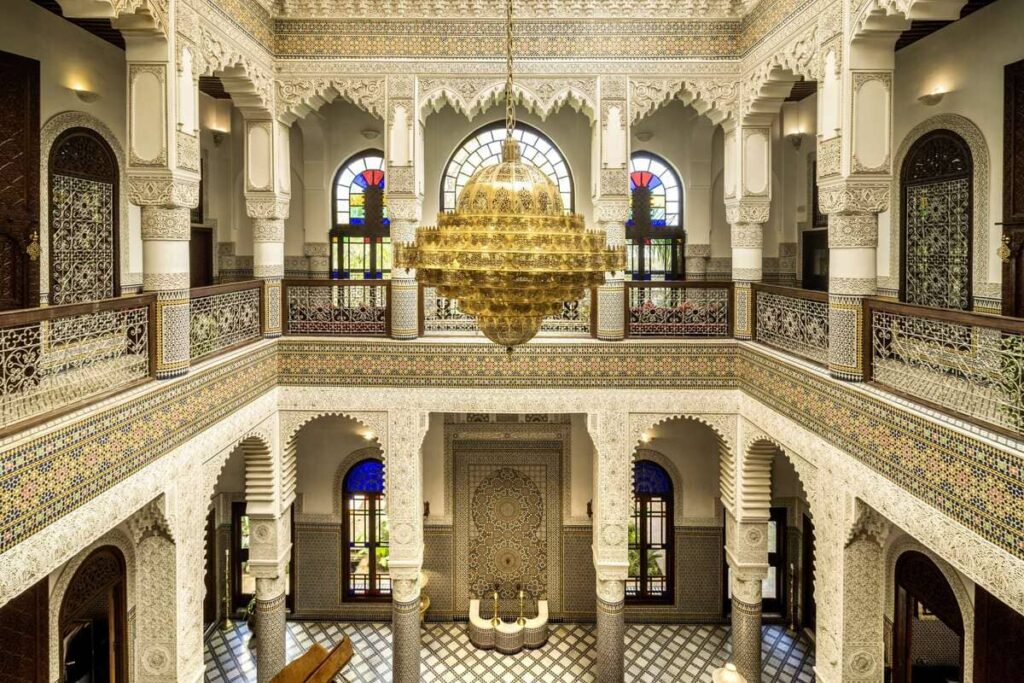
Here are the top riads in Fes medina:
- Riad Fes – Relais & Châteaux: A 5-star marvel with the most deluxe amenities. Very high price, but it’s the best choice if you want to splurge.
- Riad Laroussa: Dates back to the 17th century with added comforts, spa, massages, a gorgeous courtyard, and a small pool. Best for midrange budgets.
- Riad Al Makan Fes & Spa: Magnificent courtyard and fabulous breakfast. Awesome value for money. Best for low to midrange budgets.
- Riad Verus: A social, fun, and busy riad with loads of events and an upbeat vibe. Suitable for younger travelers with lower budgets.
Best choice bordering the medina:
- Palais Faraj Suites & Spa: Spectacular suites surrounding a central courtyard, akin to a true riad. Also features an outdoor pool, spa, hammam, massage treatments, a beauty salon, and a free yoga session on Saturday.
It’s better NOT to stay in the new part of Fes – Ville Nouvelle – as it’s quite far from the medina and it will take you 20 minutes by taxi every time you travel between the two.
Best Day Trips From Fes
I’d say you need at least 2 days for Fes, the city. So you won’t have to rush and have no time to truly savor the spirit of the place.
Why not more, though?
Fes is a good base for day trips to some of the best places to visit in Morocco. Here are a few ideas:
1. Chefchaouen – The Blue City in the Rif Mountains: It’s about 3.5 hours away. A day is enough to appreciate the medina and take lots of photos of the beautiful blue houses.
2. Volubilis, Meknes & Moulay Idriss – Roman Ruins and Imperial History: A combination of 3 different stops, about 1.5-2 hours from Fes. Now, a disclaimer, I didn’t really like Meknes, but if you’re into history, especially of the Roman Empire, Volubilis is a unique site.
3. Ifrane, Azrou & The Middle Atlas – Nature and Berber culture: Replace the maze with nature. If you were getting a bit claustrophobic in Fes, Ifrane, and Azrou will give you a welcome respite in a scenic natural park called “The Switzerland of Morocco”.
4. Sahara Desert (Merzouga): Though technically not a day trip (takes at least 3), it’s one of the most popular tours departing from Fes. Most desert experiences include camel trekking, crossing the dramatic Ziz Valley, overnight desert camps in a Berber camp in Merzouga, and riding 4×4 quadbikes.
Practical Tips for Enjoying Fes
While visiting Fes is mostly straightforward, such a unique city has a few quirks that you need to know and/or navigate around.
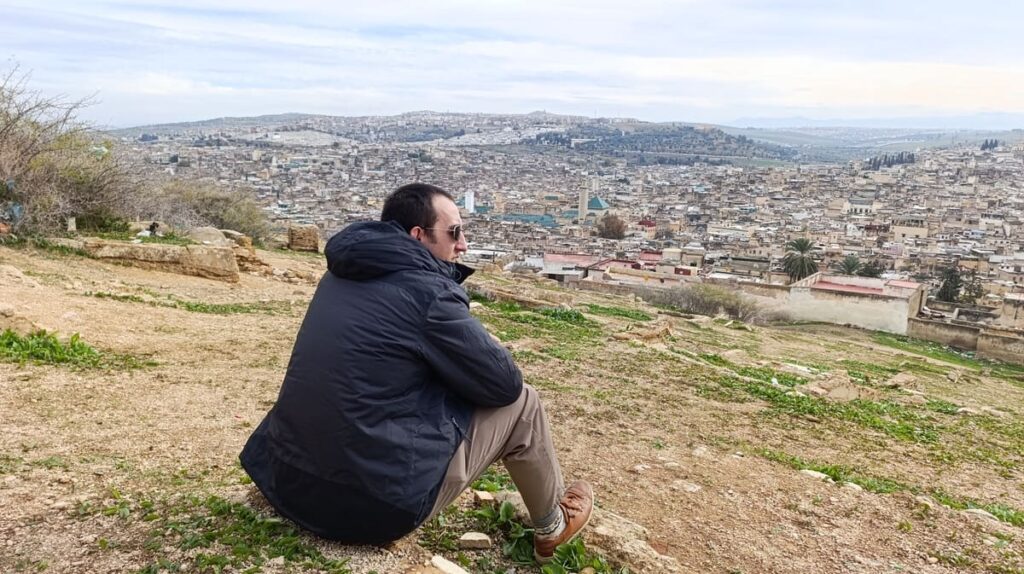
Here are a few useful nuggets of information and practical tips to make your stay in the oldest Moroccan capital as smooth as possible.
Guide vs no guide
You don’t need a local guide to explore Fes.
There are no areas where only guided tourists can enter.
However, a local guide will surely add value to any visit, especially by providing historical background, interesting facts, and pointing out details you’d otherwise miss.
Should you wish to go with a guide, this walking tour of the Fes medina is the best-rated, offers flexibility, and is both fun and informative.
Reading the map and navigation
Should you wish to forgo my challenge to get lost on purpose, you may want to use a map to navigate within the medina. Fair enough.
I found Maps.me surprisingly efficient. It has the smaller alleys mapped too, helping you find your way in the maze, no matter how “deep” you go.
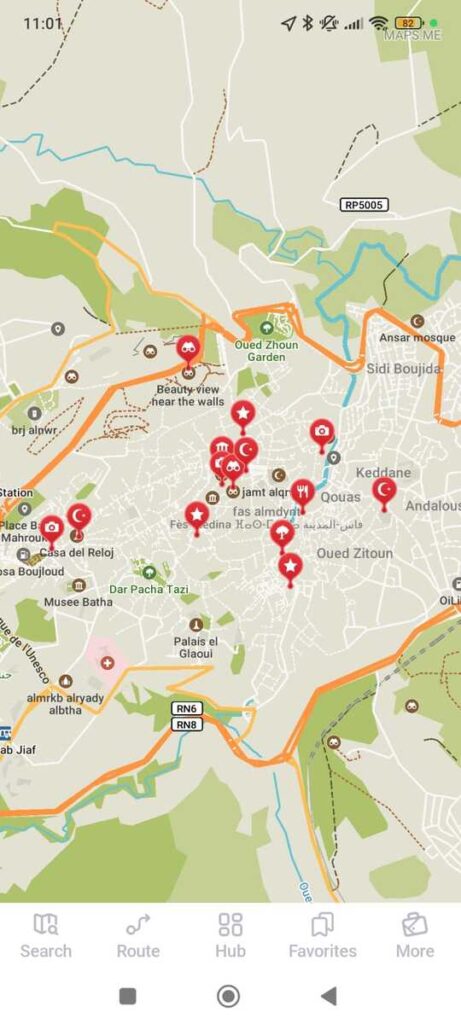
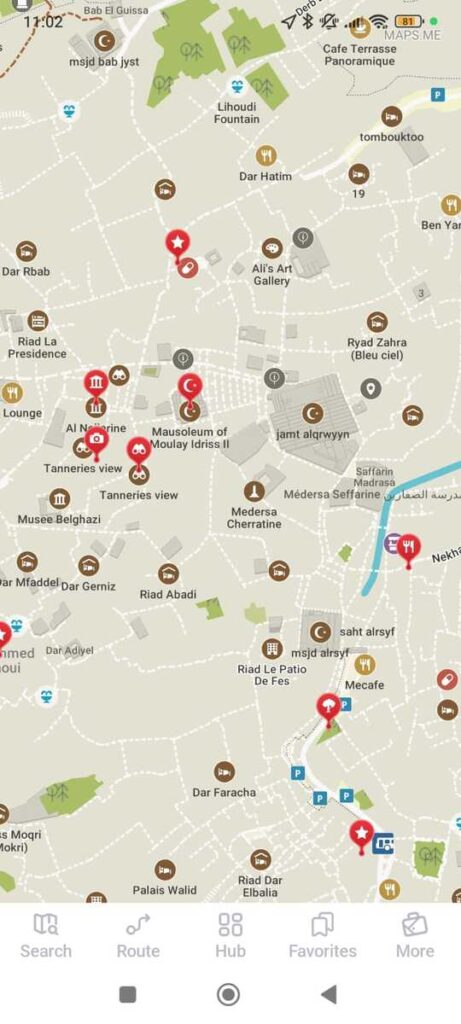
Google Maps is fine, but missing the smallest alleys.
Apart from that, it’s worth noting that Fes has 2 main streets that run nearly parallel to each other: Tala’a Kebira and Tala’a Seghira. Both start near Bab Bou Jeloud in the western end of Fes el-Bali and merge just before Souq al-Attarine. Think of them as pedestrian highways you can use to get to a new place.
The”secret” road signs
Did you know that the road signs in the Fes medina carry more information than just the mere names?
First, the color of the sign indicates a route. I’d go into detail and tell you if the colors weren’t largely faded, the routes weren’t nonsense, and the signs weren’t only 200 or so. Anyway, I baited you to think the colors are important, but in reality, you can safely ignore them.
Another thing is the sign shape. Hexagons mean a dead end, rectangles mean the road has branches, and squares mean the road is open but without branches.
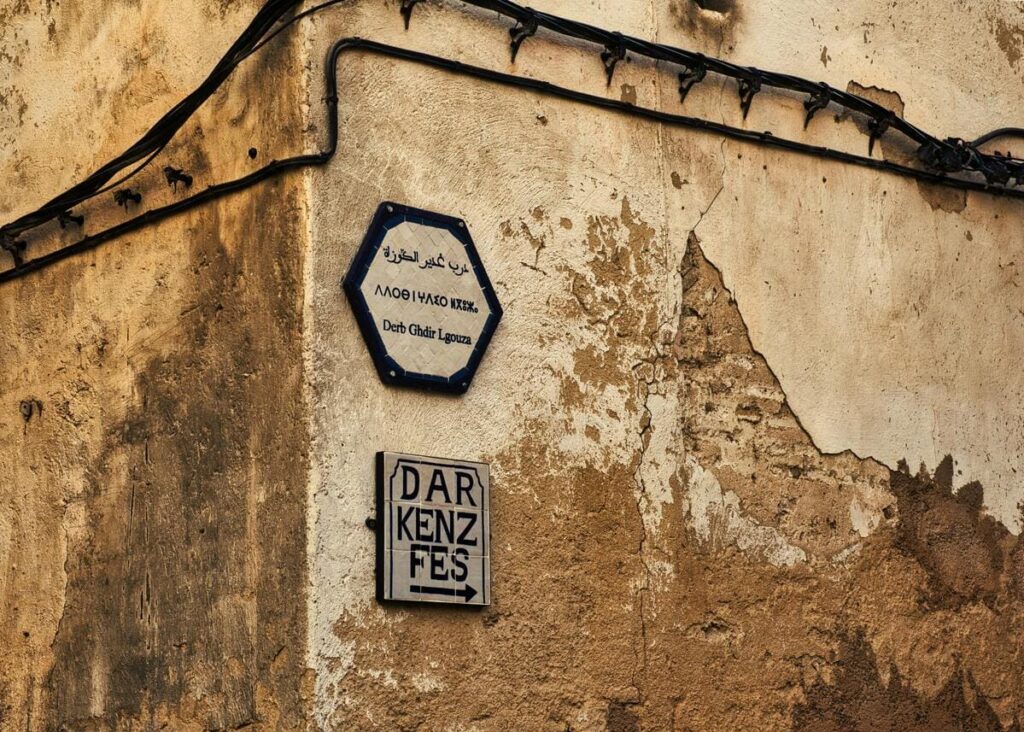
I think knowing an alley is a dead end is handy, though not paramount, whereas the other two are mostly inconsequential.
Scams (no, the street isn’t closed!)
One thing I can guarantee you will experience in the medina of Fes is locals telling you a street is closed. 100%, there is no way around it.
The thing is, streets are never closed.
Their goal is to take advantage of your naivete. If you believe them (sometimes even if you don’t), they will start leading you to a street that “isn’t closed”. Show you the way out, right?
The problem is that “service” is not free. It’s one of the oldest scams in the book of Moroccan scams. The same local will demand payment for his work even if you didn’t actually want it – he helped you escape the maze after all, didn’t he?
Even though Moroccan people are generally kind and do not wish you harm, the ones who approach you unsolicited in Fes are not of the general kind. It’s safer to ignore advice on the street, not to follow anyone who isn’t your guide, and keep your B.S. meter up.
Entry into the tanneries’ viewpoints
Being one of Fes’s most famous attractions, the 3 tanneries are also scam magnets. The “fake guides” from above will usually try to lead you here and then demand compensation for “a job well done”.
To see the leather-curing pools, you need to enter one of the buildings that overlook them. Most, if not all, are private leather shops.
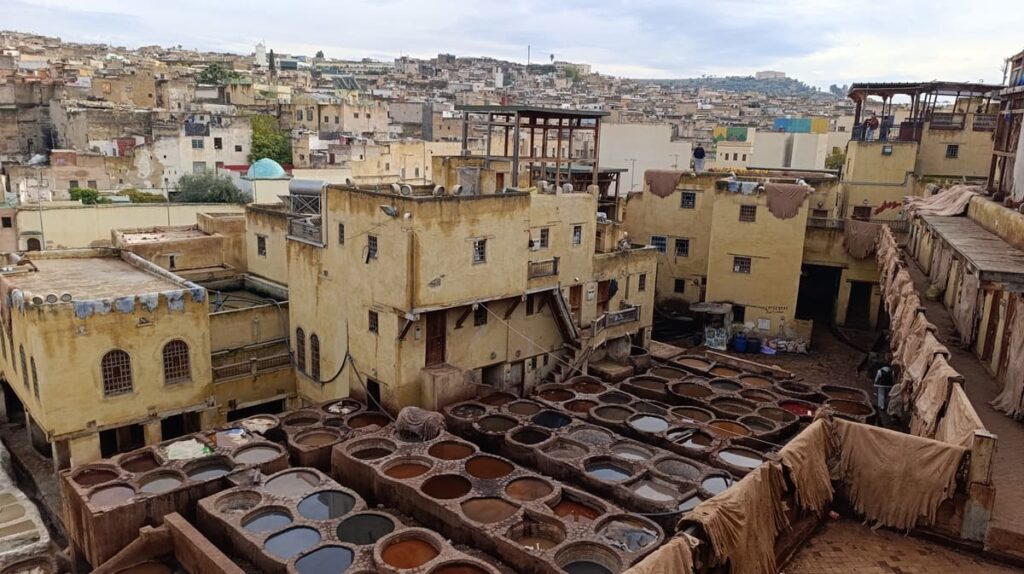
These should, on paper, be free to enter, but this is up to the discretion of the owners. Some have a sign “Free entry”, others don’t. Some owners will ask for an entrance fee before letting you in; others can be cunning and ask for a fee afterwards (which is the truly scammy move).
My advice is to look for the free entrance, confirm that it is, regardless of the sign, and buy leather goods if you want, not because you may feel pressured. We entered Chouara Tannery for free via one of the shops below, so I can confirm that it’s totally possible.
Friday in Fes
Friday is the holiest day of the week in Islam. On Friday, men gather for a compulsory communal midday prayer.
What this means for Fes is that many of the shops close around 10-11 AM (or never open) and then reopen around 2-3 PM (or…never).
I still had my B.S. guard up when, on Friday morning, several locals told me the souq was closed, so I didn’t believe it. Well, technically, the souq street is open, but most shops remain closed.
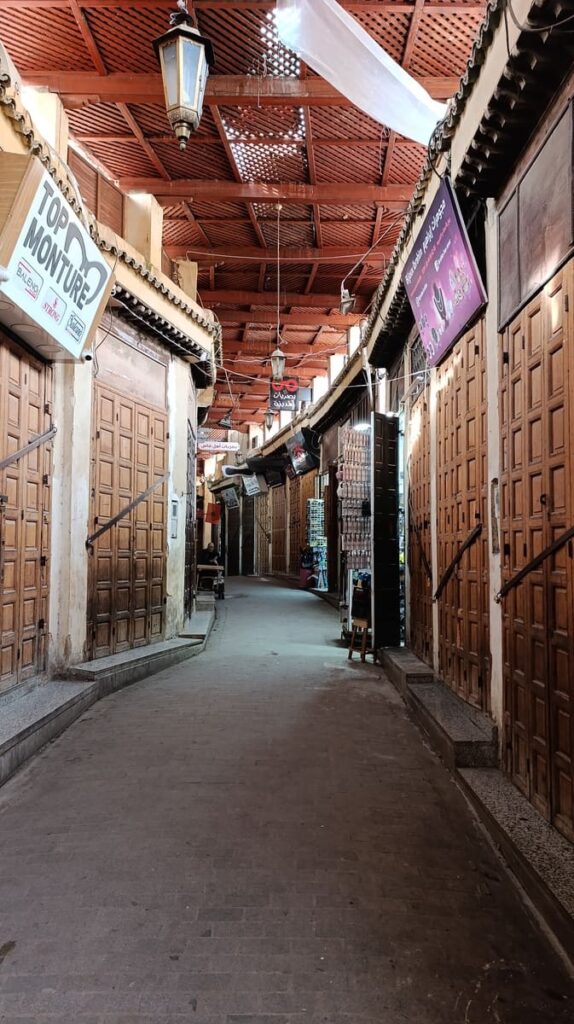
Moreover, most landmarks remain closed to visitors – all mosques, medreses, and historical sites included.
Fes after dark (crime and safety)
Even though many of the smaller alleys look dodgy AF, Fes is generally regarded as very safe.
Yes, even during the night.
Now, do I think you should go explore the medina’s labyrinthine alleys after dark? No, it’s not worth it.
But is it any more dangerous? Also no.
Crime is a rarity, and the few robberies I’ve read about all happened during the day.
Parting words about Fes
Fes is chaos.
I love chaos. It is so human. So authentic.
Could be overwhelming if you like to be in control, to have order around you.
But once you embrace the visible, audible, and olfactory disorder that surrounds you in Fes, you will be truly immersed.
Pure cultural immersion in a city that has barely changed in the past thousand years. Isn’t that amazing?