
Tumpak Sewu Waterfall Guide: The Thousand Cascades of East Java
This post may contain affiliate links. If you make a purchase using one of these links, I may receive a small reward at no extra cost to you. See my Disclosure Policy for more information.
When it comes to waterfalls, Indonesia does it best. Java, in particular, hides some impressive drops of water.
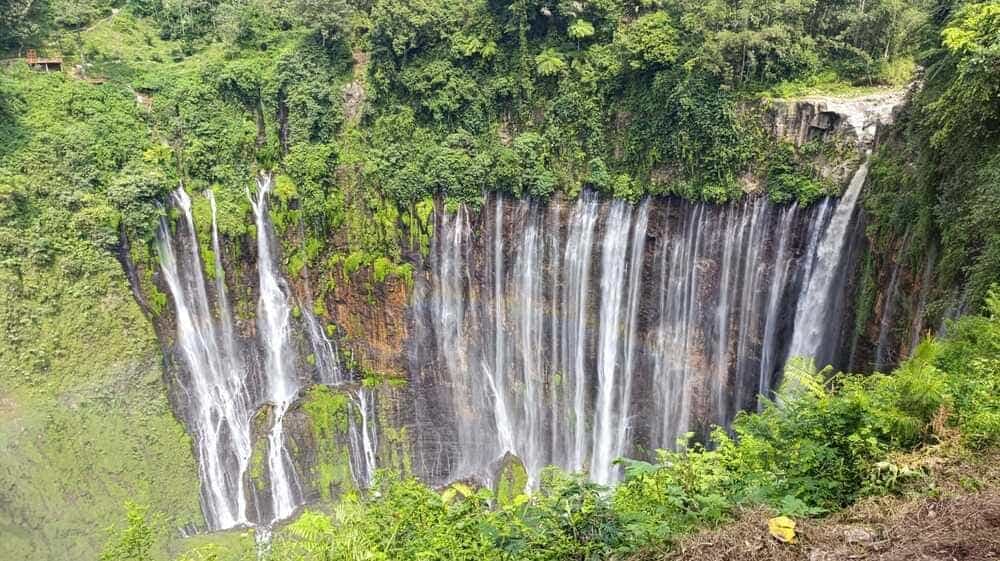
Tumpak Sewu Waterfall (Air Terjun Tumpak Sewu in Indonesian) is not just water falling from a high place – it’s an entire amphitheater of cascades.
Hundreds of streams plunge in unison into a misty canyon below. It’s raw, loud, and one of the most spectacular sights in East Java.
This Tumpak Sewu travel guide covers everything you need to know before you go – from getting there to hiking down to the base, with practical backpacker tips and budget details from my own visit.
Tumpak Sewu is a stop on my Ultimate 14-day Java Itinerary!
What Is Tumpak Sewu, and Where Is It?
“Tumpak Sewu” means “a thousand waterfalls” in Javanese, and once you see it, you’ll understand why.
Although not actually 1000, the Javanese seem to have an obsession with the number and often estimate things of great proportions to sewu: Candi Sewu, Grojogan Sewu, Pantai Sewu, Gunung Sewu, etc.. You get the idea.
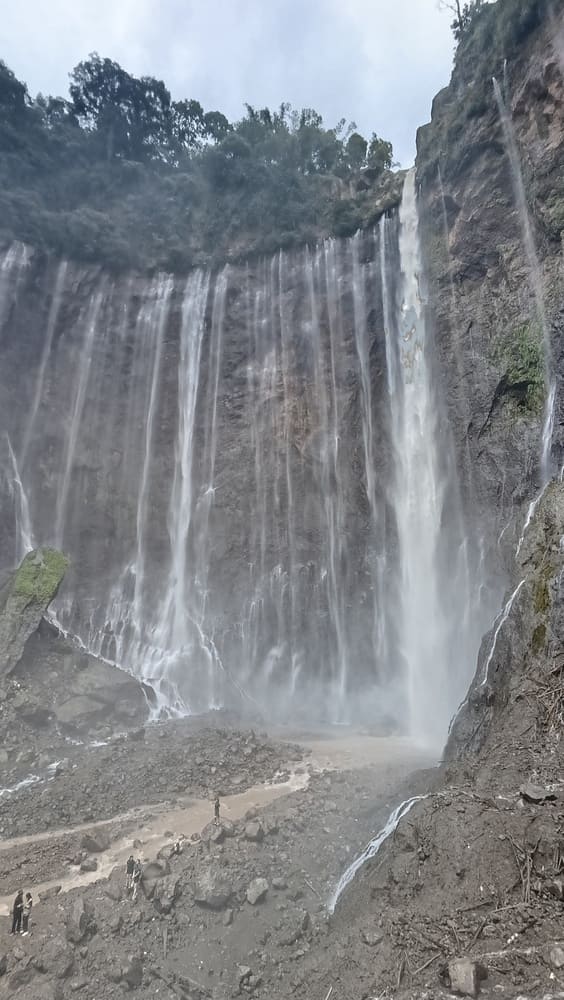
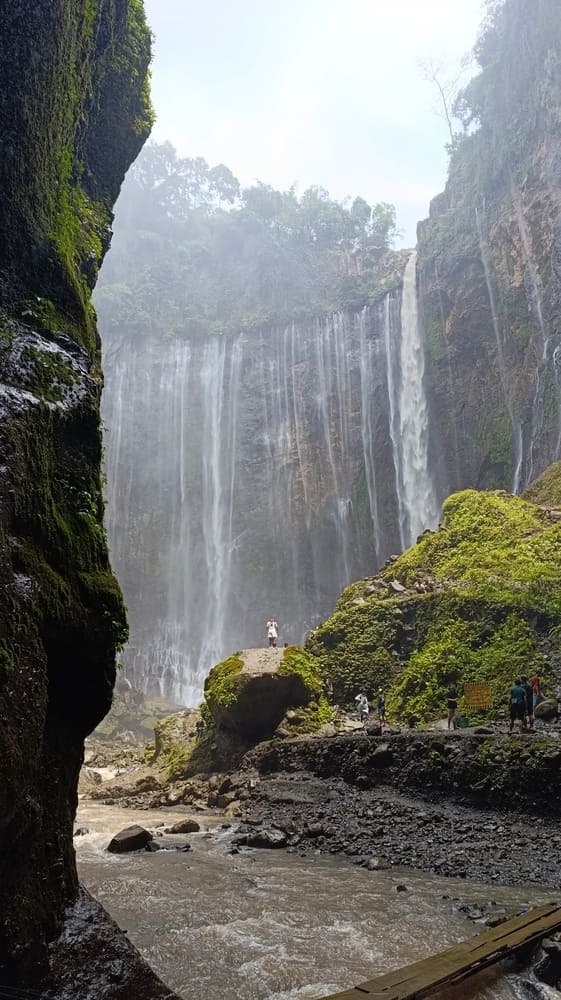
Tumpak Sewu is vast and expansive, dwarfing you, a puny traveler. The name is appropriate, despite being slightly inaccurate.
The falls are formed by the Glidik River, flowing from Mount Semeru, Indonesia’s highest volcano, which, on a clear day, you will be able to see in the backdrop.
You’ll find it in East Java, on the border between the Lumajang and Malang regencies. It’s about 2-3 hours from Malang city or 5-6 hours from Surabaya, making it an ideal day or overnight trip.
How to Get to Tumpak Sewu Waterfall
Tumpak Sewu is a bit remote, but not that much. It’s not near railway tracks, so you can’t use Java’s preferred transport – the kereta api.
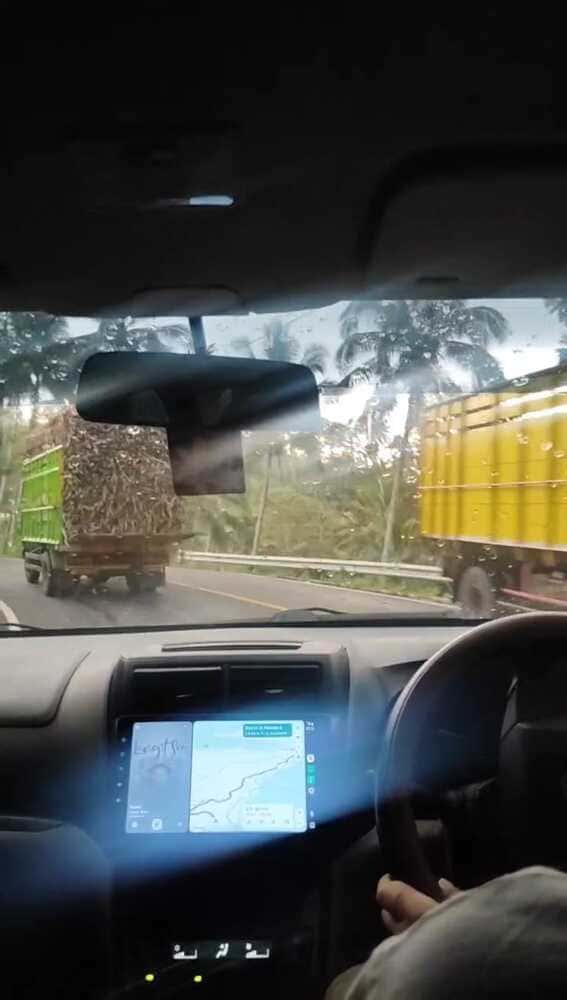
But it is on a rather important road artery that runs on the south side of East Java. Thus, traffic is sizeable, even if the road itself is narrow.
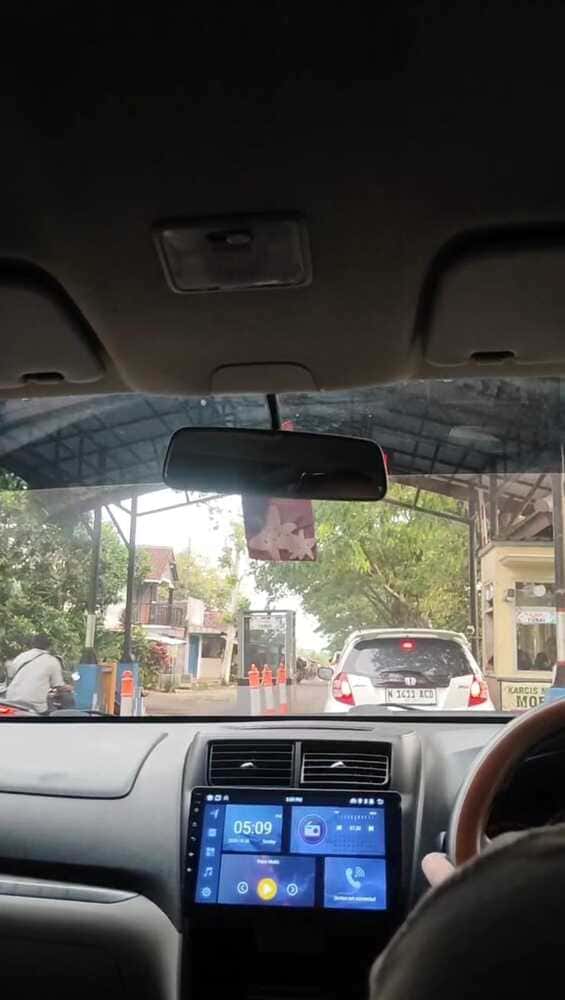
By car or motorcycle
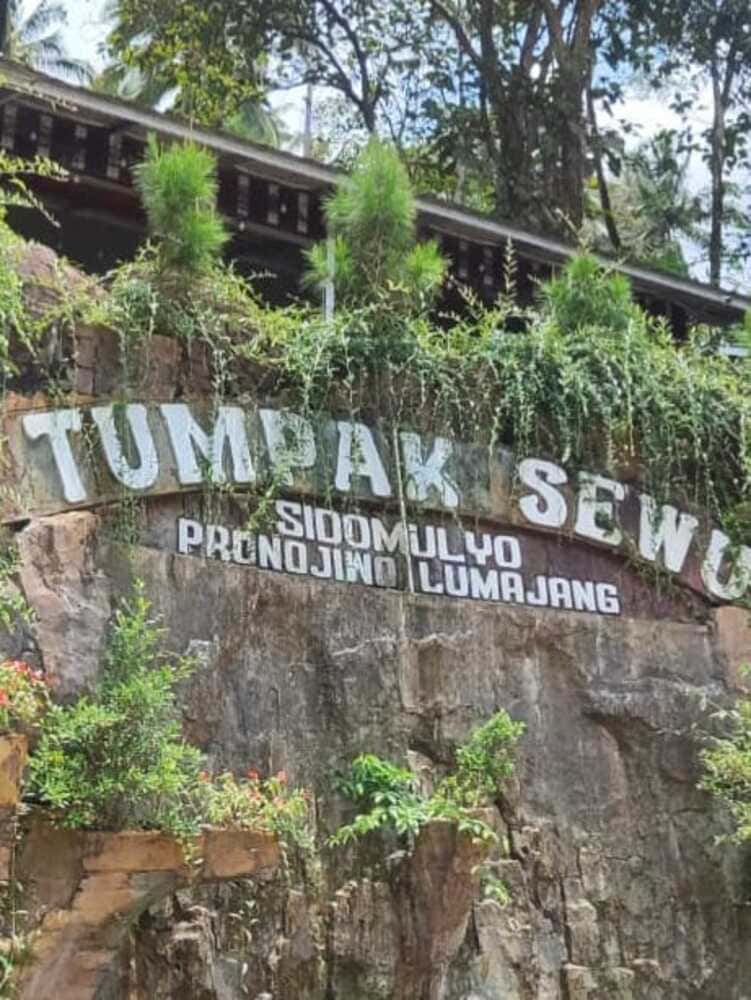
From Malang, the trip takes about 2-3 hours by scooter or private car. The road winds through lush villages and rice terraces before reaching Sidomulyo Village, where the main entrance is located.
From Surabaya, it’s roughly six hours by car – doable if you start early or stay overnight nearby.
Since I was traveling with 2 others (3 people total), a car made sense. If you’re alone or with a partner, a scooter is better.
A car costs considerably more – about 250-300k IDR per day (~15-18 USD) vs the 70-120k IDR (4.50-7 USD) for a motorcycle. You will pay more for gas, too.
Renting either is relatively easy to organize in any major city – ask your accommodation. Booking a car rental online in Indonesia is considerably more expensive.
By Public Transport
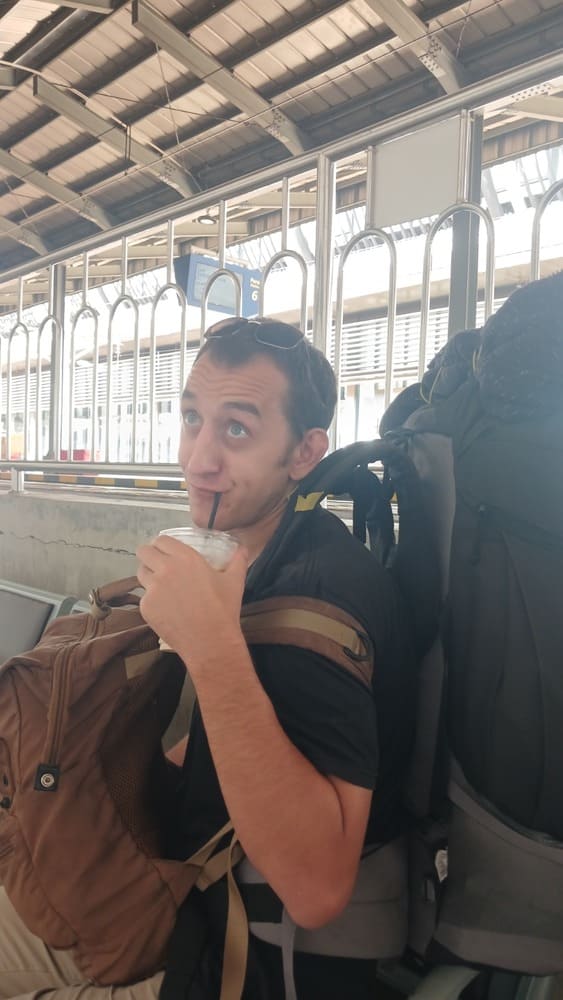
Going to Tumpak Sewu the budget way, like the locals, is only possible if you start from Malang.
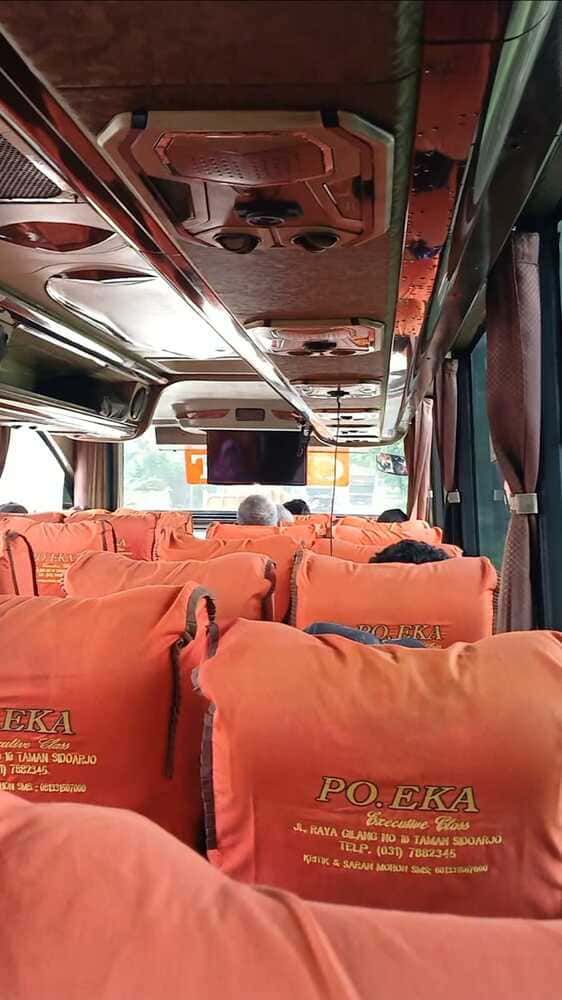
You need to get to Terminal Bayangan Gadang [map] in the southern suburbs of Malang and take a bus heading to Lumanjang. It costs around 30.000 IDR (<2 USD).
There is no timetable – public buses on Java rarely follow one. It leaves when it deems it full enough to be worth it. It’s rarely more than 15-20 minutes of waiting, though.
Note that the last buses from Malang to Lumanjang leave around 3:30 PM (suitable if you want to get there the night before and spend the night in a guesthouse).
The last buses from Lumanjang back to Malang leave around 2:30 PM, which is normally enough time to visit Tumpak Sewu in the morning and return the same day.
In a tour
Forget about driving yourself – just get picked up, driven to Tumpak Sewu, then driven back. Easy piesy.
With transport, entrance fee, and lunch included, it’s a no-brainer deal.
The car leaves Malang around 6 AM, arrives before 9 AM, and returns to Malang by 3-4 PM.
Many backpackers combine Tumpak Sewu with Bromo and Kawah Ijen – two of the most impressive volcanoes on the island. It makes sense as they form a logical route towards (or from) Bali. This 3D/2N tour from Malang or Surabaya includes all 3. Yes, it’s a bit rushed, but well-organized and worth the price.
Tumpak Sewu Entrance Fee and other charges
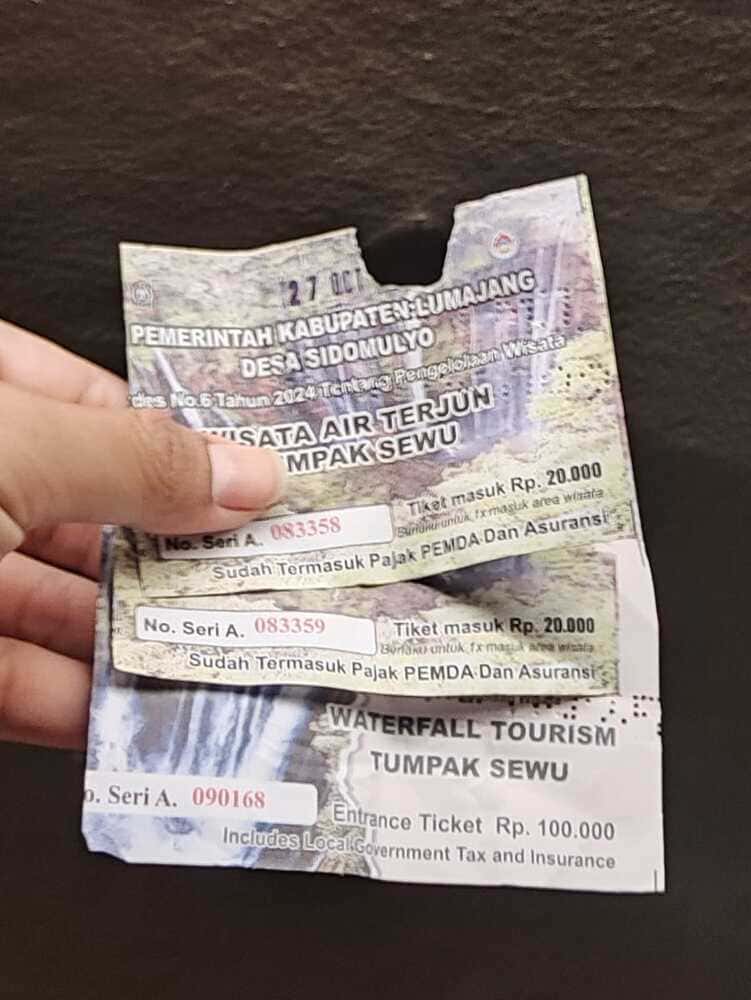
The entrance fee to Tumpak Sewu is 20.000 IDR for locals or 100.000 IDR (6 USD) for foreigners.
Welcome to the land of price discrimination, where you get laughed at if you point out how ridiculous it is. Anyway, I digress.
If you come by a rented vehicle, you will need to pay an additional 5.000 IDR parking.
The public toilet there is not free either – a 5.000 IDR charge too.
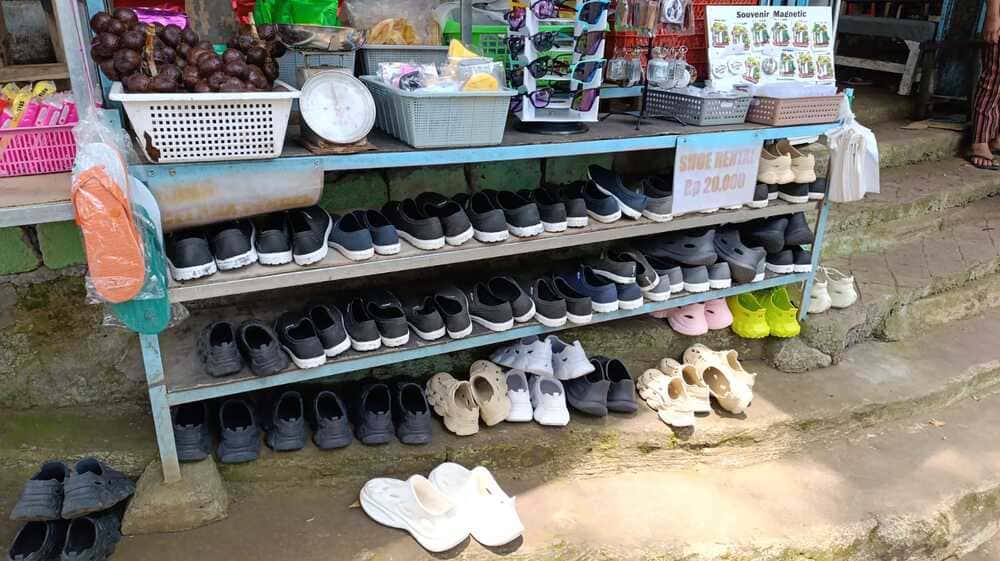
If you want to rent (water, i.e., rubber) shoes, you can do so on-site for 20.000 IDR.
Locals will approach you, offering guide services for around 100.000 IDR. I can’t imagine this ever being a good deal, as one isn’t required, the area is totally doable independently, and they won’t give you much information, not any you can’t find online anyway.
When to Visit Tumpak Sewu Waterfall
Tumpak Sewu flows year-round, but the experience changes with the season. I doubt anyone’s trip to Indonesia revolves around visiting Tumpak Sewu – most end up in the country and wonder if it’s safe/possible/exciting to visit it.
You can visit Tumpak Sewu year-round, in any month.
The dry months (May to October) offer safer trails and clearer visibility for hiking down to the base. The paths are less slippery, and the canyon is safer to explore. The drawback is that the flow is slightly less, although still powerful by normal standards.
During the rainy season (November to April), the waterfall roars with extra power, though trails can flood and access may be restricted.
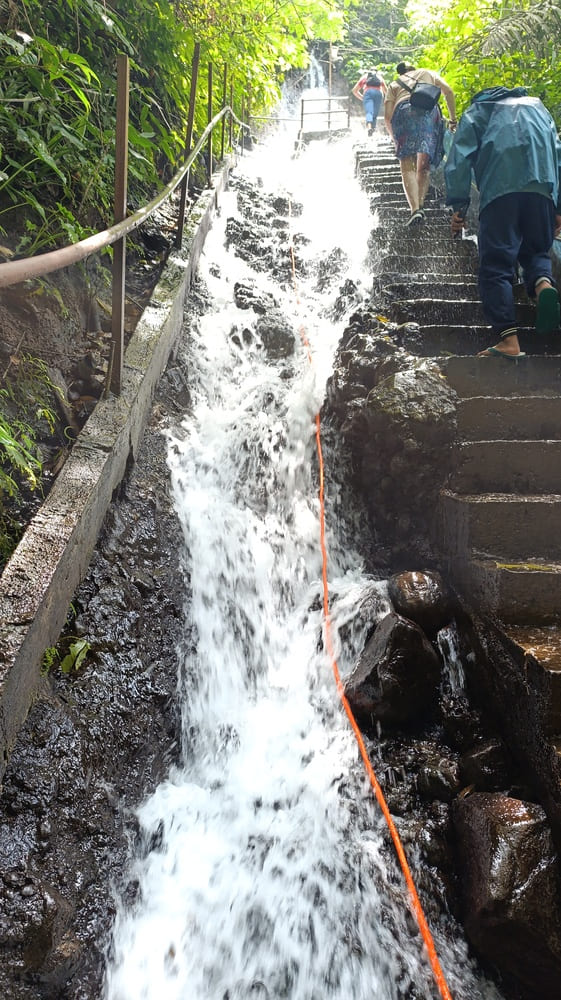
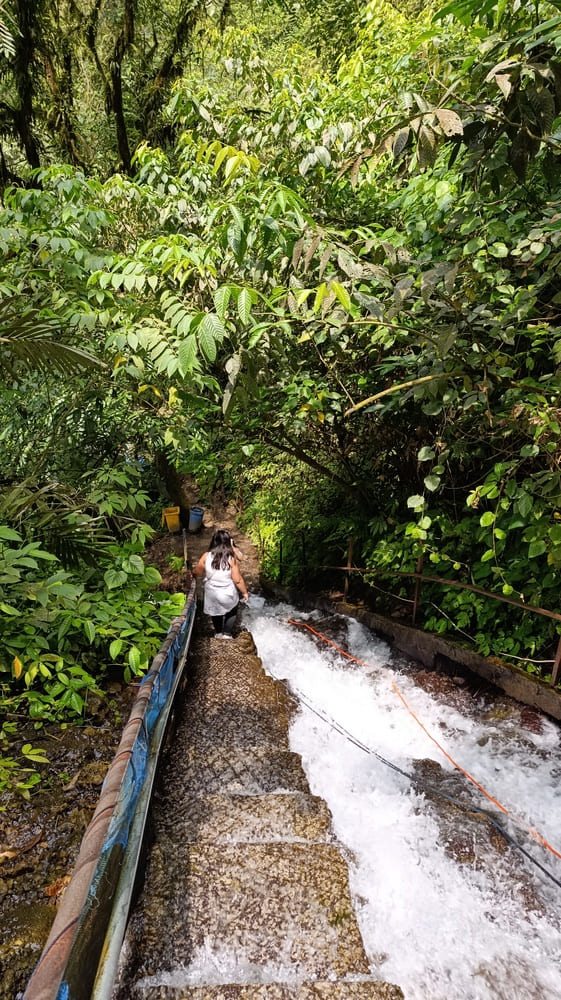
If you have the luxury to pick when to visit Tumpak Sewu, go at the start or end of the rainy season (October/November or March/April) when water volume is higher, but conditions are still manageable. But then again, any month is perfectly fine.
As to the time of day, aim to arrive before 10 AM, ideally even before 8:30 AM. You will have the best lights for photos, and the sun won’t be shining directly above the canyon for a while.
Tumpak Sewu is open from 7 AM until 3 PM.
Hiking Down: Trails, Viewpoints, and What to Expect
There are two main entrances:
- Malang/Sidomulyo side: Popular and easier access for day-trippers. Most choose this entrance.
- Lumajang side: Slightly steeper but less crowded.
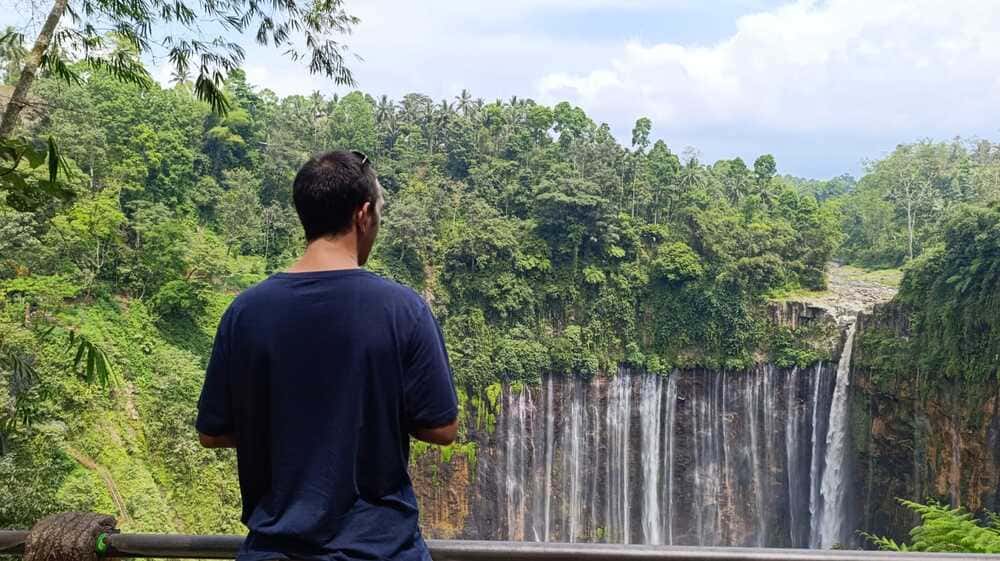
After entering, you will start at the upper viewpoint, a short walk from the parking area. It’s the postcard shot – a perfect semicircle of waterfalls framed by greenery. On a clear day, you may be able to see Mount Semeru behind the center of the cascade.
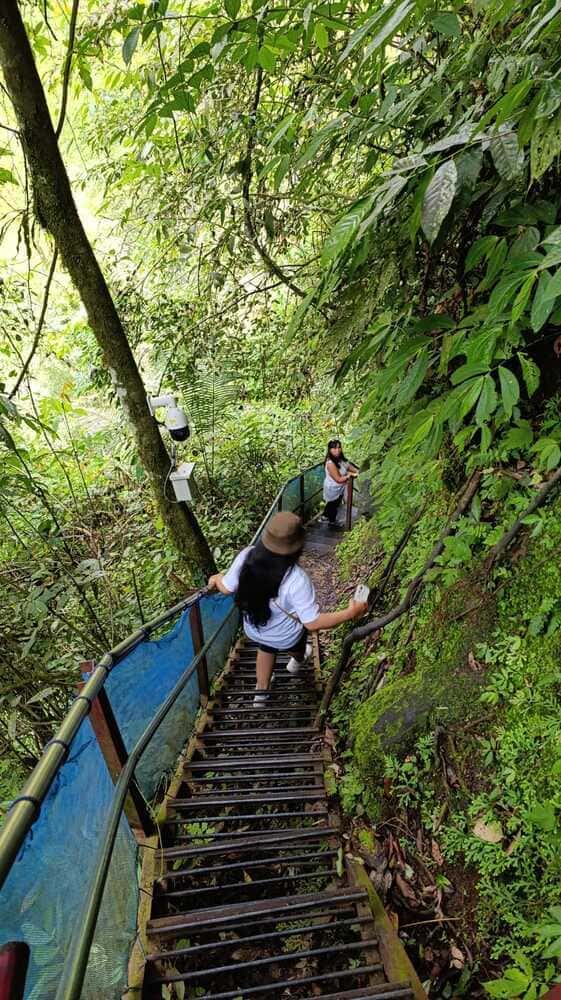
The real adventure starts when you descend into the canyon.
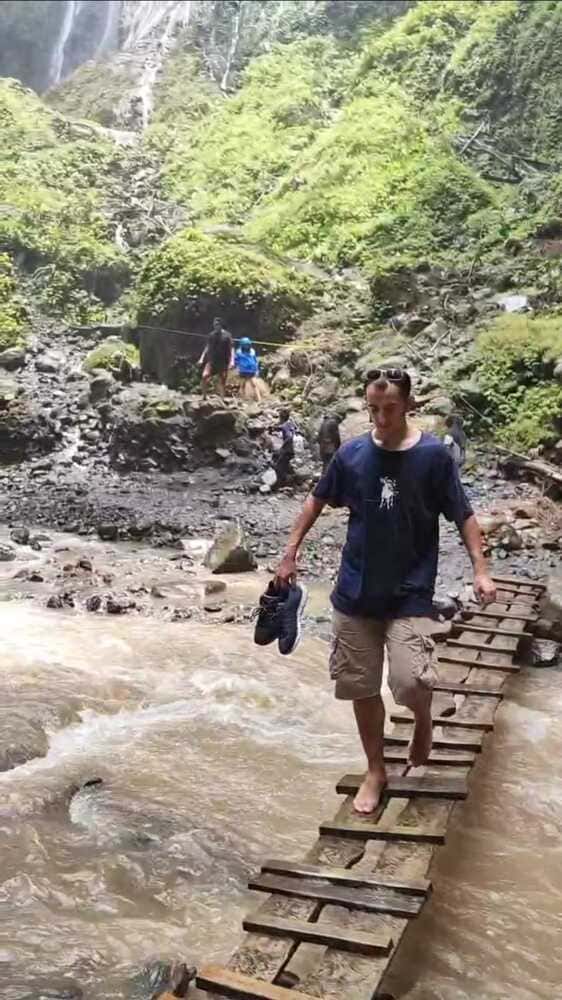
The trail takes about 15 minutes. It is mostly iron or stone steps, around 400 of them. Some sections have bamboo ladders and ropes. You will need to cross a stream towards the bottom, though even there the stairs remain.
Your shoes will get wet.
Flip-flops are not recommended, and honestly, it’s a good idea not to wear such, although it is possible to traverse in any shoes if you remain careful throughout.
I didn’t want to get my shoes wet (long day of driving ahead), so I removed them and continued barefoot. It wasn’t the most comfortable, but it’s perfectly fine – our ancestors walked barefoot most of the time in all sorts of rugged terrain.
Still, if you can, wear shoes with grip or watershoes. Keep your valuables in a dry bag.
At the bottom, the gorge’s walls surround you. Follow the stream for another 5 minutes to reach the foot of the waterfall.
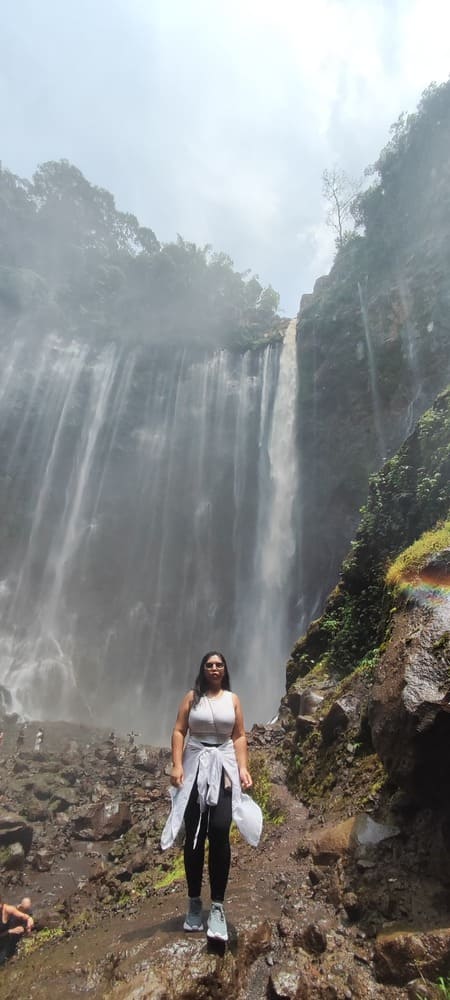
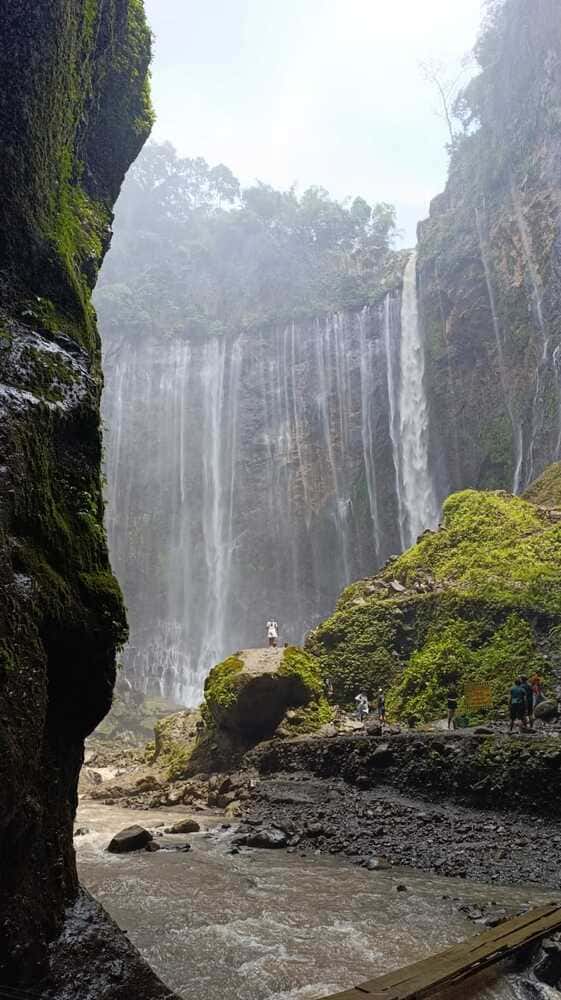
There, you’ll stand in front of the main curtain of water – an almost 100-meter-high wall that thunders into a misty basin. This is the lower viewpoint, and the most amazing sight at Tumpak Sewu.
As the water falls, it turns into super-small droplets, which fly forward, getting everything in their way quite wet. This includes you and your electronics!
After queuing for your turn or finding a less popular spot for your mandatory pictures, there is only one way – backwards. No way to get lost at least!
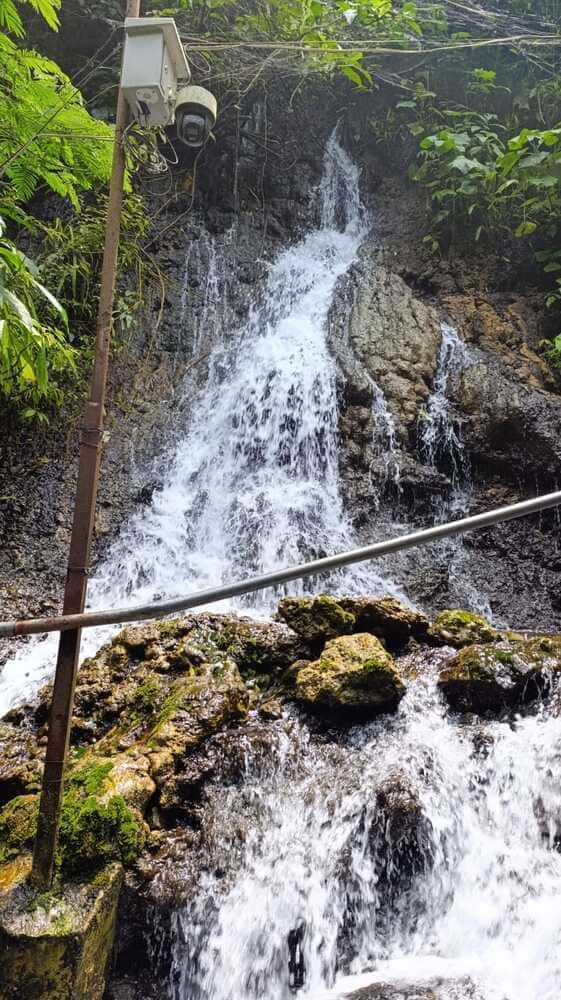
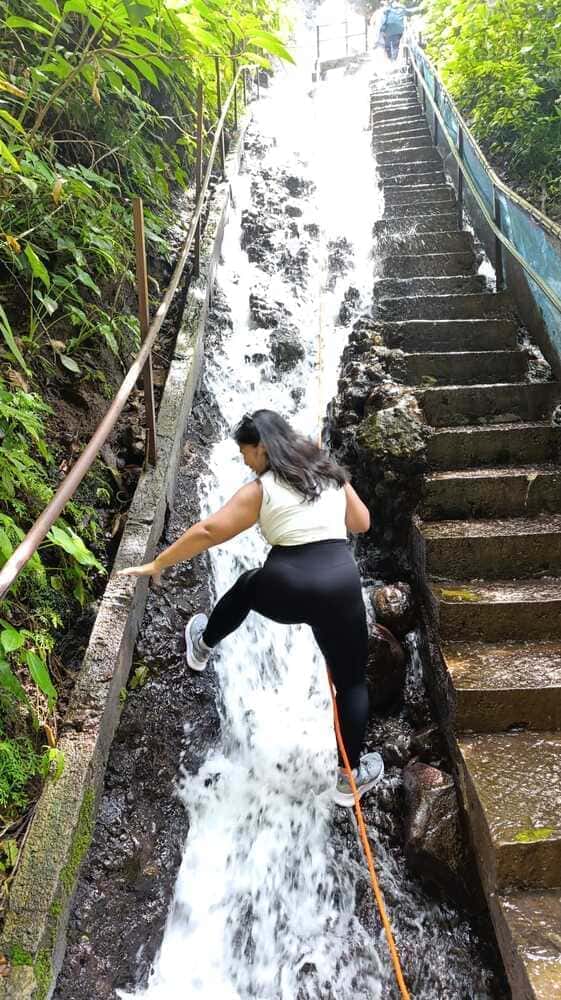
Goa Tetes
Goa Tetes is a small cave with mineral-stained rocks and gentle cascades. It’s located about a 10-minute walk from the stairs – just turn left when you get down.
I have to confess – we planned to visit it after checking out the grand waterfall, but then we forgot completely, and when we remembered, we were already at the top.
Looking at pictures, it pales in comparison with the main event (Tumpak Sewu), but since it’s there, you may as well see it before you go up again – if you don’t forget like us!
What to Pack for Tumpak Sewu
To be fair, nothing is truly a “must-have” – you can successfully visit Tumpak Sewu without any prior preparation.
But these are nice to have:
- Rain jacket or poncho – the water droplets are everywhere. Leave behind anything not waterproof.
- Lightweight, grippy shoes (flip-flops, as mentioned already, are way less than ideal).
- Waterproof phone case or dry bag.
- Towel and a spare shirt, especially if you don’t take a poncho.
Tumpak Sewu Waterfall Budget Breakdown
| Item | Cost (approx.) | Notes |
|---|---|---|
| Entrance fee | Rp 100,000 | Cash only |
| Parking | Rp 5,000 | Car or scooter |
| Optional guide | Rp 50,000-100,000 | Only if you feel nice, want to support the locals, or like the company. |
| Scooter rental (Malang) | Rp 80,000-100,000/day | + fuel of 10.000 per ~50 km. |
| Simple meal | Rp 20,000-30,000 | Local warung. One exists just before the stairs down to the gorge, but it is a tad more expensive than outside the sight. |
| Bottle of water | Rp 5,000 | Buy before the trail. |
Total day budget: Around Rp 150,000–200,000 (≈ USD 10–13) for backpackers.
Where to Stay Near Tumpak Sewu
The most common base is Malang, where you can find many cheap hostels.
I recommend the Little Malang Hostel, which is both cheap and incredibly well-rated.
Staying in Malang lets you explore other waterfalls like Coban Rondo or Coban Pelangi, or escape the heat with a short trip to Batu.
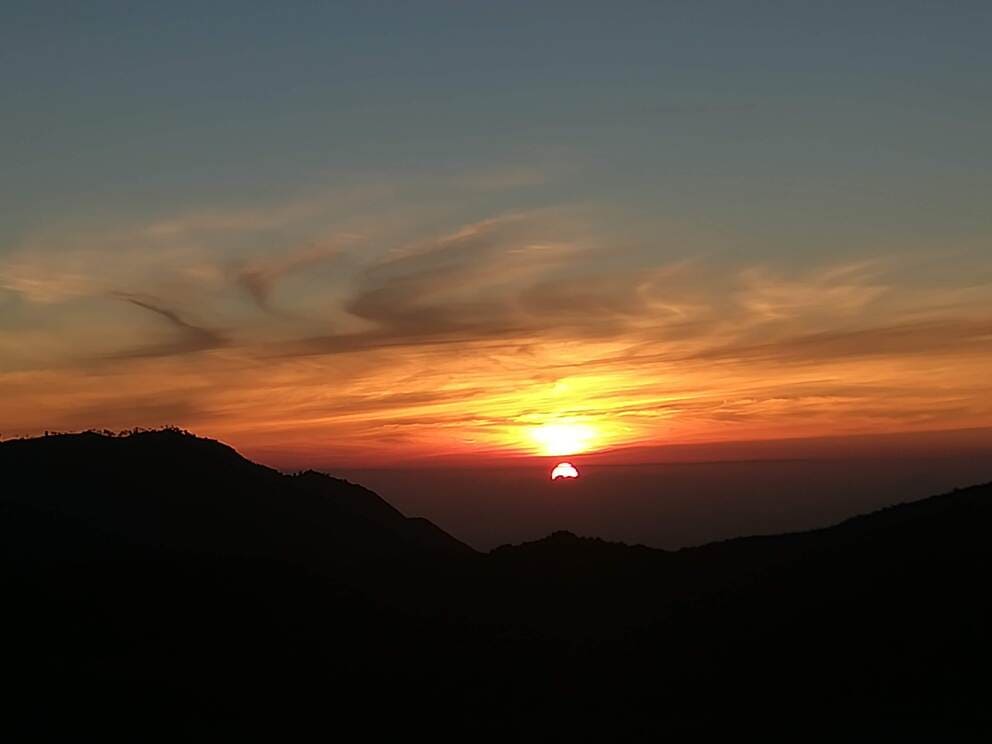
If you want to catch the sunrise at Tumpak Sewu without the early drive, stay close to the waterfall, within Sidorenggo/Pronojiwo. Guesthouses there are basic and a little more expensive than in Malang, but still budget-friendly and with a lot of character. I recommend the Kaliningrat Cottages, which offer amazing views of Mount Semeru on clear days.
Combining Tumpak Sewu with Mount Bromo
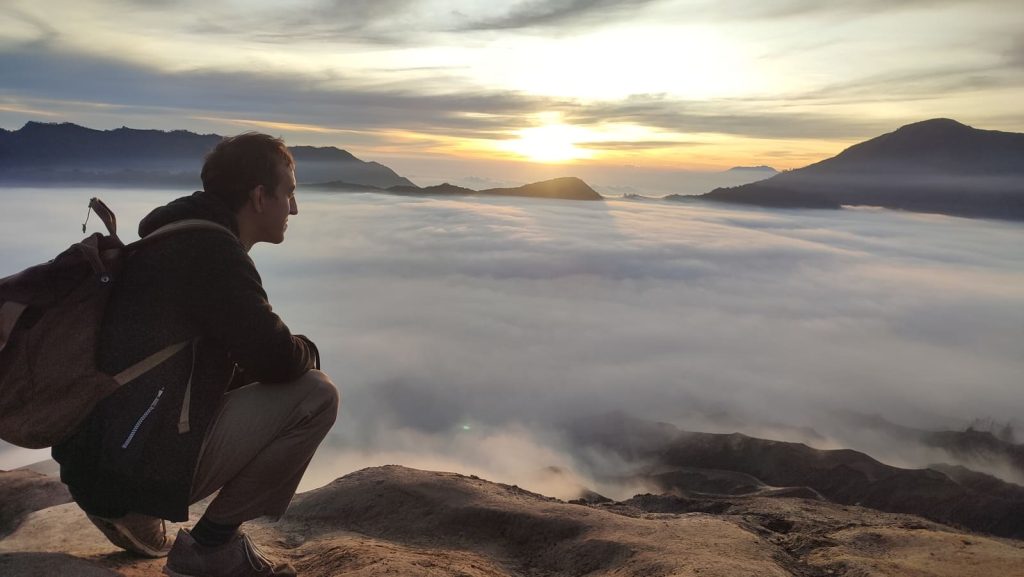
Mount Bromo and Tumpak Sewu are two of the top attractions in East Java. Thus, combining the two for a 2-3 day East Java loop is standard practice.
Unfortunately, they are on both sides of the highest mountain in Java. Transport can be a bit complicated or long, or both.
Going back to Malang is one option, but it adds a lot of travel time.
Public transport from Tumpak Sewu (Pronojiwo area) to Lumanjang is the same minibus that starts in Malang and stops near the waterfall on demand. It doesn’t have a set schedule, and you have to flag it down on the main road near the waterfall.
From Lumanjang, there is another public minibus that will bring you to Probolinggo. From there, you will need to take the highly irregular local minibus to Cemoro Lawang or rent a scooter and go by yourself. I have explained more about this leg of the journey in detail in the Mount Bromo on a budget guide.
It shouldn’t come as a surprise, then, that many opt for private transfers and organized tours to visit Tumpak Sewu and Bromo one after another.
- Take this 2D/1N tour of Tumpak Sewu and Bromo from Malang, or
- Take this 3D/2N tour, which includes Tumpak Sewu, Bromo, and Kawah Ijen with a drop off in Bali.
FAQs About Visiting Tumpak Sewu Waterfall
Here are some quick-fire answers to your most pressing questions about Tumpak Sewu.
Can you swim at Tumpak Sewu?
Not really. It’s cold, shallow, and the water falls with bone-crushing power. Maybe you can wade near the edges, but that’s about it.
Is a guide required?
Not really. Only helpful if you want a local company.
Is Tumpak Sewu open all year?
Yes, but trails sometimes close briefly during heavy rain.
How long does the full visit take?
It took us just over 2 hours, including hiking to the bottom and taking photos. Hard to spend more than 3 hours there unless you picnic.
Can you fly a drone at Tumpak Sewu?
Yes – standard rules in Indonesia apply. You don’t need a permit if you fly under 150 meters and the drone weighs less than 2 kg. Always keep the drone in sight.
Final Thoughts: Why Tumpak Sewu Belongs on Your Java Itinerary
Tumpak Sewu is a humbling experience. It is almost otherworldly – but the fact that it isn’t is the awe-inspiring factor. The roar of water, the jungle mist, and the deep gorge are hard to compare. Some call it the Niagara of Indonesia – it is in the same ballpark of natural wonders.
Yes, it is a bit remote and public transport is not organized very well, but if you can handle the 2-3 hours of driving on the winding volcano slopes, it is very worth it.
Come early, pack light, and embrace getting muddy. You’ll leave drenched, exhausted, and very happy you came.